

How row 1 of business class became the new first class
Airlines are turning the first row of business class into upmarket 'business plus' suites – and you’ll pay more for the privilege.
By David Flynn, May 8 2026
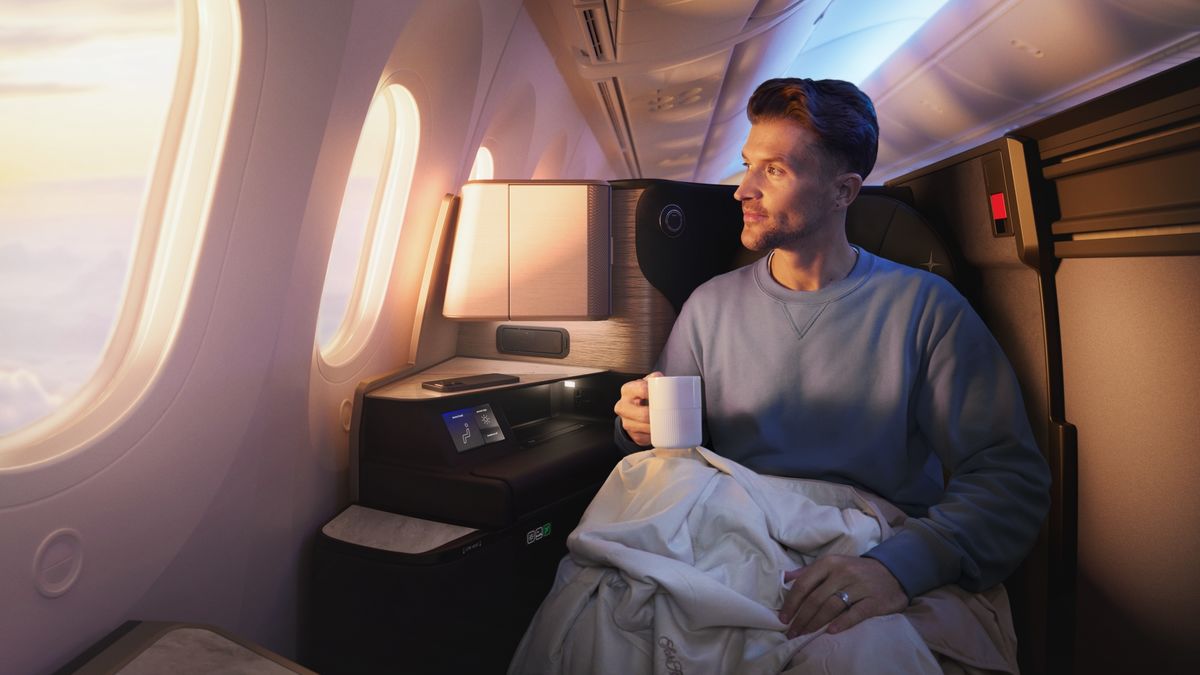
The days when every seat in business class was created equal are rapidly coming to an end.
A new trend is sweeping through the design studios and hangars of the world’s leading airlines: transforming the front row of the cabin into a better-than-business-class space.
Airlines sometimes tag this as a suite or studio – in the industry, the concept is more broadly known as business plus.
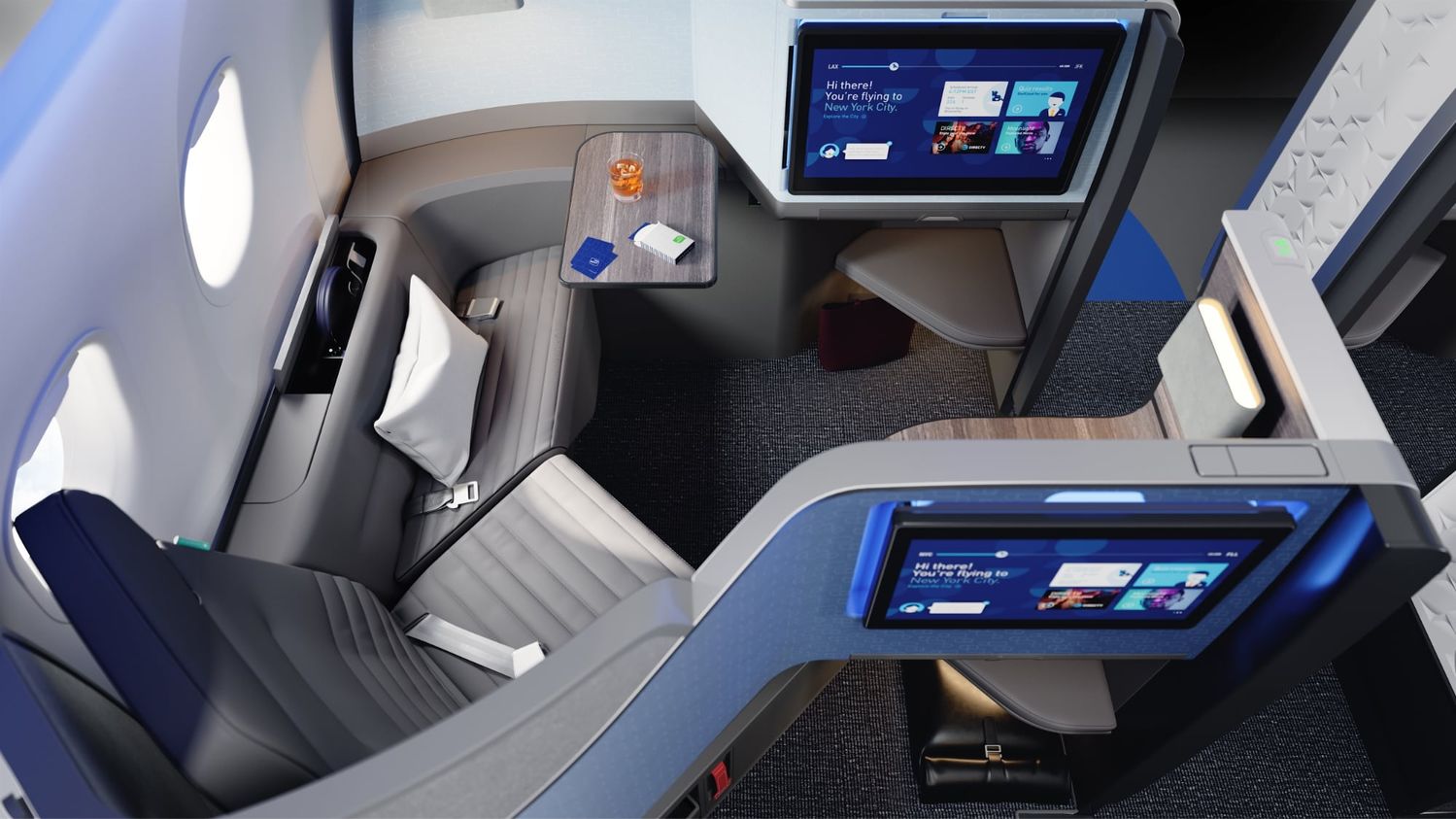
JetBlue's Mint Studio is a poster child for 'business plus' on single-aisle jets like the Airbus A321LR.
It’s a clever play that offers high flyers more room to work and dine, while handing the airline a tidy revenue boost.
At its best, a business suite can deliver a first class lite experience on airlines which lack a formal first class cabin.
How ‘wasted space’ became a Plus factor
Aircraft layouts often result in the first row of a business class cabin having additional room between the seat and the bulkhead wall.
To date, this has simply meant that passengers in that row enjoy a bit more space to stretch out.

The first row of the business class cabin usually boasts more room than the rest.
But what a traveller may see as extra room, some airlines consider to be wasted space – a lost opportunity and, more importantly, lost revenue.
Upgrading this first row to an enhanced business class proposition – embracing the extra space, and pairing it with extra features and amenities – allows airlines to charge more to passengers who want more.
How much more? Anywhere from AUD$300 to AUD$1000 on top of the regular business class fare, depending on the carrier and the route.
Typical business plus inclusions are:
- a ‘buddy seat’ – an oversized ottoman that functions as a guest seat, allowing two business class passengers to share the journey and even dine together
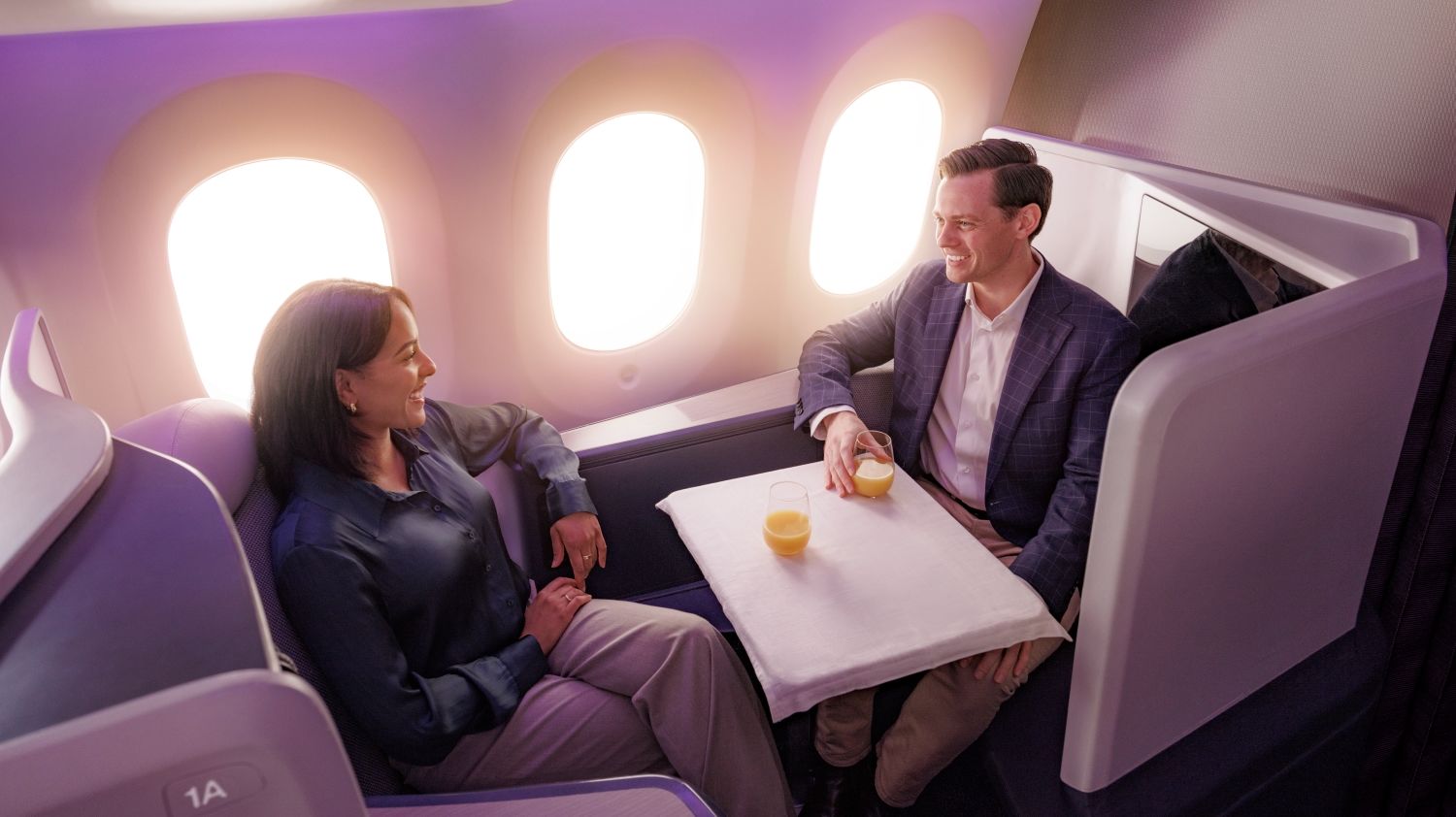
Air New Zealand's 787 Business Premier Luxe.
- taking that further, the ability to open up the two middle suites into a space which can be shared by four people
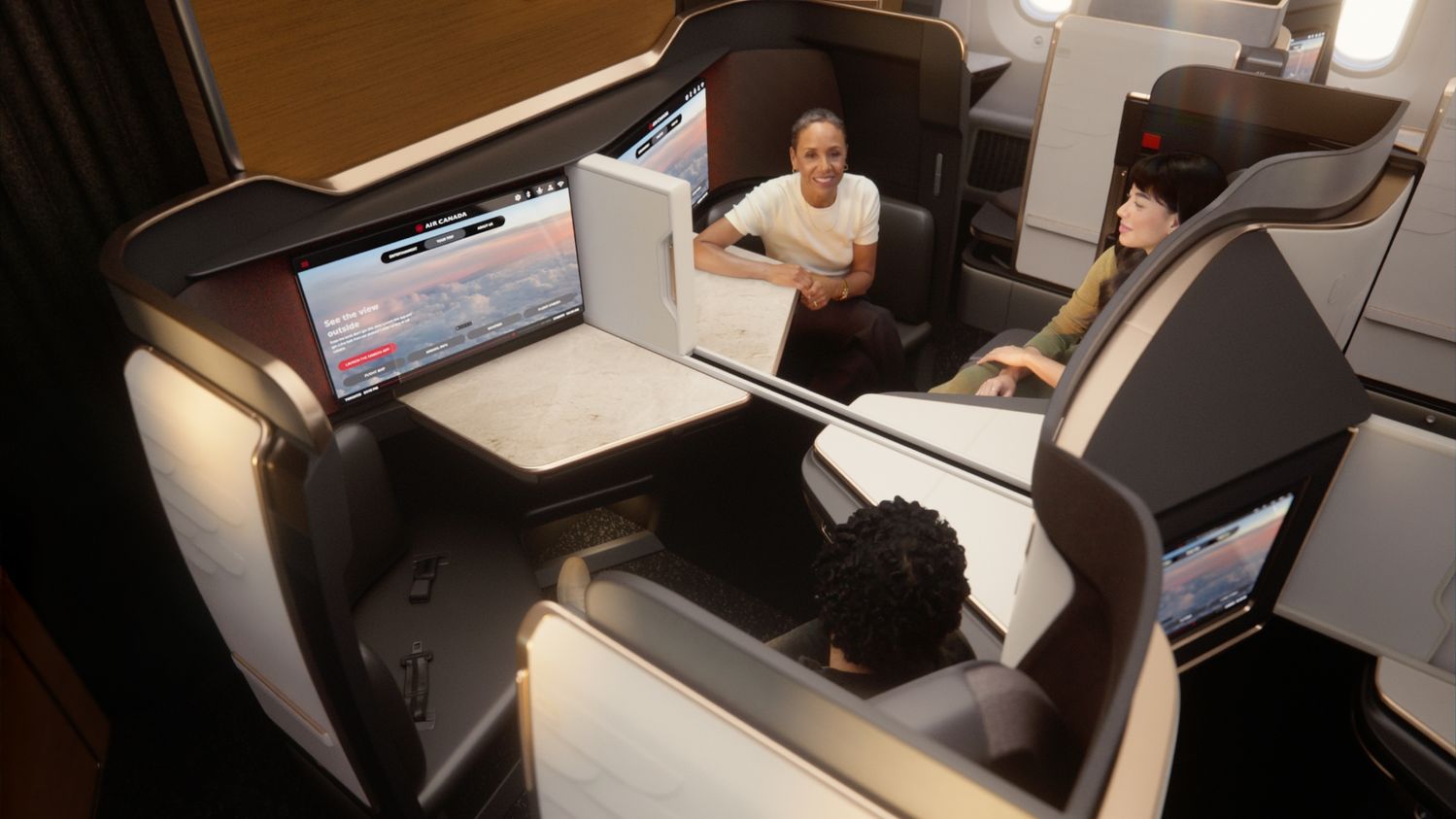
Air Canada's 787-10 Signature Plus.
- an option to combine the middle suites into a double bed
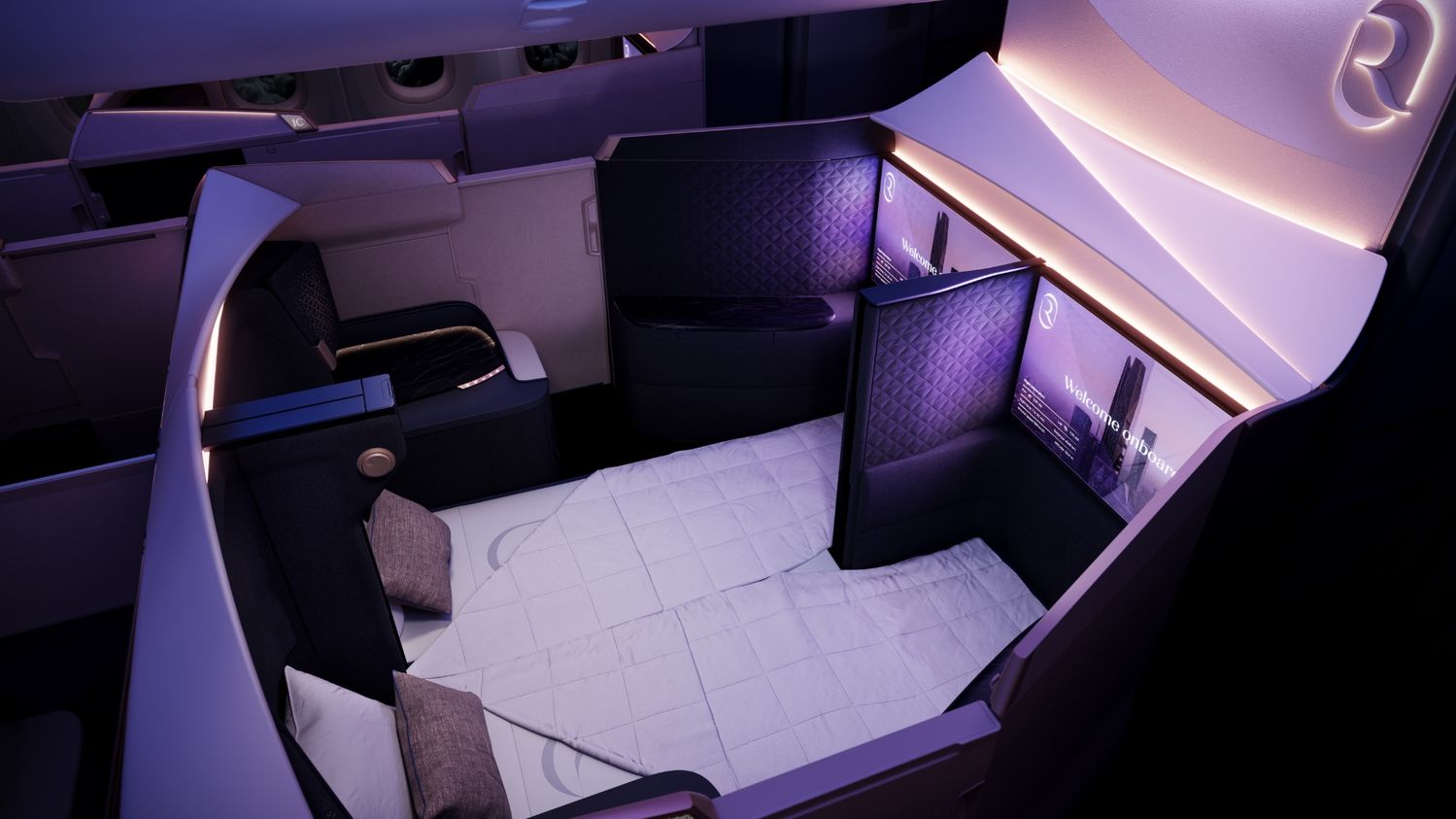
Riyadh Air's 787 Business Elite.
- massive screens: while standard business class seats might offer 16–18 inch screens, these front-row suites often boast 27-inch and even 32-inch displays
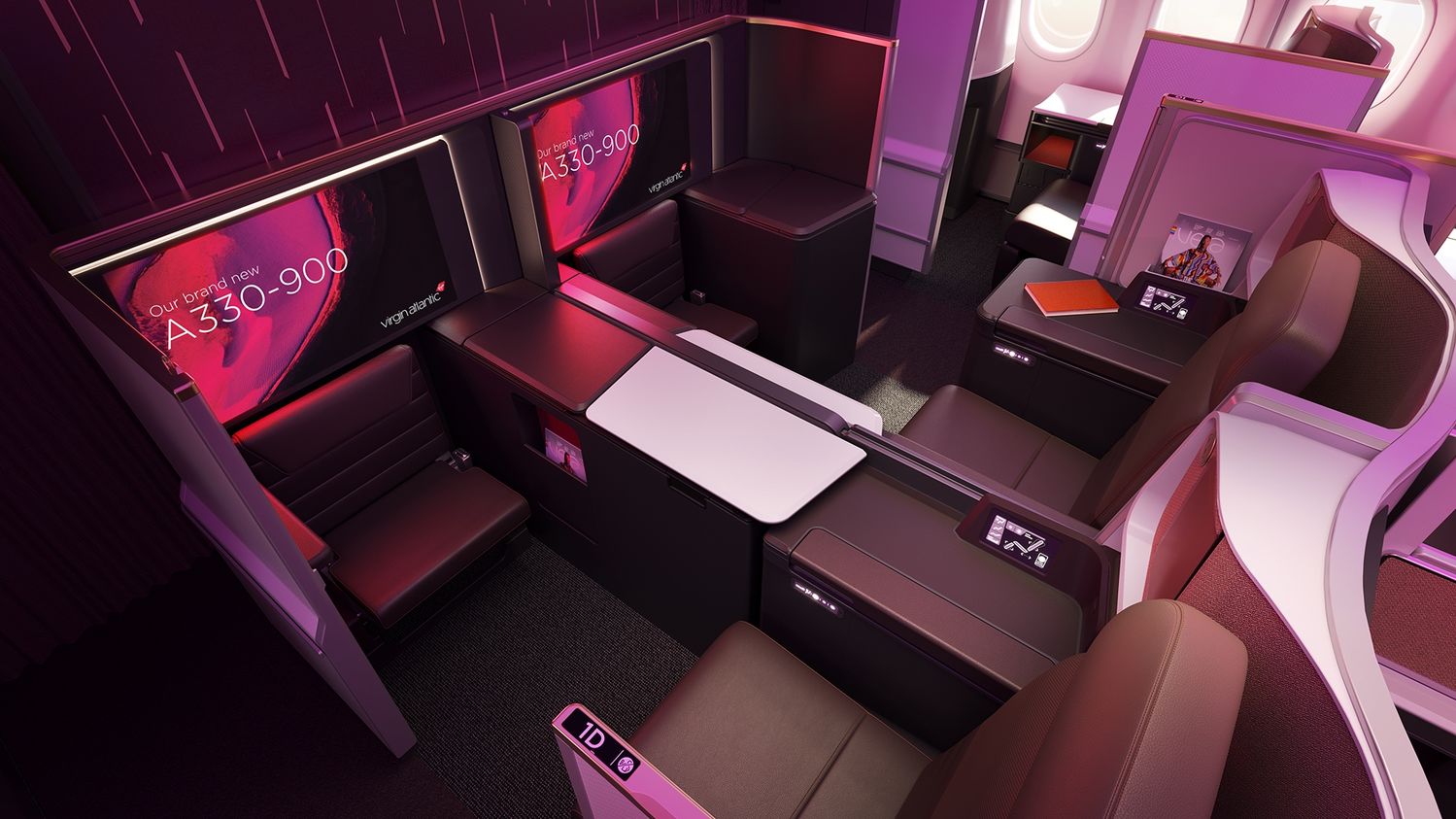
Virgin Atlantic's A330neo Retreat Suite.
- expanded workspace: larger side consoles make the most of the extra room
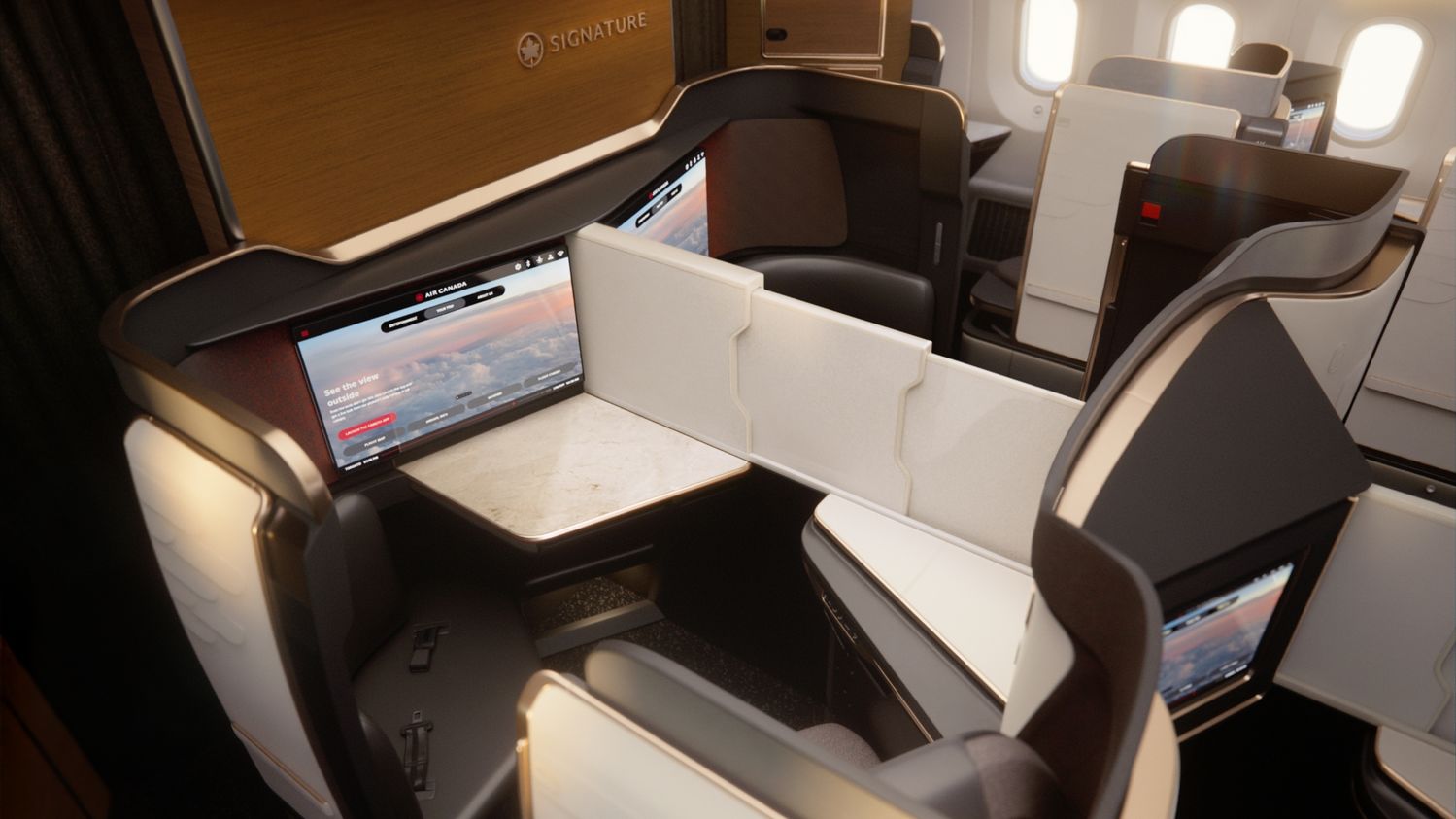
Air Canada's 787-10 Signature Plus.
- enhanced privacy: higher doors or wraparound shells to help differentiate this premium seat from the rest of the cabin
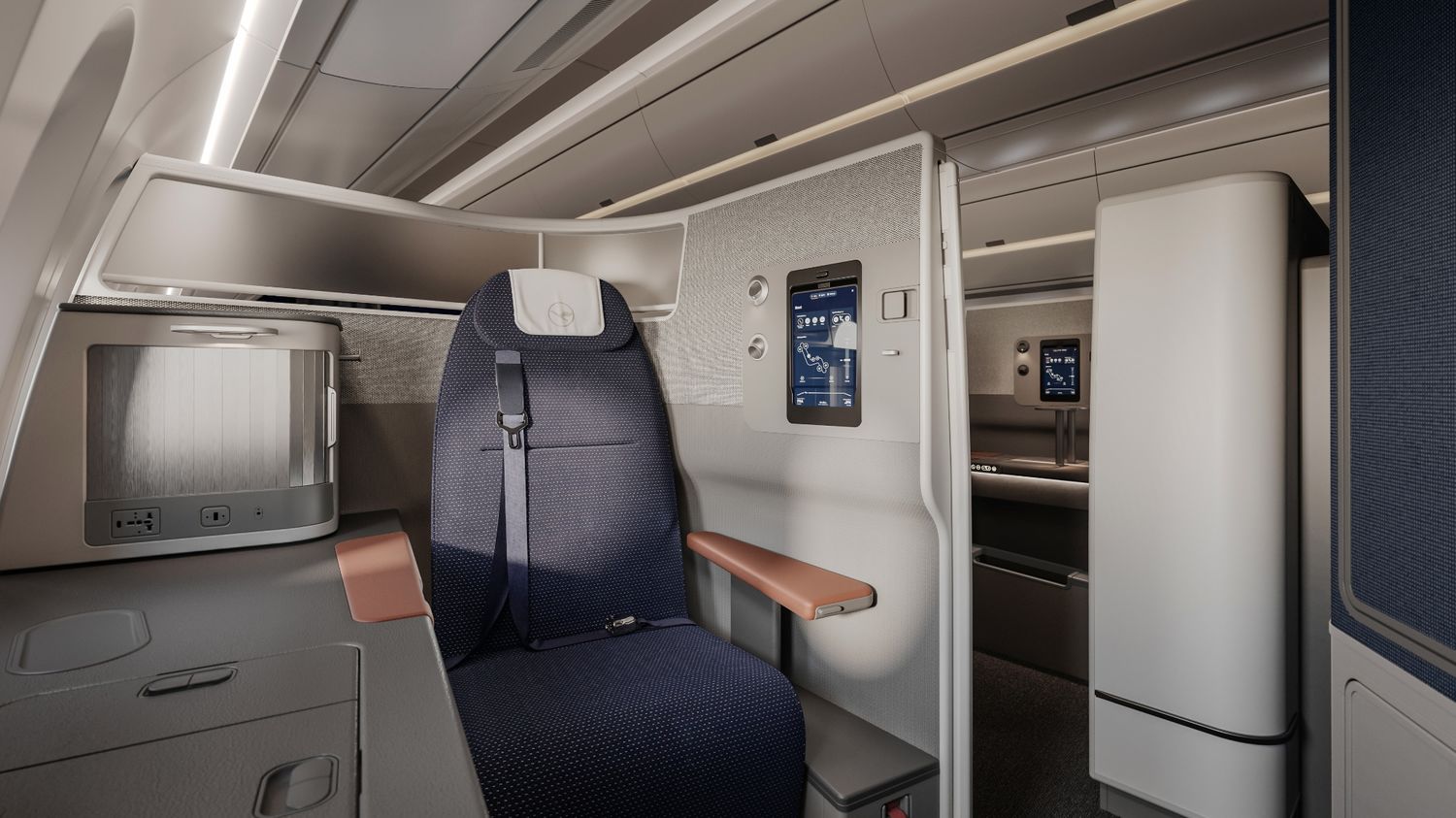
Lufthansa's Allegris Business Suite.
- superior soft product: fancier entrees and drinks, bedding, pyjamas and amenity kits than the standard business class fare
Which airlines are chasing the business suite spot?
Most airlines which have rolled out some form of business plus don’t have first class, so these suites are the next best thing.
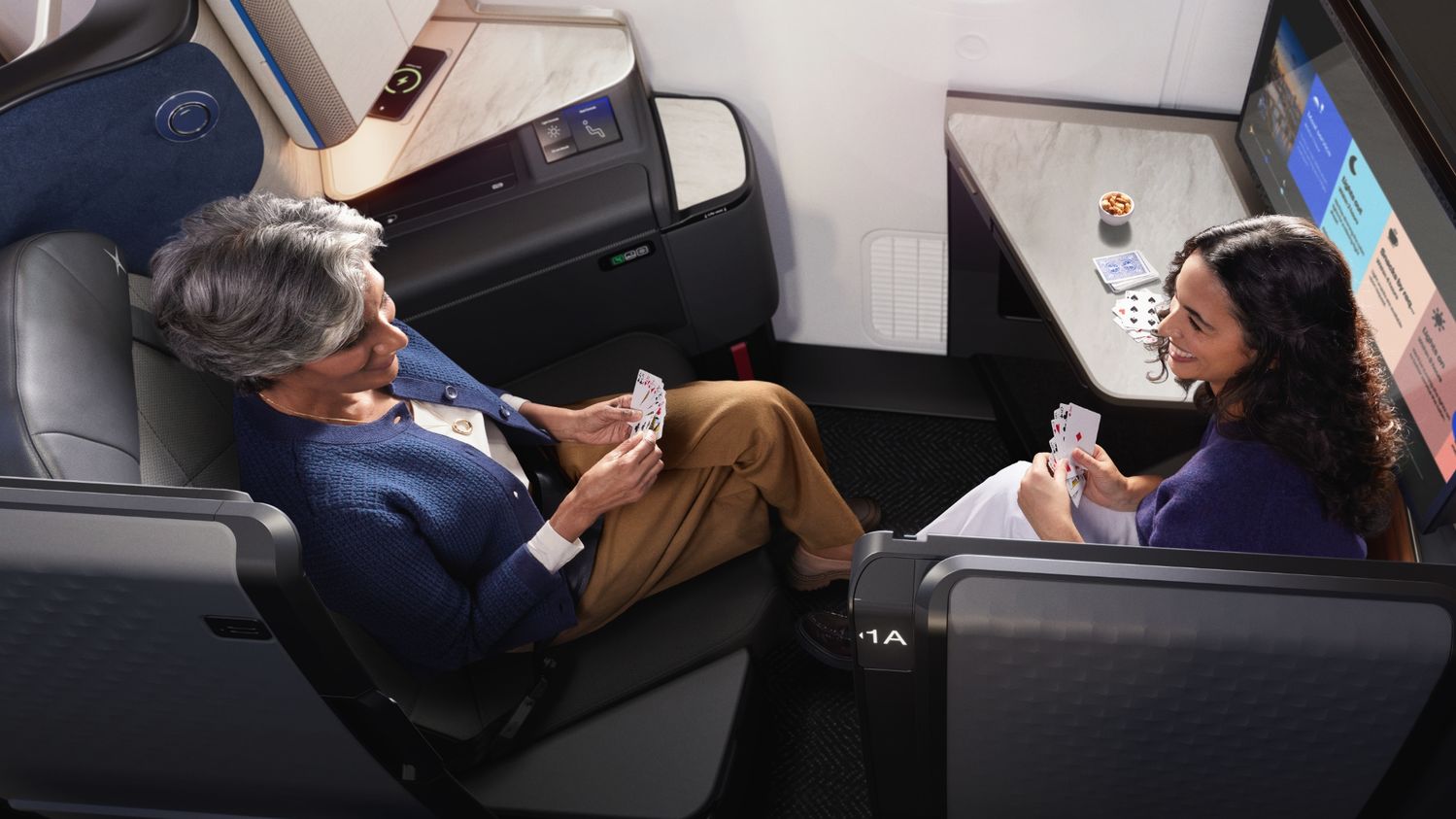
United Airlines' 787 Polaris Studio.
That holds true for Air Canada, Air New Zealand, American Airlines, Germary’s Condor, JetBlue, Riyadh Air, United Airlines and Virgin Atlantic.
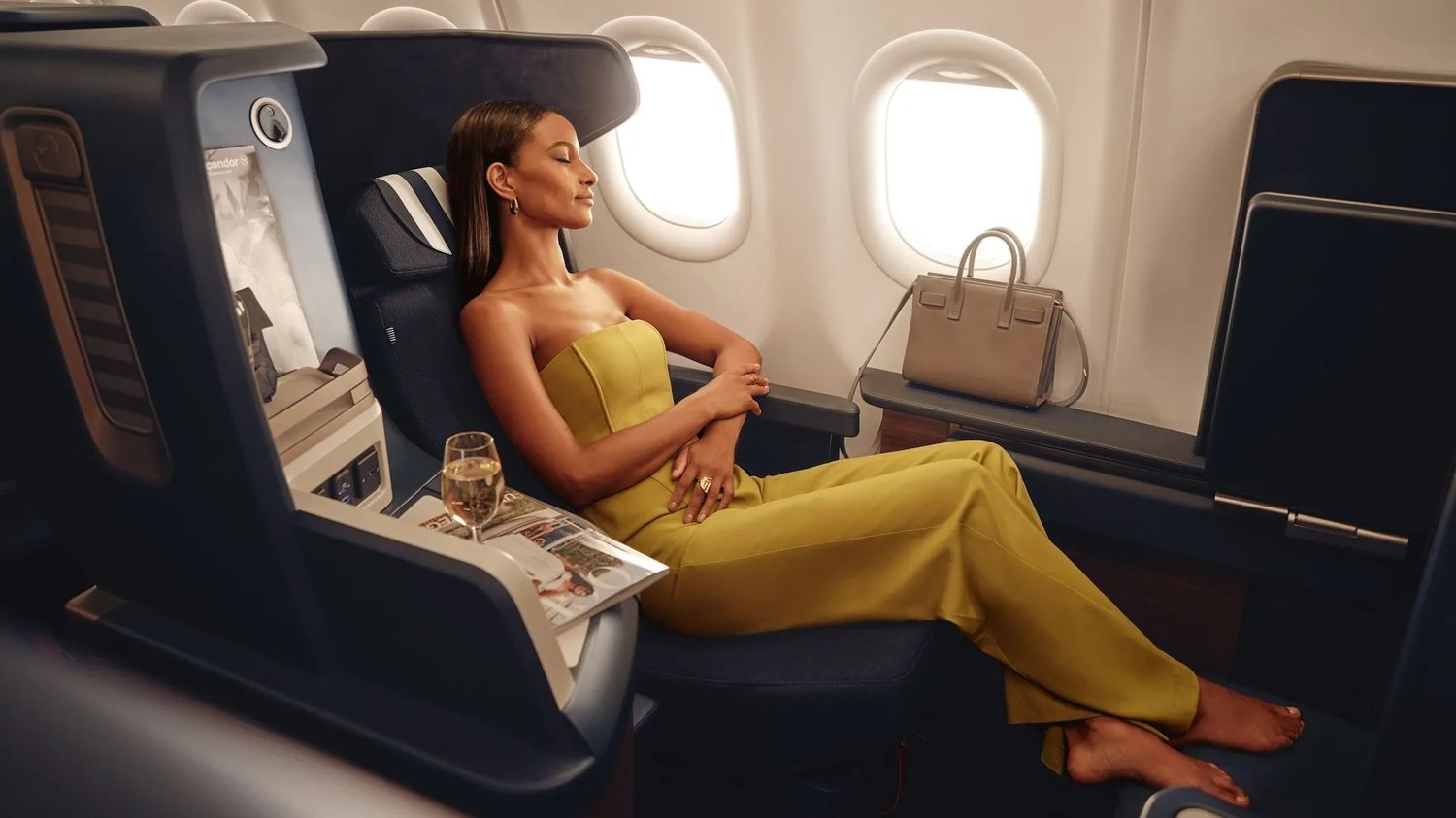
Condor's A330neo Prime Class.
Additionally, Thai Airways is now in the process of phasing out first class in favour of doored business class suites with a business plus treatment at row 1.
However, Lufthansa and Swiss opted to retain first class – in a vastly improved form – while adding front-row suites to their respective business class cabins.
Etihad Airways chose a different path: it turned row 1 of its Airbus A321LR jets into first class by amping up the soft product and ground component of what might otherwise have been just a better business class.
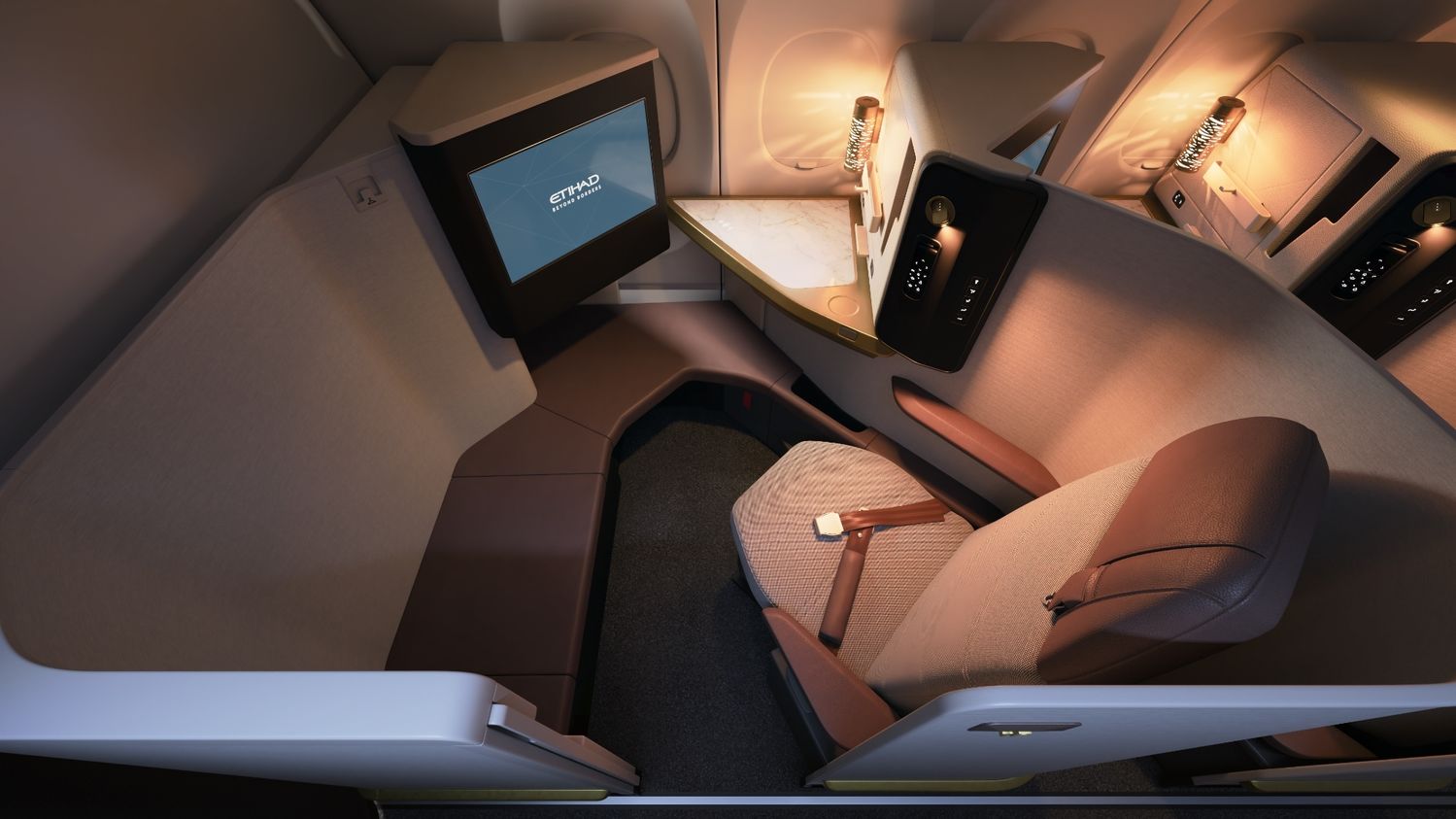
Etihad turned the first row of its A321LR into first class.
In fact, the increasing popularity of single-aisle aircraft like the A321LR and A321XLR for long international routes has in itself driven the business plus wave.
“First class for free”
London-based Factorydesign – which pioneered the front row treatment with seatmaker Thompson Aero Seating – positions business plus to airline clients as being ‘first class for free’.
The concept “revolves around the integration of the front row seat into customised front row furniture,” Factorydesign says.
“Opening up the upper monument area creates a larger open suite without the loss of seat count in the cabin… a truly premium, enhanced offer ‘for free’.”
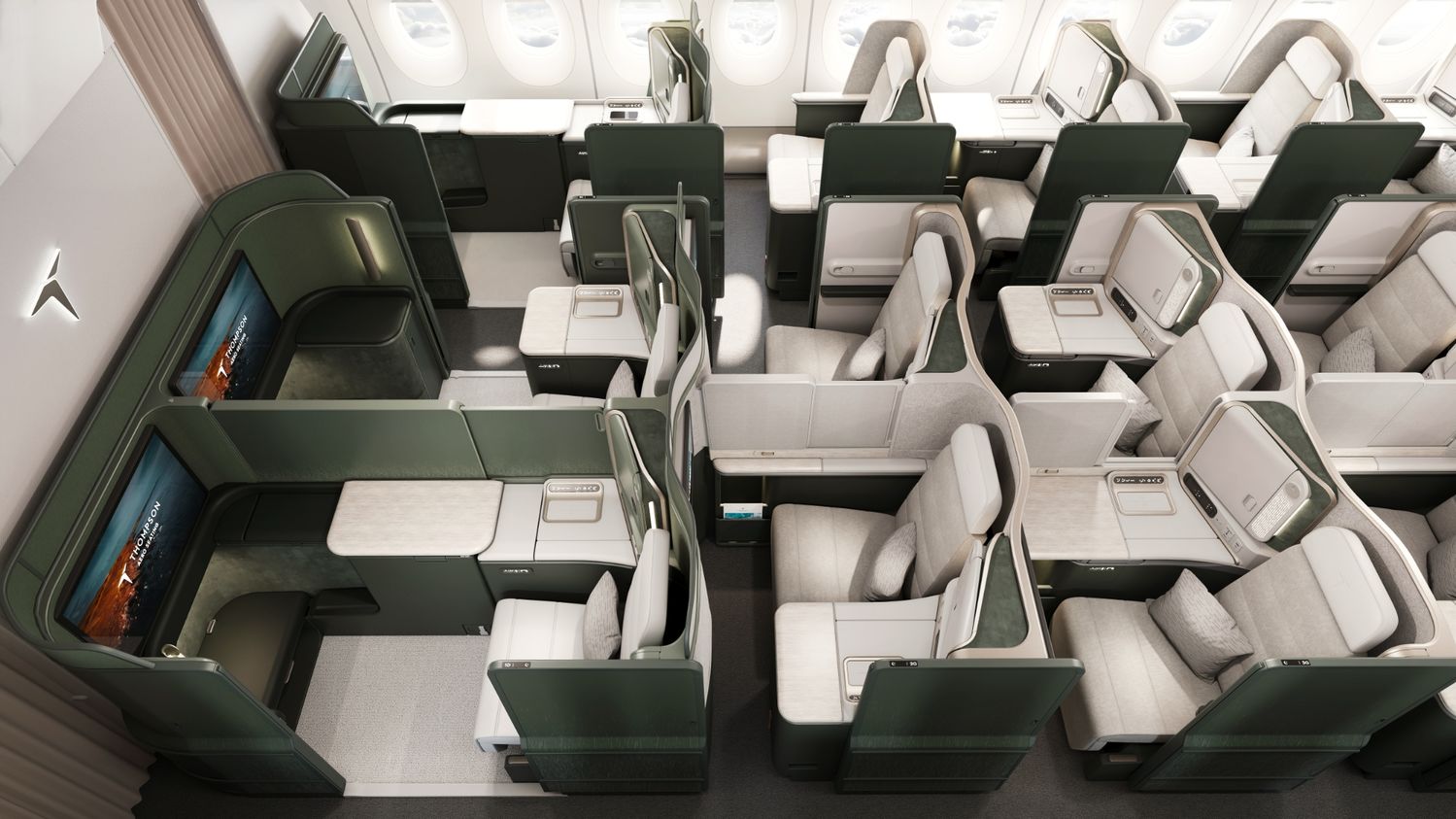
Thompson Aero's Vantage XL First treatment.
Of course, airlines have to invest more to develop and execute a business plus treatment.
But those front-row suites act as a “halo product” – a way to capture the highest-spending passengers without the increased operational cost of a dedicated first class cabin (which requires different catering, crew ratios, and ground services).
JetBlue became the poster child of this ‘front row first class’ approach with the 2021 launch of its Airbus A321LR jets, where a pair of Mint Studio berths topped the Mint Suites business class cabin built on Thompson Aero’s Vantage Solo design.
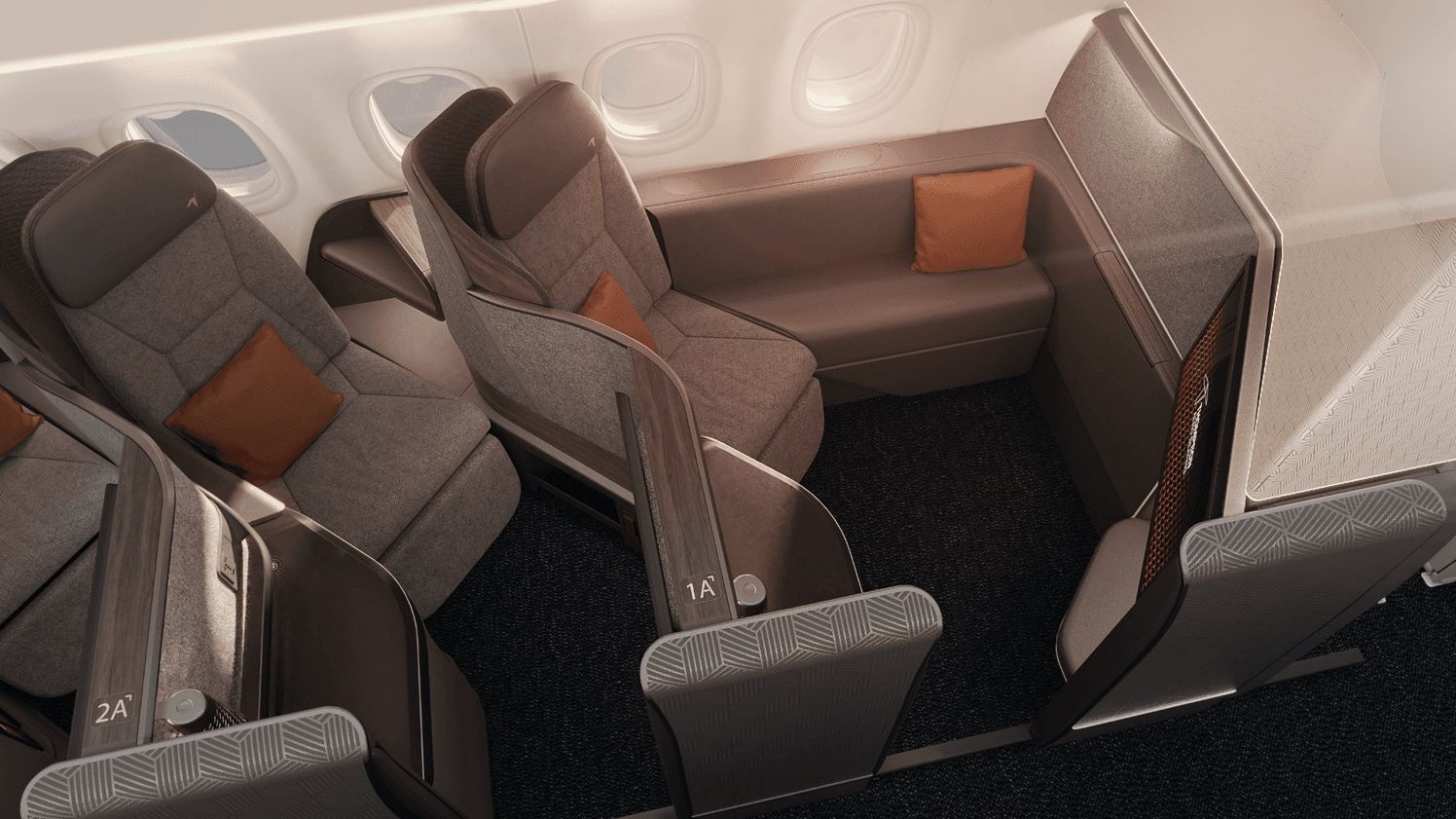
Thompson Aero's Vantage Solo pioneered 'business plus' on single-aisle jets.
JetBlue then tasked Acumen Design Associates with transforming the first two seats into Mint Studios: “a unique front row first class suite… that offers extra bed width and an immersive 32-inch monitor.”
JetBlue's A321LR Mint Studio.
“We explored concepts solely focused on a larger bed, or larger table surface,” Acumen said.
“But in the end it was felt that opening up the space as much as possible, and allowing the space to be shared with a second passenger would create a truly ‘wow’ experience.”
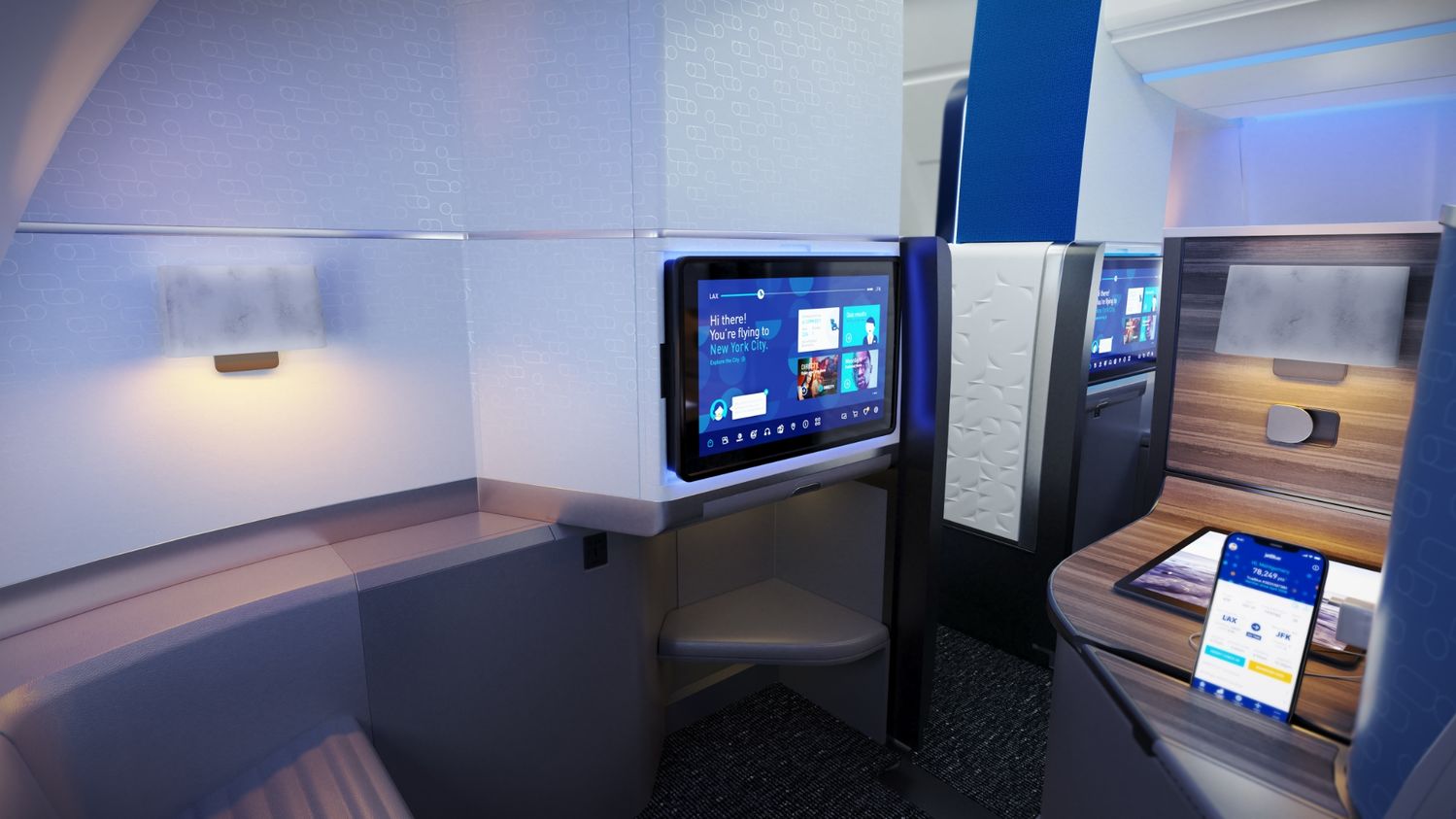
JetBlue's A321LR Mint Studio.
Additional creature comforts for Mint Studio passengers include a mirrored vanity, extra storage “and a guest seat and table to work, lounge or entertain a fellow Mint traveller,” along with pyjamas and slippers.
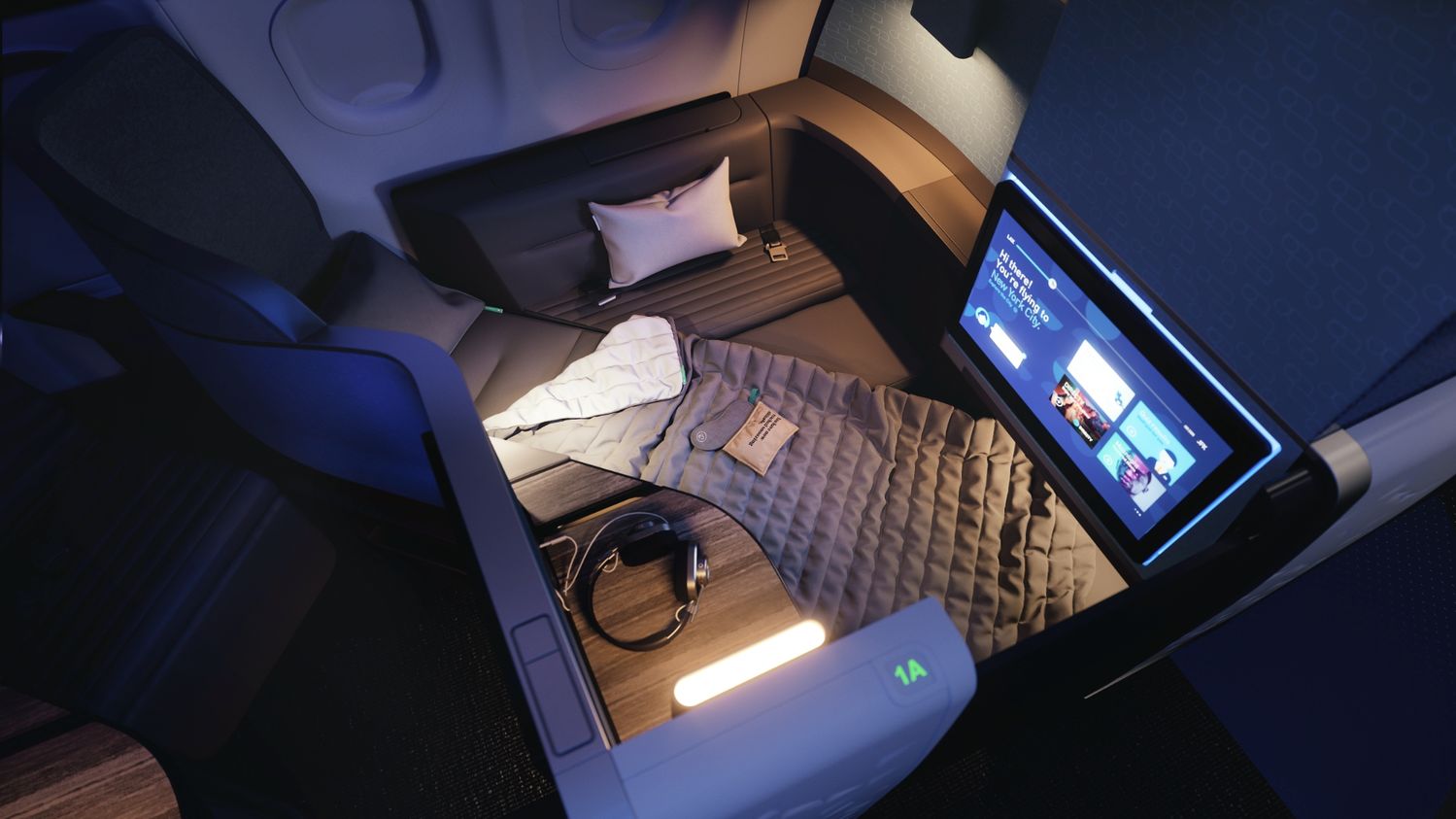
JetBlue's A321LR Mint Studio.
Factorydesign sees further opportunities for airlines, including a personal mini-bar.
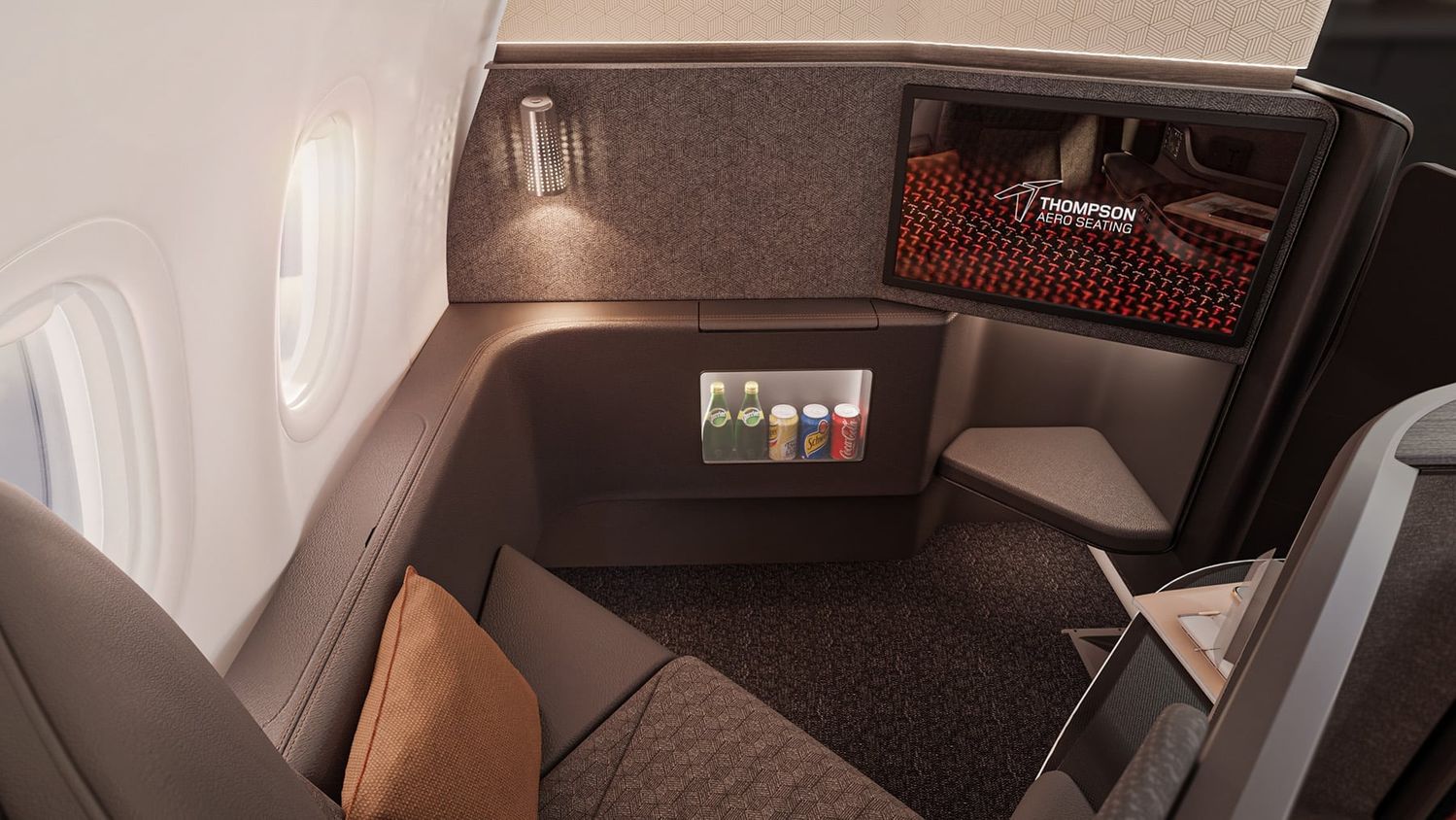
The bespoke 'business plus' experience could include a chilled mini-bar.
There’s also the potential to apply similar thinking to the last row of the business class cabin, such as “a dedicated parent and baby suite, or destination space such as a self-serve bar.”
Also read: How British Airways created the world’s first business class bed

24 Aug 2011
Total posts 1280
Airlines love charging extra for these seats as it basically costs them nothing; the extra space only exists because that is how the plane is designed. Compared with a regular first class product, there are none of the other extra costs that come with adding another class such as different menu, dedicated crew, dedicated toilets, superior landside product etc.
Hi Guest, join in the discussion on How row 1 of business class became the new first class