

Review: Korean Air Prestige Suites 2.0 Business Class
Korean Air’s most modern business class has reached the Sydney to Seoul route aboard the Boeing 787-10.
By Sid Raja , June 23 2026
Route
Sydney - Kingsford Smith
Aircraft Type
Boeing 787-10
Airline
Korean Air
Flight
KE401
Cabin Class
Business
Seat
7B
Notes
The Good
- A first-rate sleep experience
- Excellent meals and drinks selection
- 24-inch 4k screen with Bluetooth audio
The Bad
- Privacy doors not certified
- Wi-Fi neither fast nor complementary
X-Factor
- Ability to control entertainment from your phone
Introduction
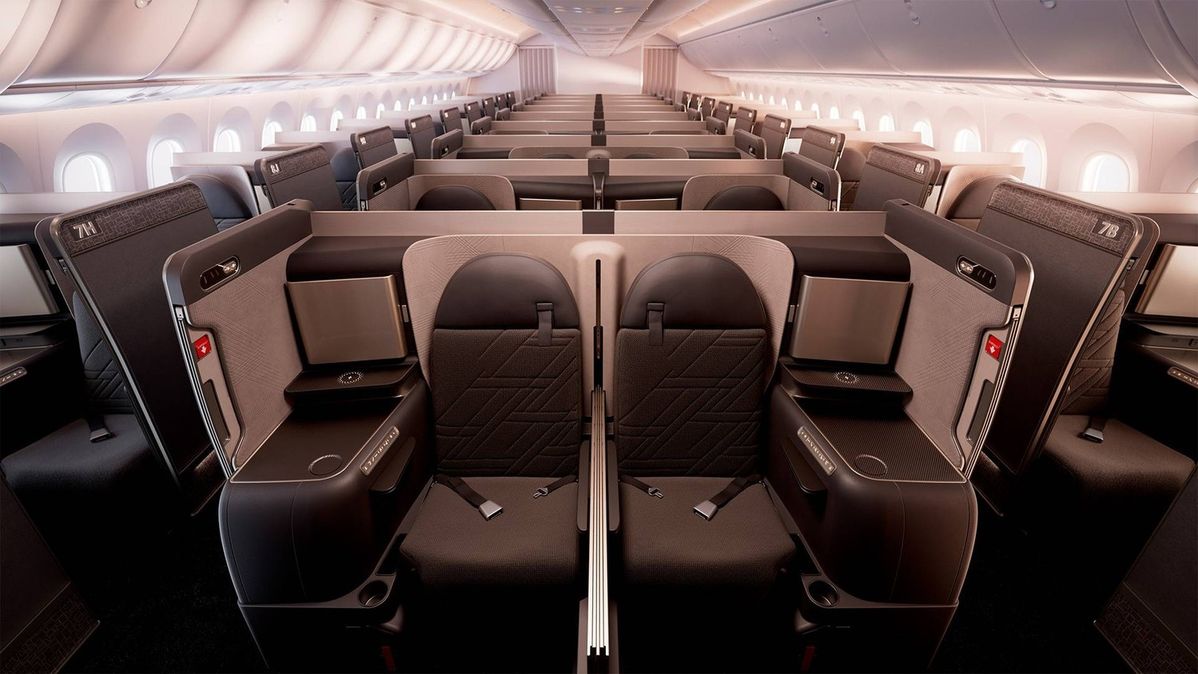
Korean Air’s long-awaited Prestige Suites 2.0 mark the carrier’s most significant cabin overhaul in years.
The new product introduces forward-facing staggered suites, oversized 4K screens and, at long last, privacy doors (with a caveat which we'll come to later).
The seat made its global debut in mid-2024 and is being progressively rolled out across Korean Air’s Boeing 787-10 fleet, with a 777-300ER retrofit still to be timetabled.
We sampled the cabin on flight KE401 from Sydney to Seoul Incheon, a roughly 10.5 hour daytime sector departing Sydney at 7:55am and arriving into Incheon the same evening.
Check-in
Korean Air operates from Sydney International Airport’s Terminal 1, with Prestige Class passengers directed to a dedicated SkyPriority check-in zone at the head of the departures hall.
On the day of travel the desks were well staffed and there were just a couple of passengers ahead of me to check-in.
The luggage allowance is generous, with two checked pieces of up to 32kg each.
Of course, if you’re travelling only with carry-on bags, you can check-in online via the Korean Air website or app.
Either way, head to the business class entrance to immigration and security, which helps you skip the early-morning queue of travellers.
Lounge
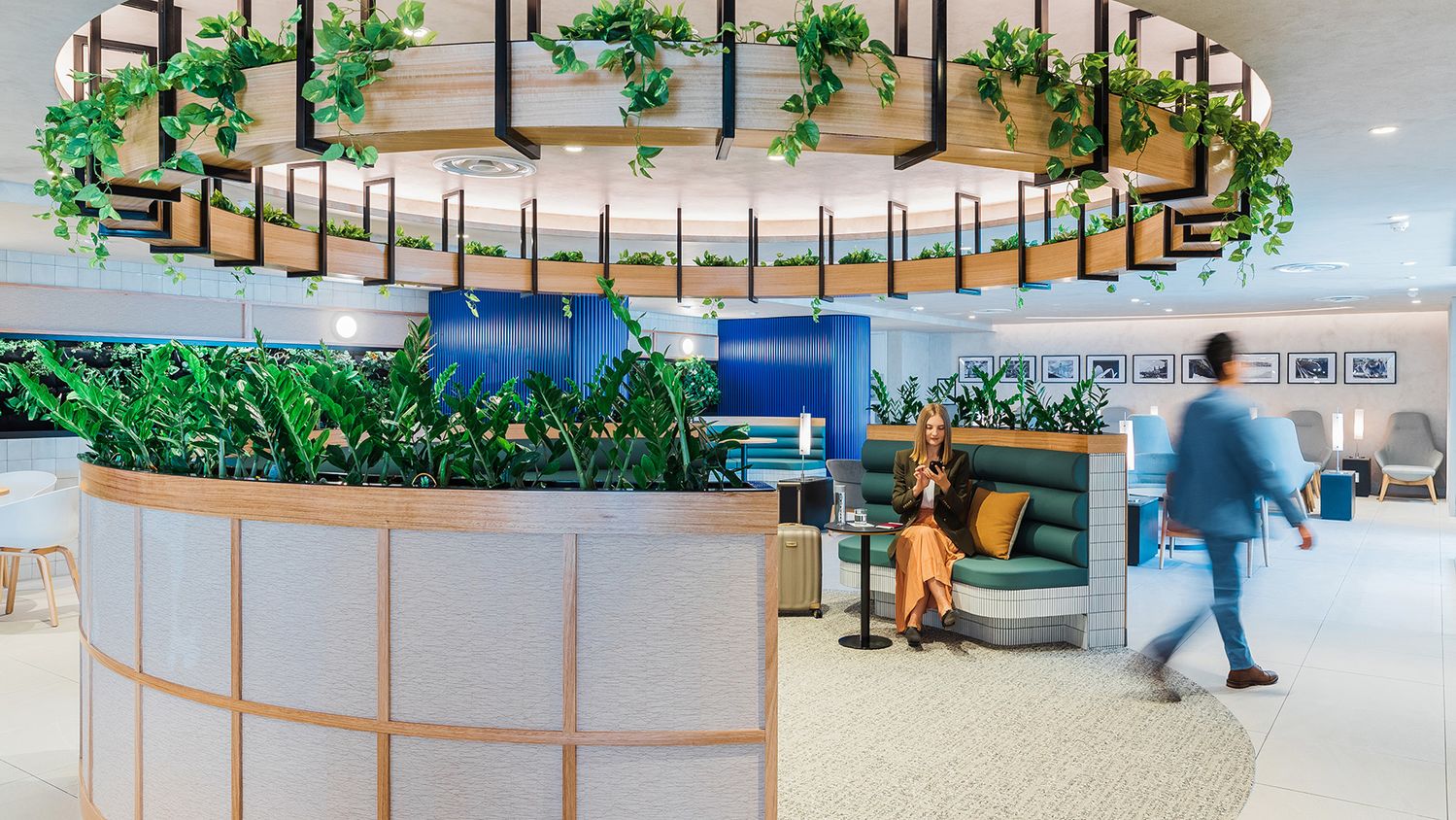
Korean Air doesn’t have its own lounge at Sydney and instead directs Prestige Class passengers to the SkyTeam Lounge near Gate 24.
The lounge wasn’t too busy ahead of the 8am departure of Korean Air’s daily flight, so I could easily find a seat.
It’s divided into distinct zones for dining, working and quiet relaxation, with floor-to-ceiling windows overlooking the apron and plenty of power outlets with AC, USB-A and USB-C ports.
The food and beverage offering combines a hot-and-cold buffet with a barista coffee station, and a typical Western breakfast spread complemented by congee.
As I would soon be eating breakfast on board the Korean Air flight, I skipped dining at the lounge and stuck to my morning coffee.
Showers are available on request at reception, and the Wi-Fi was adequate to clear emails before the gate call.
Seat
The Prestige Suites 2.0 retains the familiar forward-facing layout of Korean Air’s previous Boeing 777 and 787 business class.
Built on Collins Aerospace’s Horizon platform, the cabin is a single zone of nine rows in a 1-2-1 configuration so that every passenger has direct aisle access, with 36 suites in total.
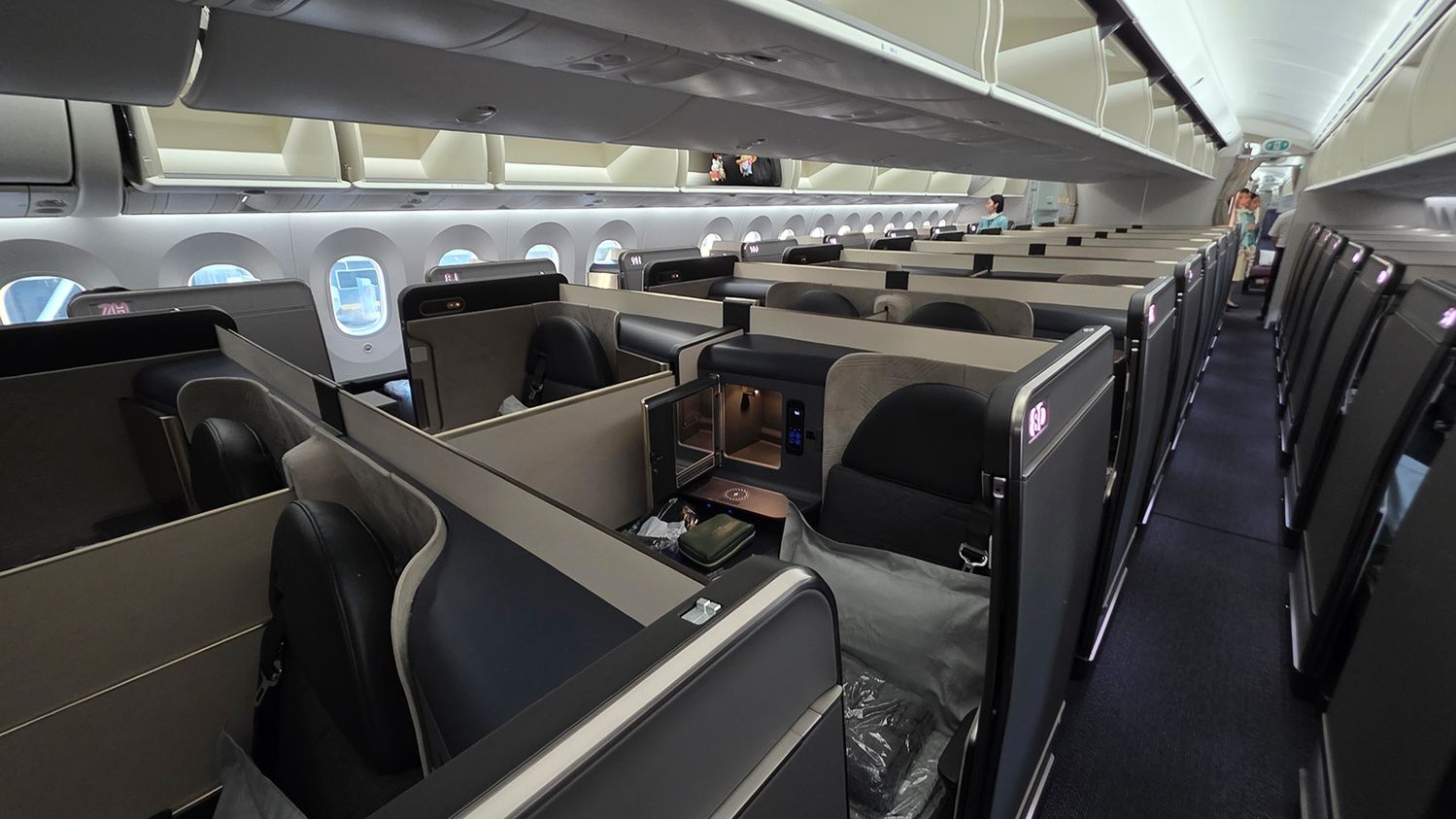
Gone is Korean Air’s signature sky-blue palette, replaced by porcelain cream, brassware gold and charcoal with brushed silver detailing, plus upholstery patterning drawn from the Korean textile art of jogakbo.
It’s a sophisticated design, even if some will miss the brightness of the old cabin.
The staggered layout makes informed seat selection very important.
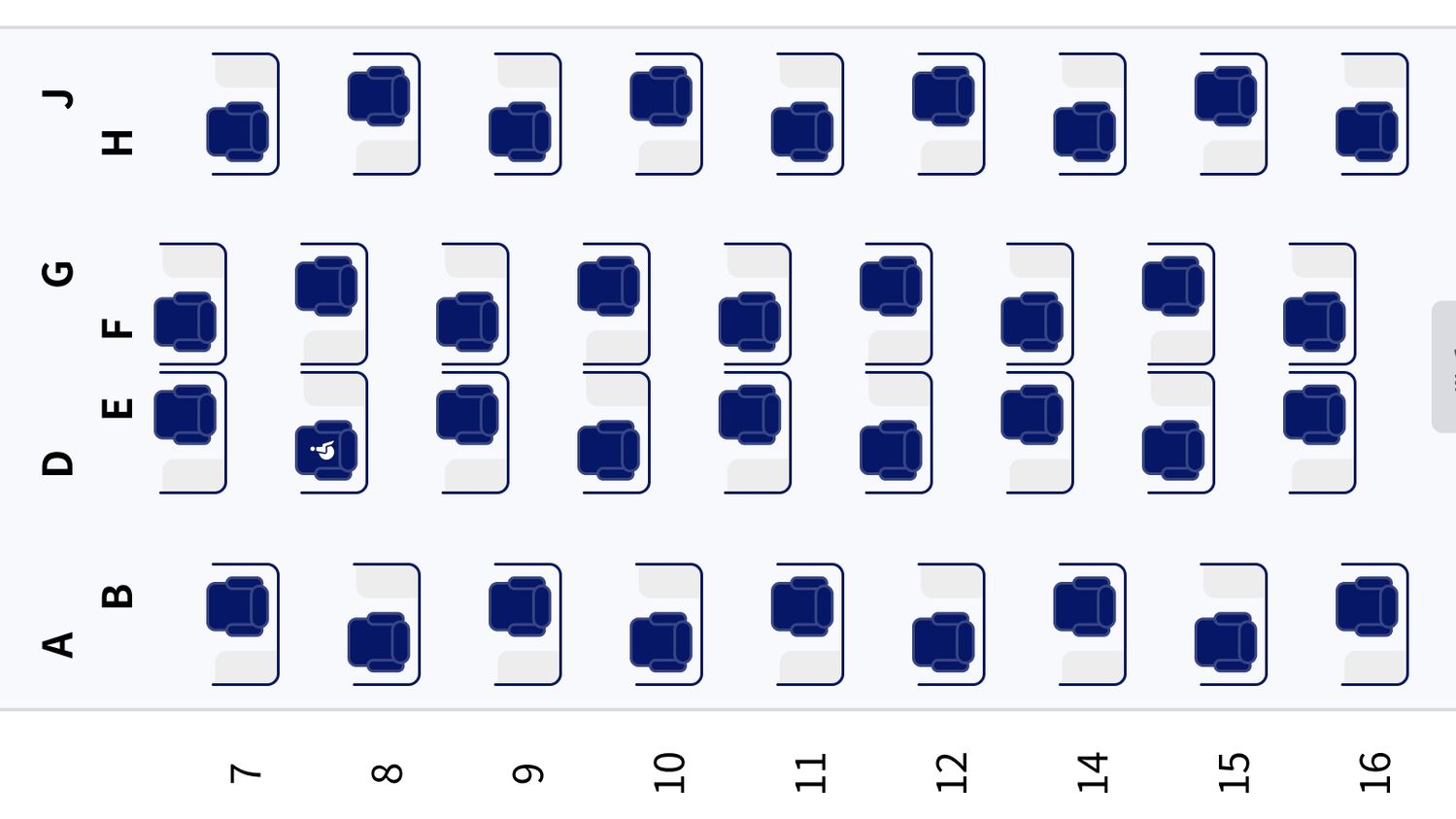
Choose an A or J seat in an even-numbered row to be sitting next to the window and furthest from the aisle.
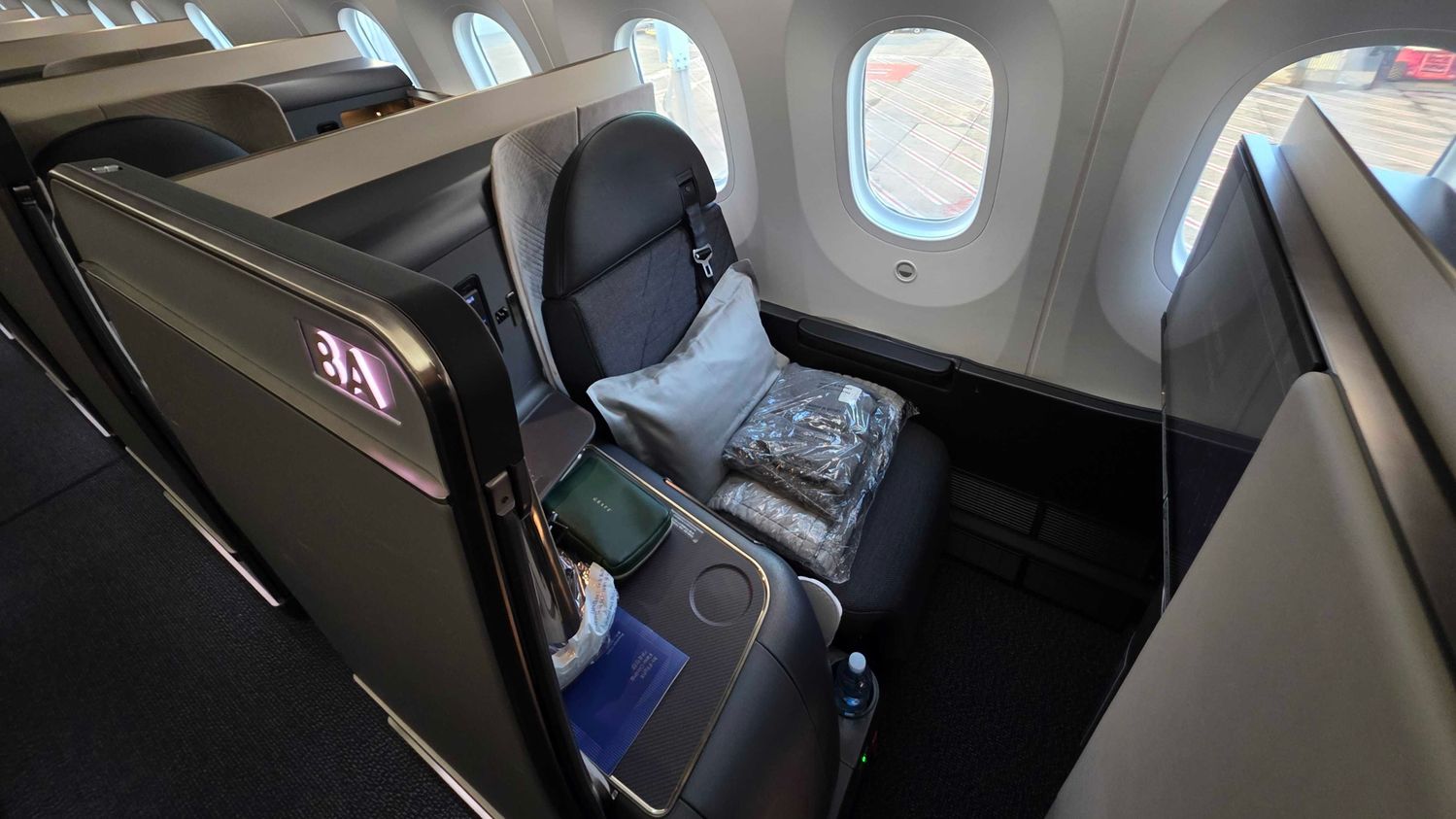
If you’d rather be next to the aisle and have that handy bench under the window, select a B or H seat in an odd-numbered row.
We were assigned seat 7B, in the very first row of the business class cabin.
Couples will gravitate to the centre pairs in odd-numbered rows E and F, where a “honeymoon" configuration draws the seats close together.
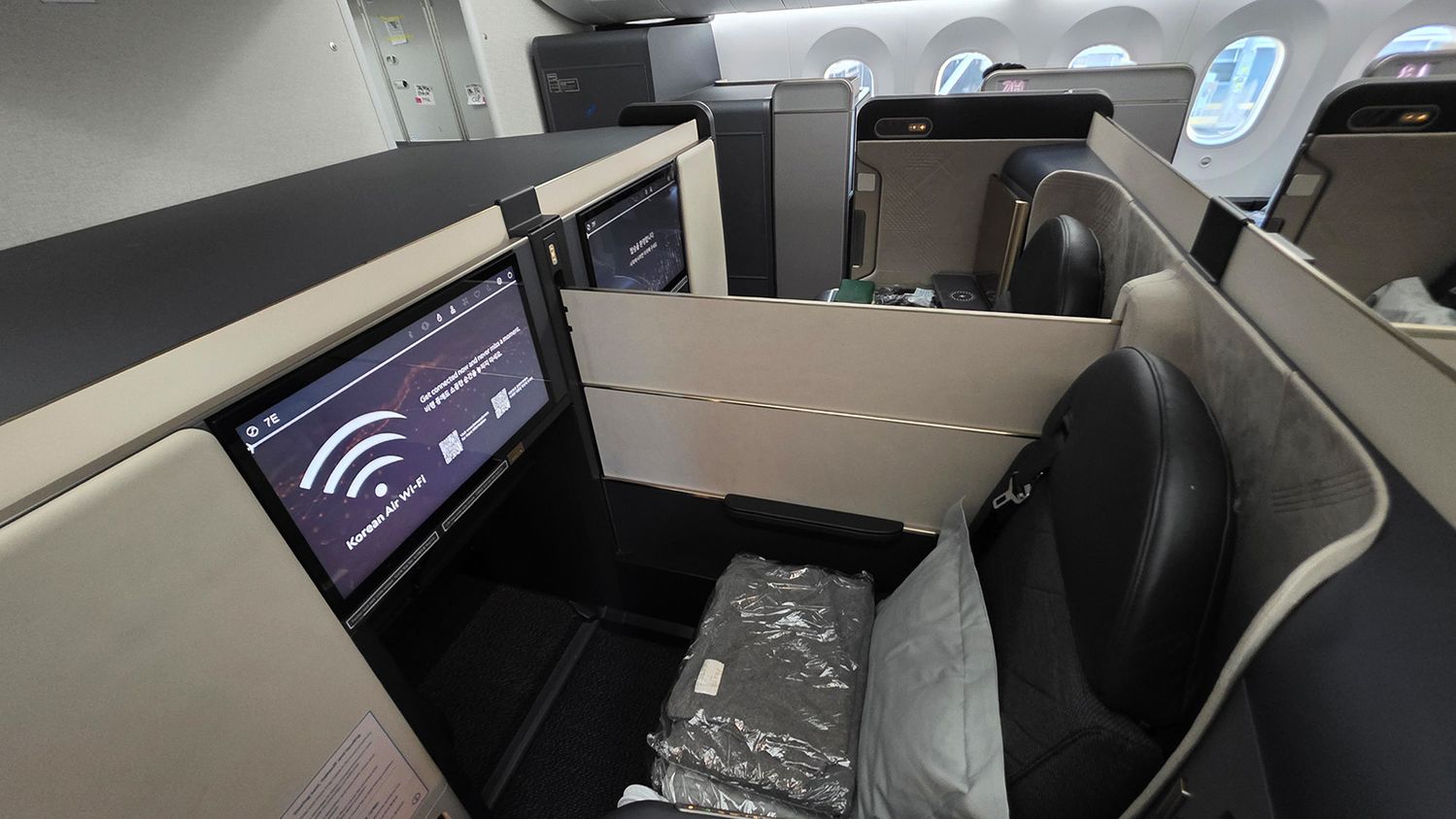
A central divider can be raised for privacy if needed, and when fully lowered, it creates a shared double bed.
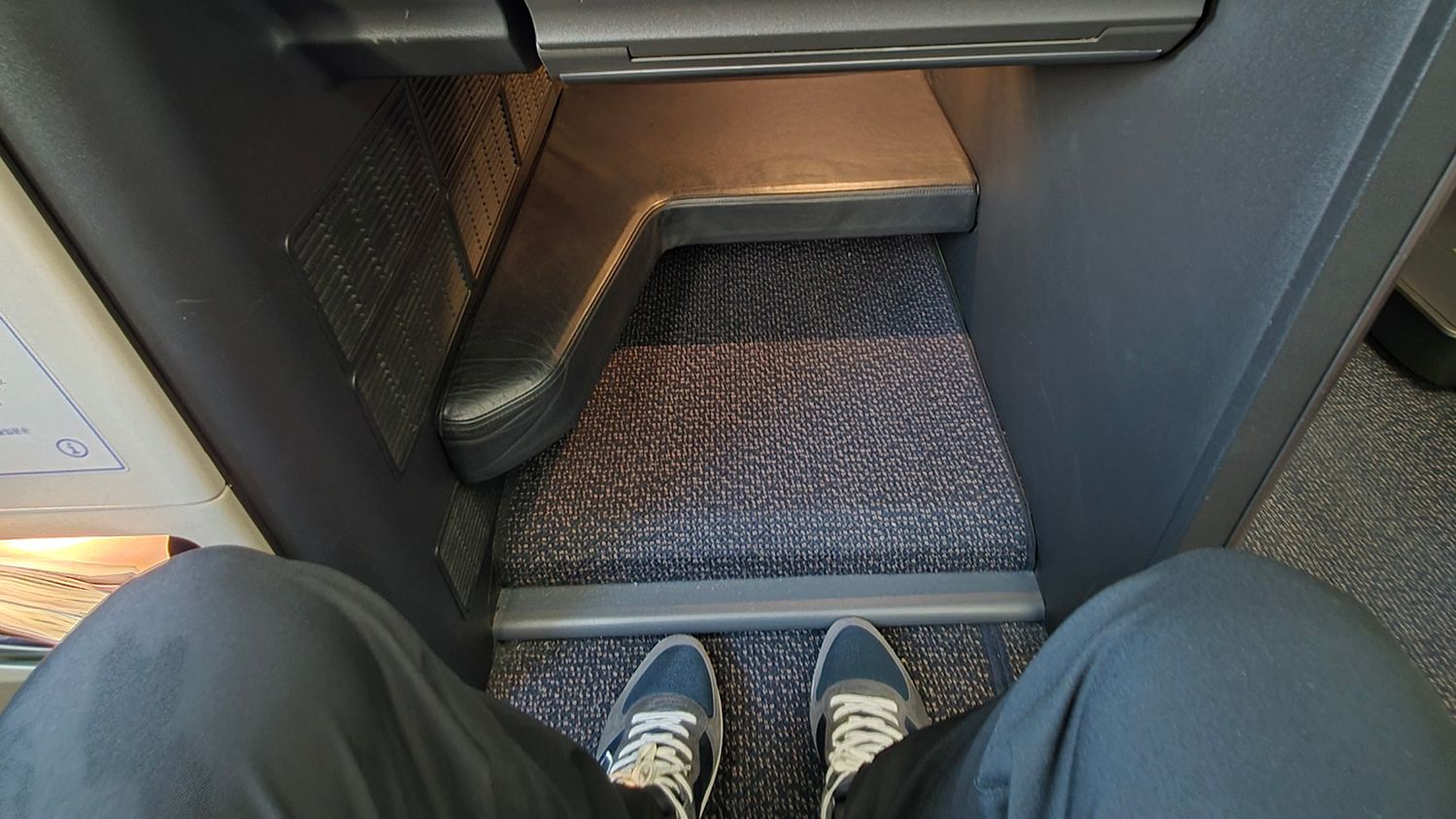
Window, aisle or middle, the seat in each Prestige Suite 2.0 measures 21 inches across at the hips, and converts to a fully flat bed of 78 inches.
The technology is where these suites really earn their stripes.
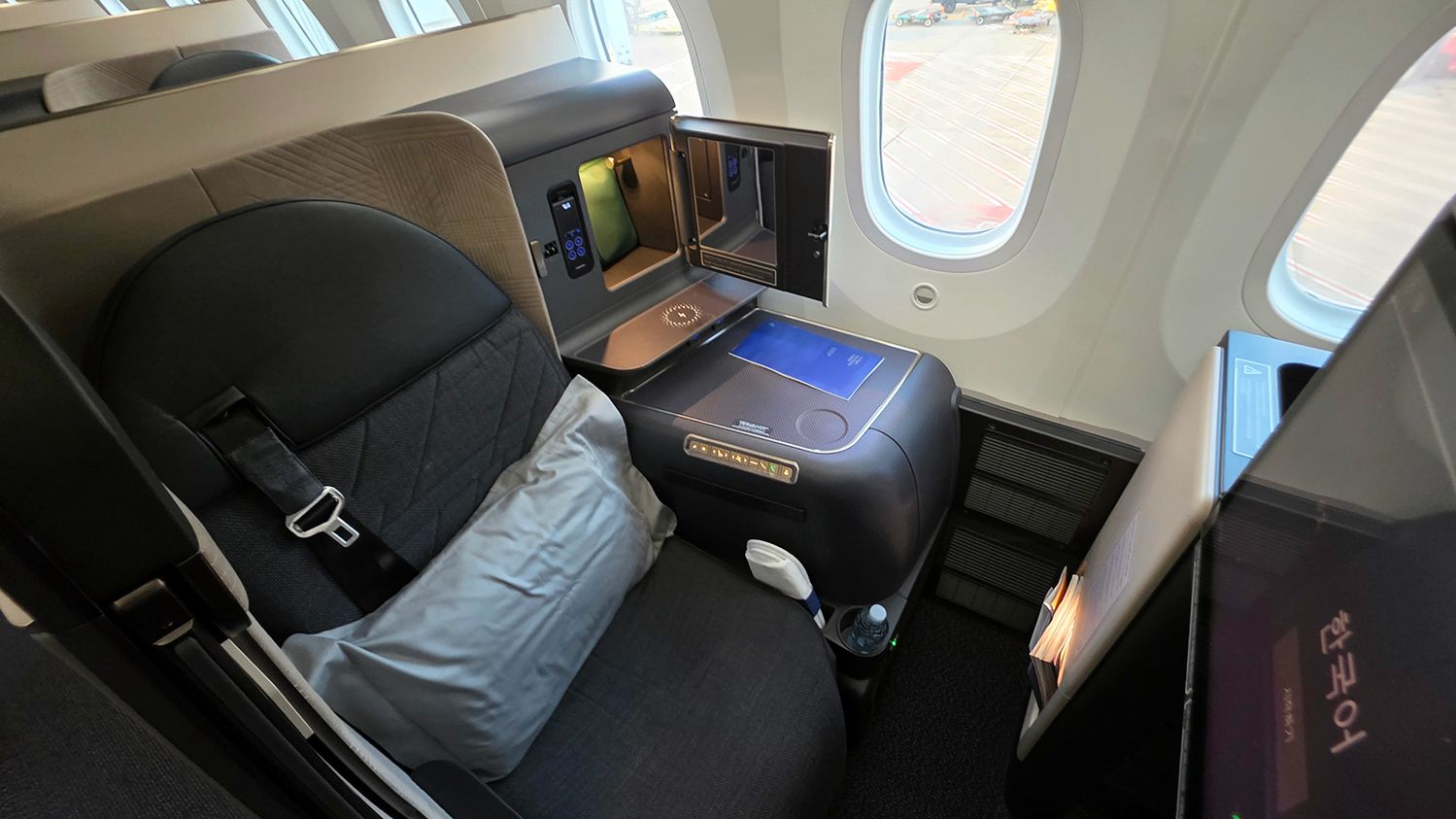
A universal AC outlet sits in the armrest, two high-speed USB-C ports are positioned beneath a wireless charging pad, and seat controls offer presets for taxi, lounge and bed modes.
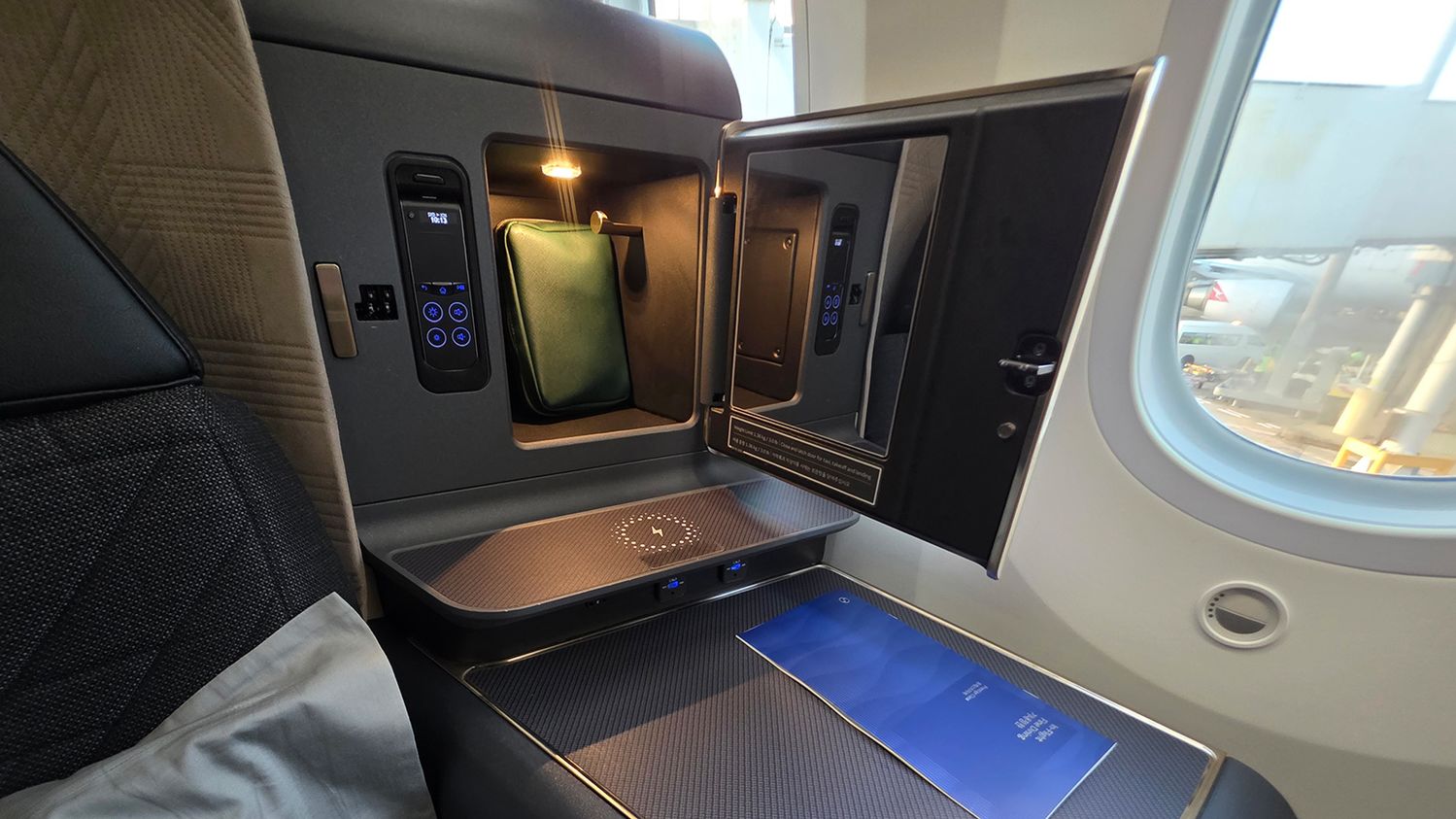
Storage is sensibly arranged, with a mirror, headphone hook and handheld controller tucked into the side cubby.
The 7B and 7H seats also have the unique advantage of a closeable compartment where the baby bassinet would usually be, so there’s lots of additional space to keep your things close at hand during the flight.
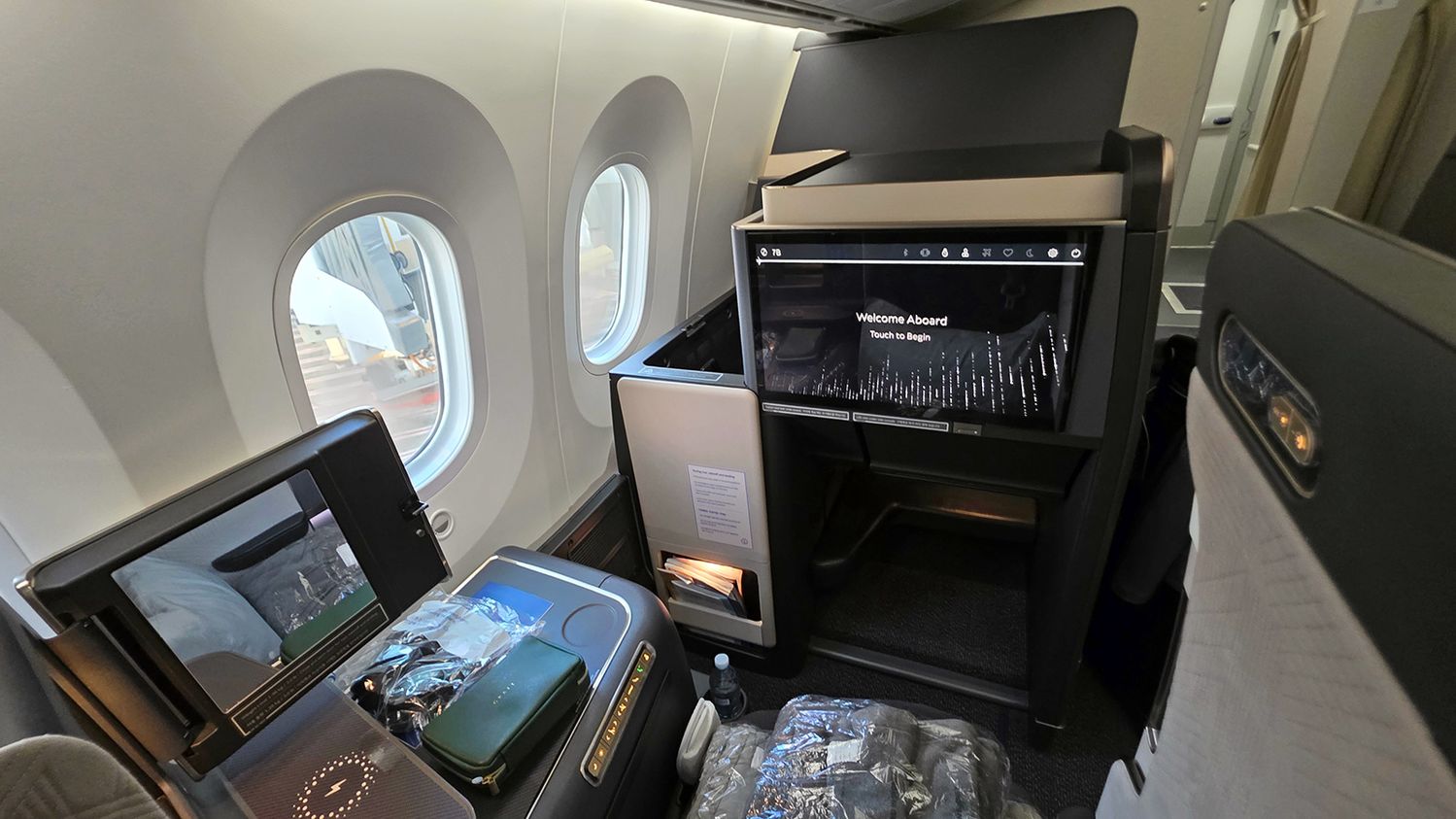
The 130cm-high sliding doors are the finishing touch to privacy on the Prestige Suites 2.0, but at the time of our flight (June 2026) they had to stay open because Korean Air was awaiting regulatory sign-off by the aviation authority.
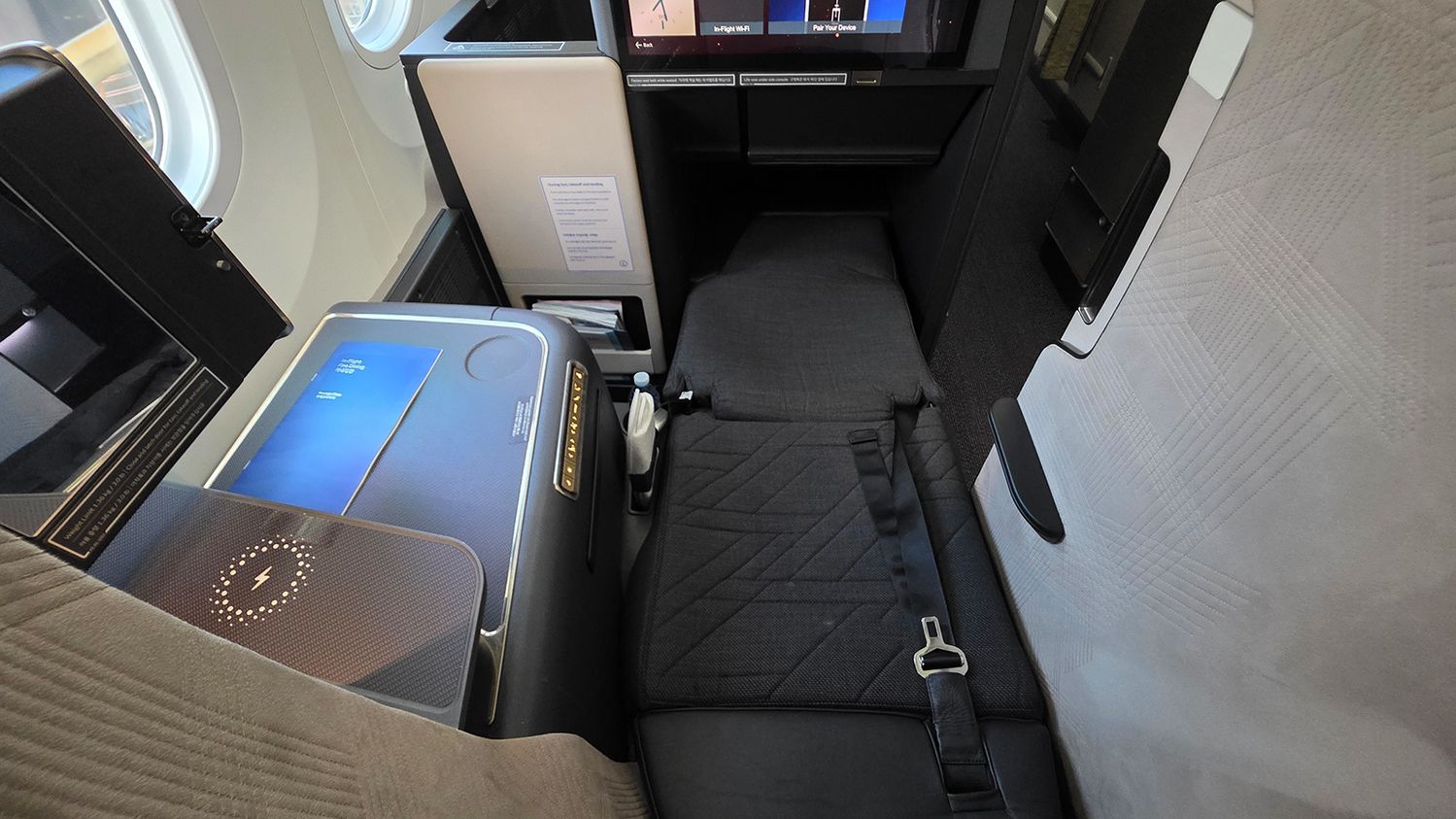
The seat itself converts into a 198-201cm long bed with enough leg oom to permit a comfortable roll-over.
The bedding is a clear step up from Korean Air’s older cabins, with a mattress topper, a blanket and a large, supportive pillow that make a real difference over a long sector. The one omission is pyjamas, which are not provided, although slippers are.
While Sydney-Seoul was a daytime flight, I easily managed to sleep for a couple of hours in the afternoon, to help take the edge off my early start.
Meal
Service began with a round of drinks and a snack mix. No champagne was offered before departure, most likely a function of the early 7:55am push-back.
The first service is the more elaborate of the two.
It opens with an amuse-bouche of smoked salmon roll with cream cheese, followed by an appetiser of Serrano ham with caramelised pear.
Those choosing a Western main are then served a cauliflower soup with the bread course before the main lands.
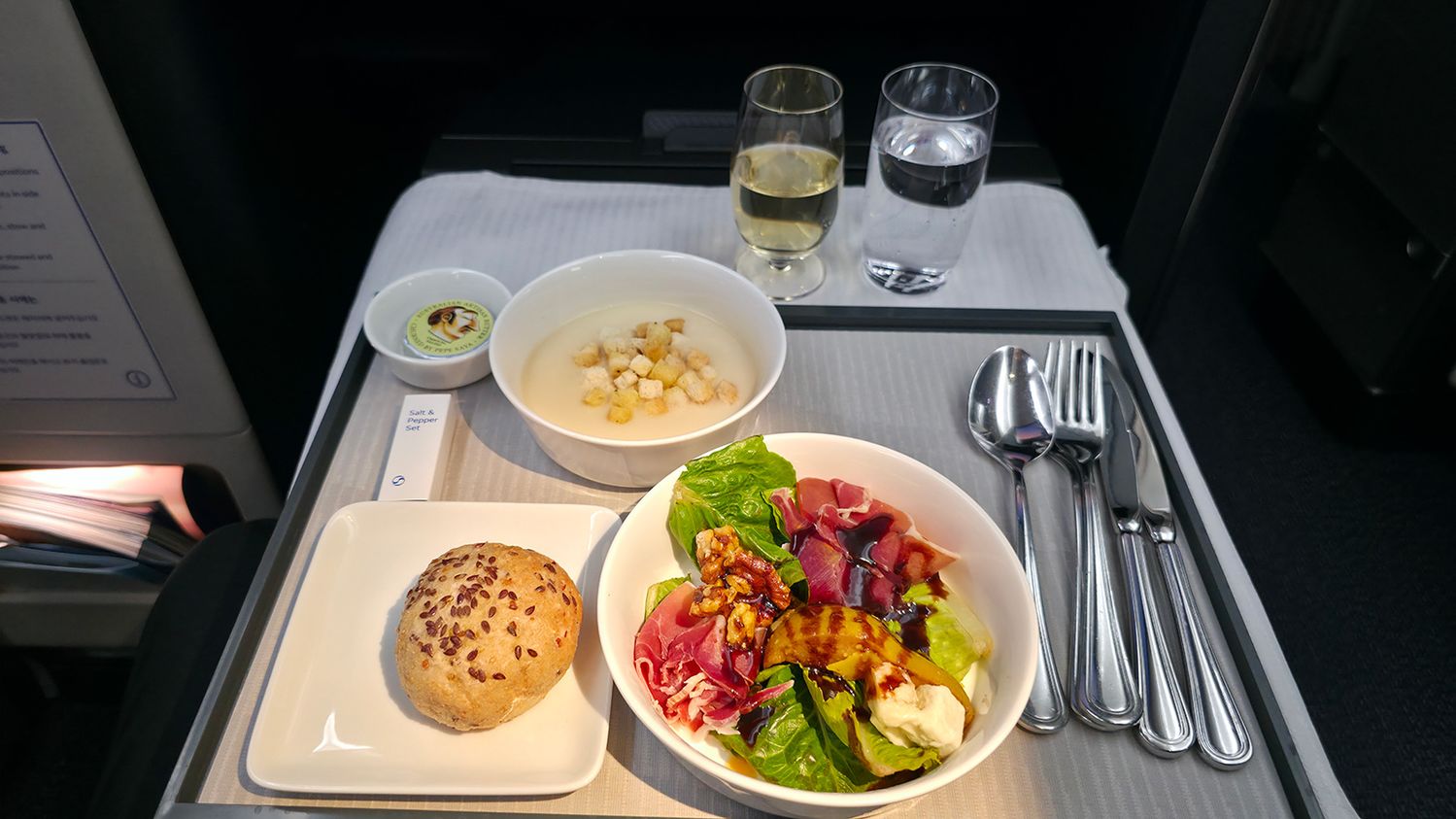
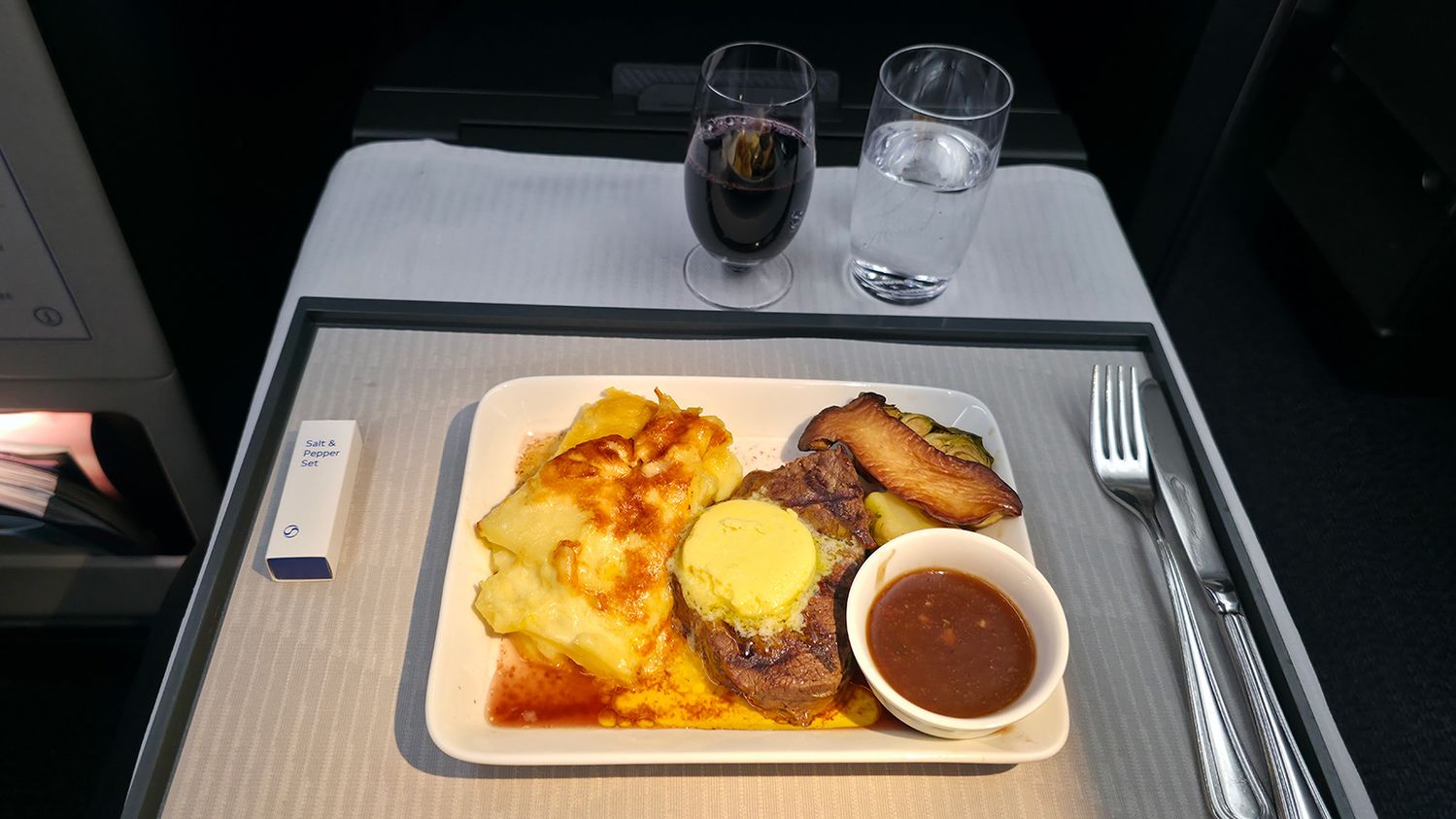
The three mains on this sector were bibimbap; seared beef tenderloin with potato gratin; and salmon papillote with vierge sauce.
I opted for the beef, which can be ordered medium or well done.
The attendants delivered a perfect medium steak on this flight, complete with a big dollop of butter on top.
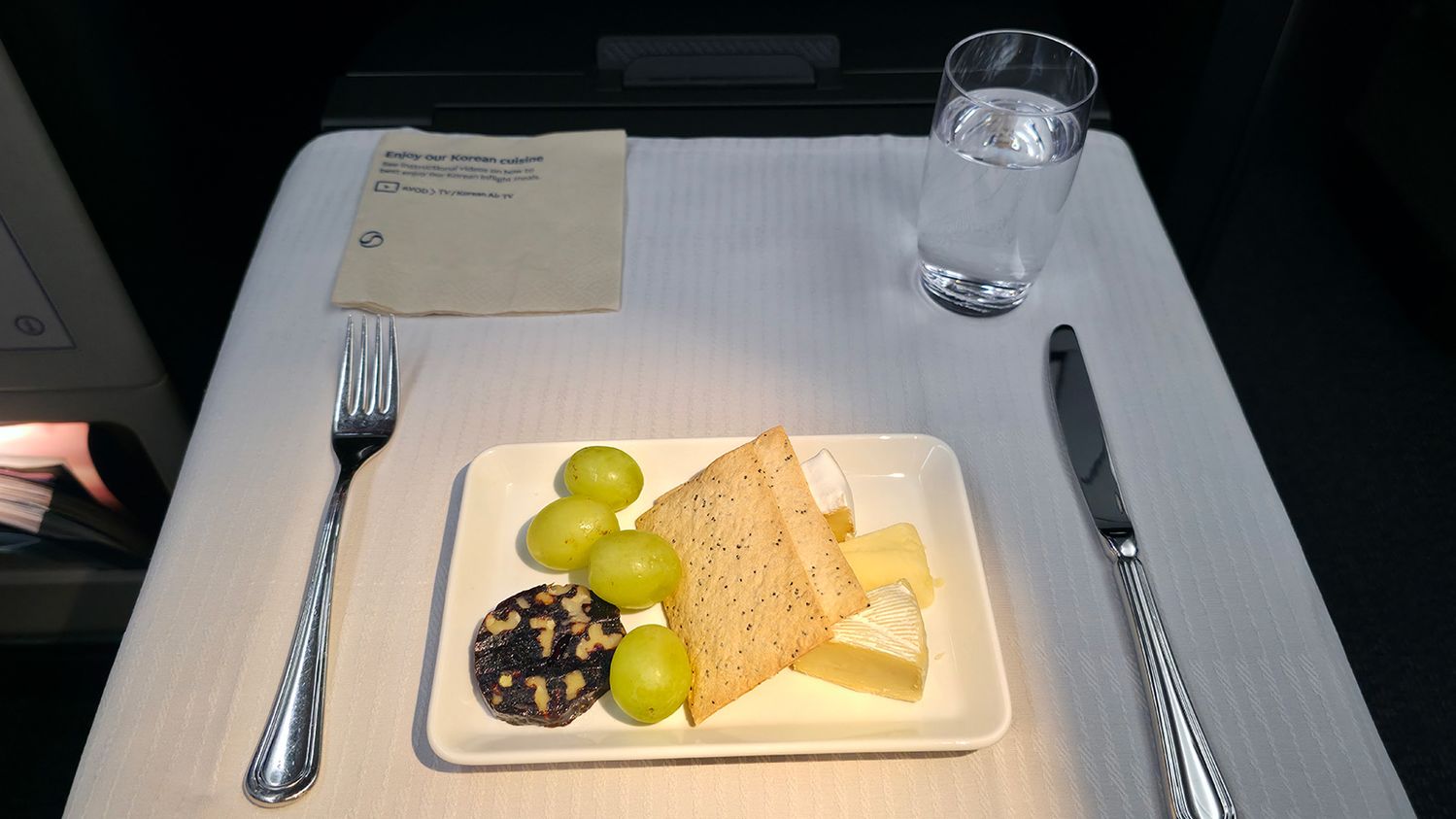
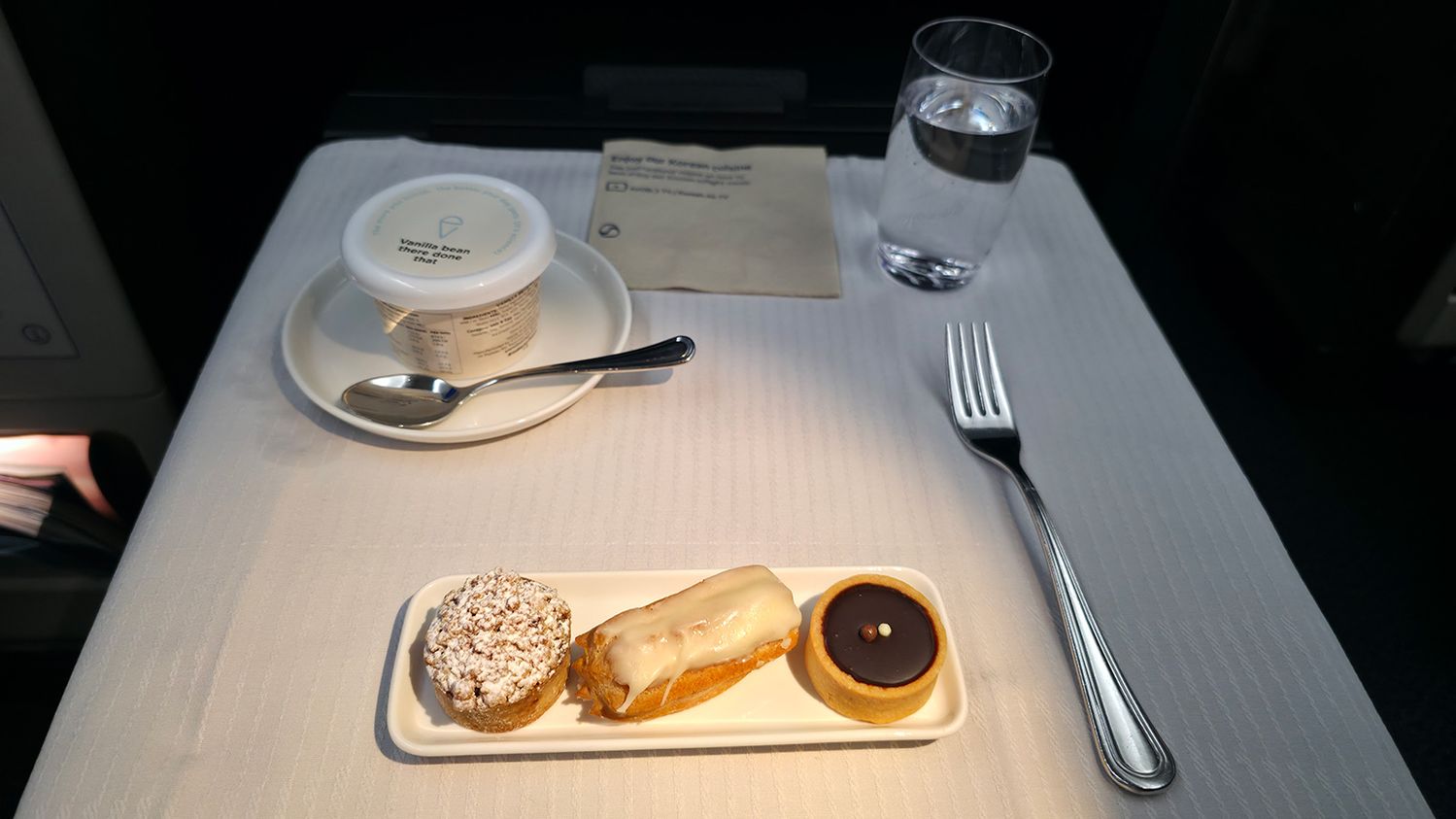
A cheese plate and a dessert with ice cream rounded out the meal.
There’s a refreshment menu of ramen, cookies, potato chips and roasted chestnuts for between services (but be warned: the ramen is quite spicy).
The wines are an all European affiar.
The champagne is a Pinot Noir-led Charles Mignon Comte de Marne from Épernay. The whites are a Jean-Marc Brocard Chablis Premier Cru and a Battenfeld Spanier Molsheim Riesling from the Rheinhessen.
The red wines on board were a Château Montus Rouge from Madiran and the M. Chapoutier Domaine de Bila-Haut L’esquerda from the Roussillon, both of which pair well with the heavier mains.
There’s also a high quality selection of spirits including Glenfiddich Perpetual Vat 1 single malt whisky and Remy Martin XO Cognac.
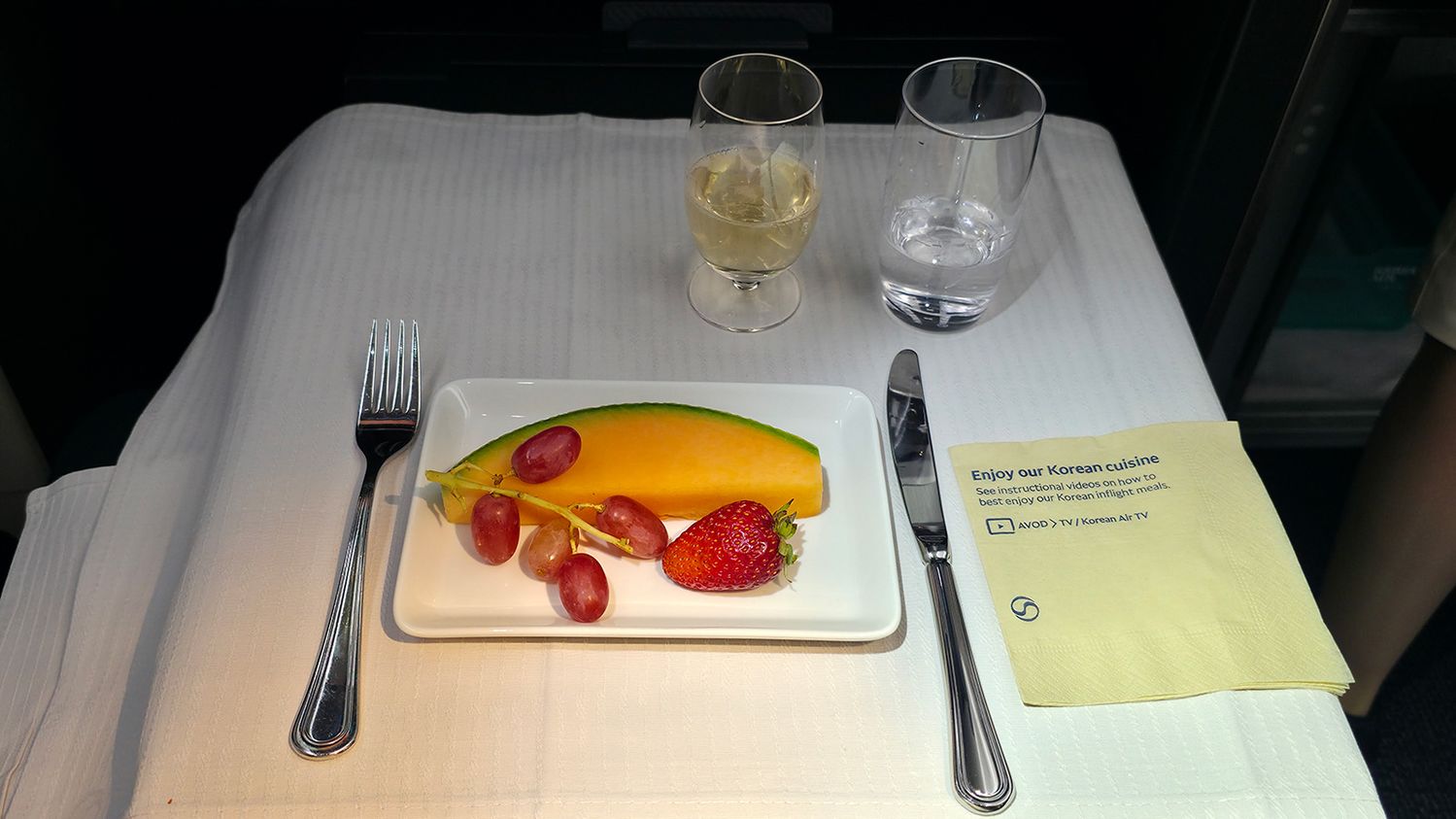
A second meal service is available about 90 minutes before landing at Incheon.
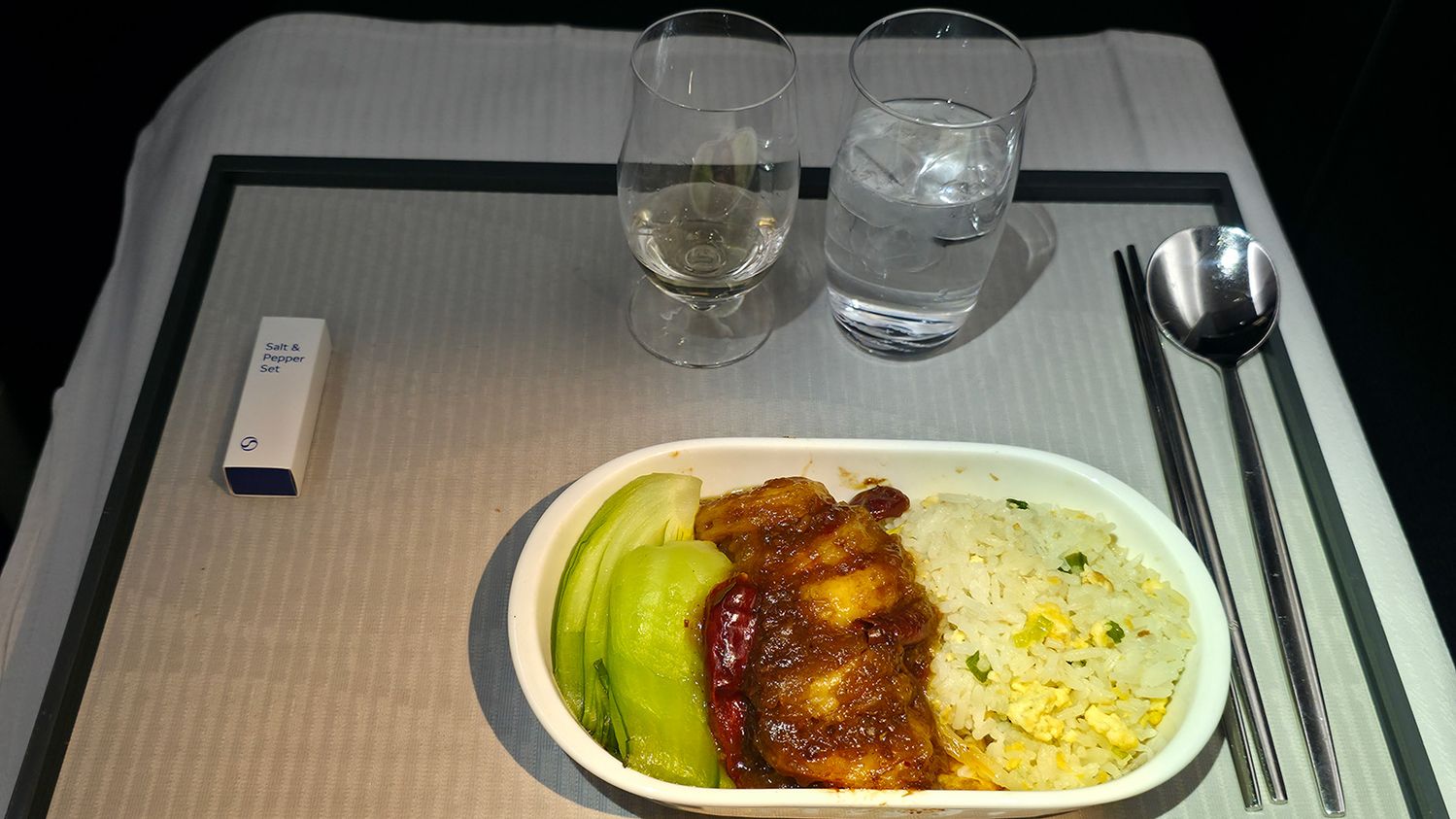
This is built around a mixed green salad and one of three mains: a Korean spicy beef short rib, a stir-fried kung pao prawn, and a mushroom risotto with seared chicken.
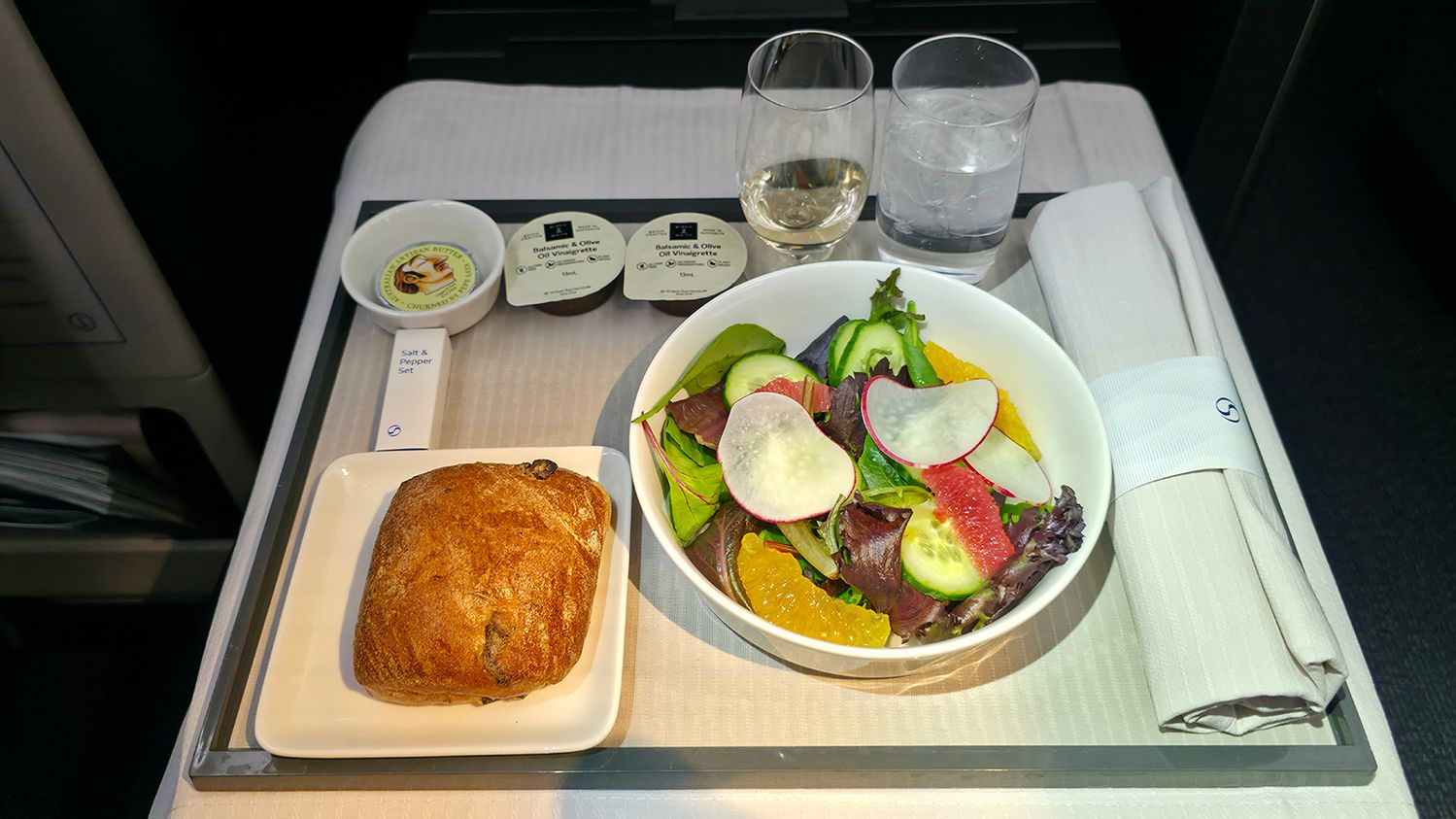
I chose the prawns, which proved quite a generous serving.
While this route doesn’t have the ability to pre-select meals, watch for that option when you are flying back from Seoul.
Entertainment & Service
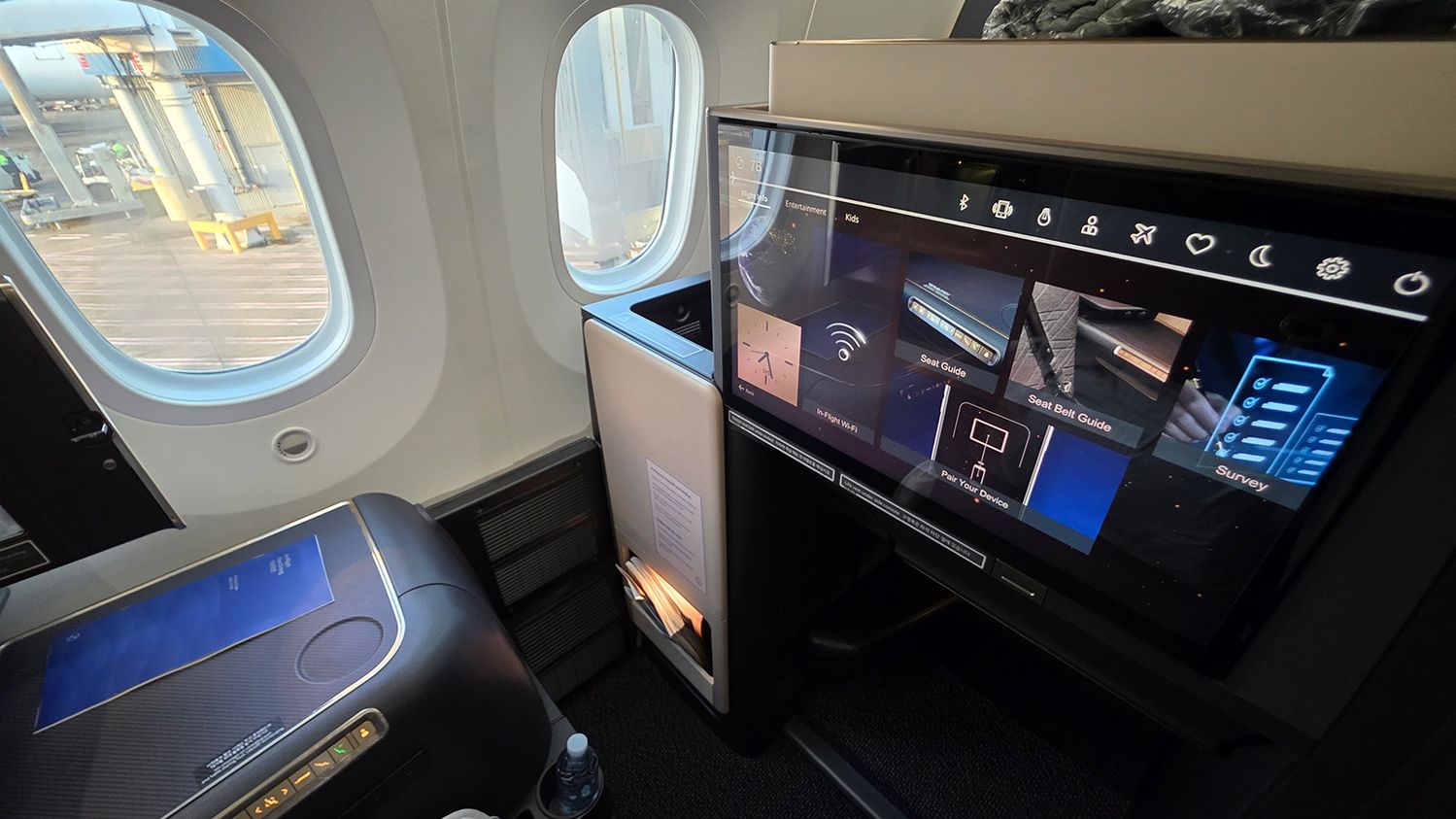
The 24-inch touchscreen is among the largest fitted to any business class seat flying today, and the picture quality is excellent.
It’s a 4K unit but keep in mind that many older shows are not available in a higher-resolution format to take advantage of the screen.
The library runs to hundreds of films and television titles.
The Asian catalogue is a real strength, of course, with a deep selection of Korean, Chinese, Japanese, and Hong Kong films, along with broader regional cinema.
The Western offering, by contrast, is where Korean Air has work to do, with fewer recent releases and a narrower spread of titles than passengers will find on most competing carriers.
Bluetooth pairing for personal headphones is quick and reliable, and the ability to pair a smartphone as a remote control is one of the smarter touches of this product. Korean Air provides basic plug-in noise-cancelling headphones, which were adequate.
Unlike many airlines, Wi-Fi isn’t included in the cost of your Korean Air business class ticket.
If you want to remain connected and tackle some work during your flight, Wi-Fi is sold in three tiers:
- US$5.95 for messaging across the entire flight
- US$10.95 for two hours of browsing
- US$20.95 for full Internet across the entire flight
Performance is another weak link here, with slow-but-workable speeds. Happily, Korean Air is working on upgrading the service to Starlink.
The three business class lavatories are kept fastidiously clean and stocked with shaving kits and mouthwash sachets.
The amenity kit, designed by British jeweller Graff, is presented in a smart pouch and contains an eye mask, earplugs, socks, a dental kit, and a citrus-floral selection of lip balm, hand cream and eau de toilette.
The crew on our flight worked the cabin with quiet diligence: proactive drink refills, unsolicited turndown service, and consistent attention throughout.
In summary: Korean Air’s Prestige Suites 2.0 is one of the best business class products flying today. We loved the design of these forward-facing suites, the large 24-inch 4K screen and sleep-friendly bedding. The food is great, and the wine list a genuine highlight.
The only real shortcomings – once the airline is allowed to close the privacy doors – are slow paid Wi-Fi, and no pyjamas being supplied. Both of these can and should be addressed.
But neither takes much shine off the experience: if you’re flying between Sydney and Seoul, this is a superb way to travel, and a major step up for Korean Air.
The author travelled as a guest of Korean Air.

Hi Guest, join in the discussion on Korean Air Prestige Suites 2.0 Business Class