How Cathay Pacific is flying towards a greener future
The challenge of sustainability spans from the engines on a jet to the leftovers from an in-flight meal.
By Staff Writers, November 18 2025

Green is as much a signature colour of Cathay Pacific as the calligraphic ‘brushwing’ logo, but the airline also has aspirations to become Asia’s greenest carrier through its environmental credentials.
That’s no easy task for any airline, given that flying planes is by nature a carbon-intensive activity.
So Cathay is starting with modernising its fleet around more fuel-efficient jets, such as the Airbus A321neo and A350 series, and the forthcoming order for 30 mid-sized A330neo planes.
In addition, from 2027 the airline will begin replacing its ageing Boeing 747 cargo jets with Airbus A350F freighters.
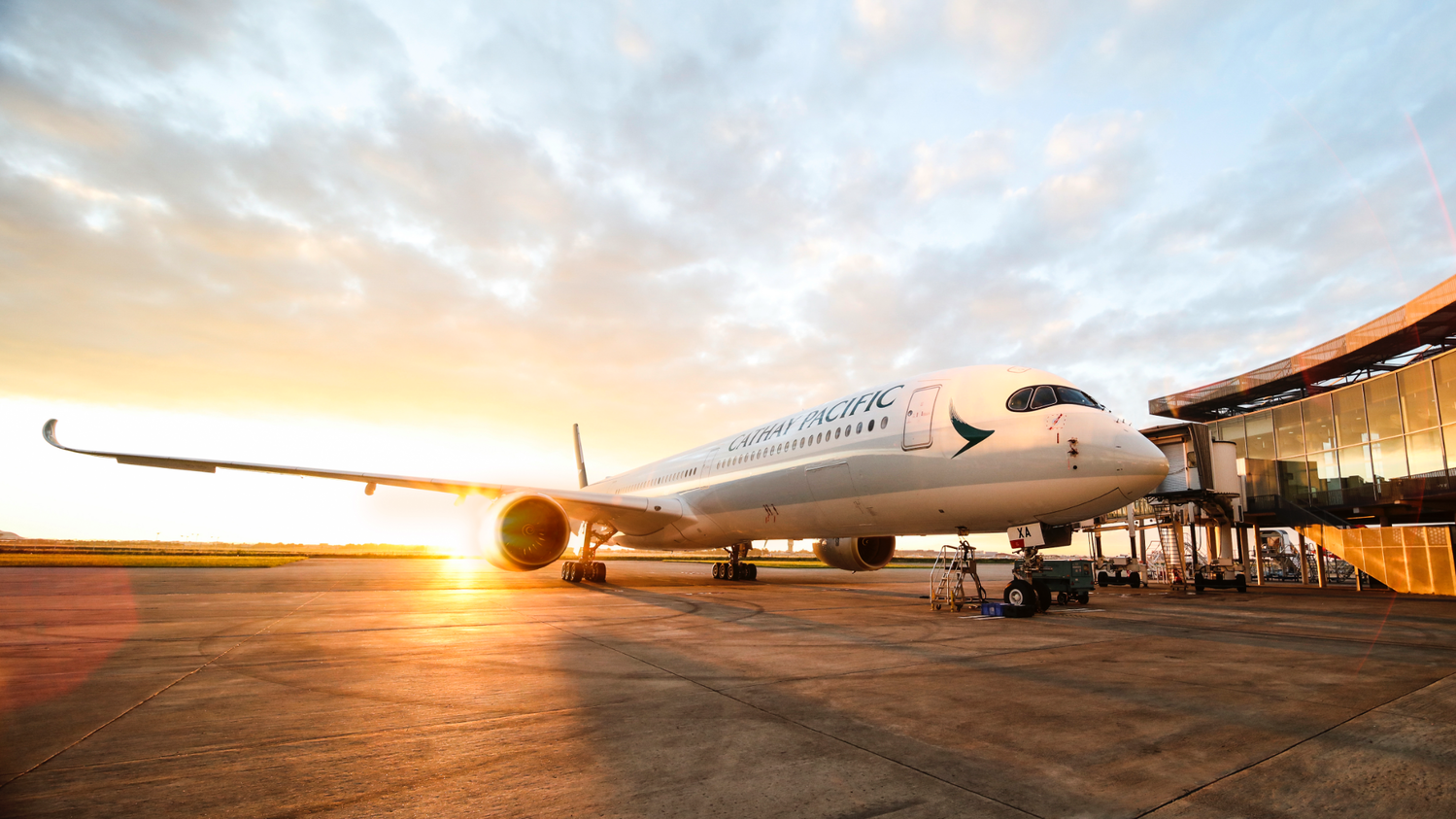
Cathay Pacific's modern fleet of Airbus jets reduce emissions and can run on 50% SAF.
Next comes making the jet fuel itself better for the environment.
All Airbus aircraft can already operate with up to 50% Sustainable Aviation Fuel (SAF), with the aim to increase this to 100% by 2030, while Cathay was among the first airlines in Asia to commit to using SAF for 10% of its jet fuel consumption by 2030.
Some Cathay Pacific flights departing from Hong Kong International Airport already run on a mix of conventional aviation fuel and SAF converted from used cooking oil.
Cathay and Airbus are also working together on a joint investment agreement of up to US$70 million to accelerate the development of SAF production in Asia and globally towards 2030 and beyond.

Cathay Pacific continues to invest in near-term and long-term SAF development.
“SAF remains the most important lever for Cathay and the wider aviation industry to drive toward our common decarbonisation goals,” explains Alex McGowan, Cathay’s Chief Operations and Service Delivery Officer.
McGowan says the Cathay-Airbus partnership is intended to help drive “a more scalable SAF industry in the near term.”
At the same time, Cathay is a cornerstone investor in a partnership between the Oneworld airline alliance and Breakthrough Energy Ventures to accelerate the development of early-stage ‘next-generation’ Sustainable Aviation Fuel technologies across the longer term.
“As an airline with significant long-haul operations, scaling innovation to make SAF more accessible and cost-competitive is critical to Cathay Pacific’s future,” notes Cathay Group CEO Ronald Lam, adding that the goal is to “build a resilient and scalable SAF ecosystem.”

For Cathay Pacific, sustainability is an end-to-end experience across the entire journey.
But planes and fuel are not the only pieces in the sustainability puzzle, even if they are the largest ones.
Cathay aims to decrease passenger-facing single-use plastic items from an average of 7.7 pieces per passenger in 2019 to just 1.5 pieces this year, while also ensuring at least 50% of those remaining single-use plastic items are made with recycled plastic.
Already, all water bottles on outbound flights from Hong Kong are made with 100% recycled plastic.
To further reduce plastic waste, the airline has been exploring alternative materials, such as recycled paper for wrapping headphones and blankets.
Trials are underway on more reusable serviceware in the economy cabin to minimise single-use items inflight.
At the same time, cabin waste is on track to reach just 0.63 kg per passenger by 2030 – a staggering 30% reduction from the 2019 baseline.

At Hong Kong, even food waste is now being converted into electricity.
Behind the scenes, the Cathay Dining flight kitchen this year unveiled an innovative system to support the recycling of inbound food waste.
Dedicated conveyors and compactors segregate food waste from general waste, with the collected food waste transferred to a nearby organic resources recovery centre for anaerobic digestion and electricity generation, contributing to enough surplus electricity to power some 8,000 households annually.
Cathay’s sustainability drive encompasses every part of the company, in keeping with its collaborative ethos of “Greener Together”.