

The Qantas A380s are finally getting Wi-Fi
Qantas expects to have Wi-Fi across its international fleet by April 2027.
By David Flynn, July 10 2026

With all of its Boeing 787s now kitted out with Wi-Fi, Qantas is turning its attention to the big Airbus A380s which dominate flagship routes to Singapore, London and Los Angeles, along with Johannesburg and Dallas–Fort Worth.
Soon, travellers heading from Sydney to London via Singapore will no longer be disconnected and in the dark on that 22-hour journey, barring a short stopover at Changi Airport.
The ten superjumbos are among the last pieces in the Flying Kangaroo’s international Wi-Fi puzzle, which it previously promised would be complete by the end of 2025.
Now it’s an early-to-mid 2027 proposition, says Qantas International CEO Cam Wallace, who says “we accept this has been a long time coming.”
“Most of our A330s are done, and we did have a small delay on our A380s because some of those were historically going to get done in the Middle East, so we pushed those back.”
“So within the next nine months, we should have all our international fleet with Wi-Fi enabled, and that’s going to be a real game changer.”
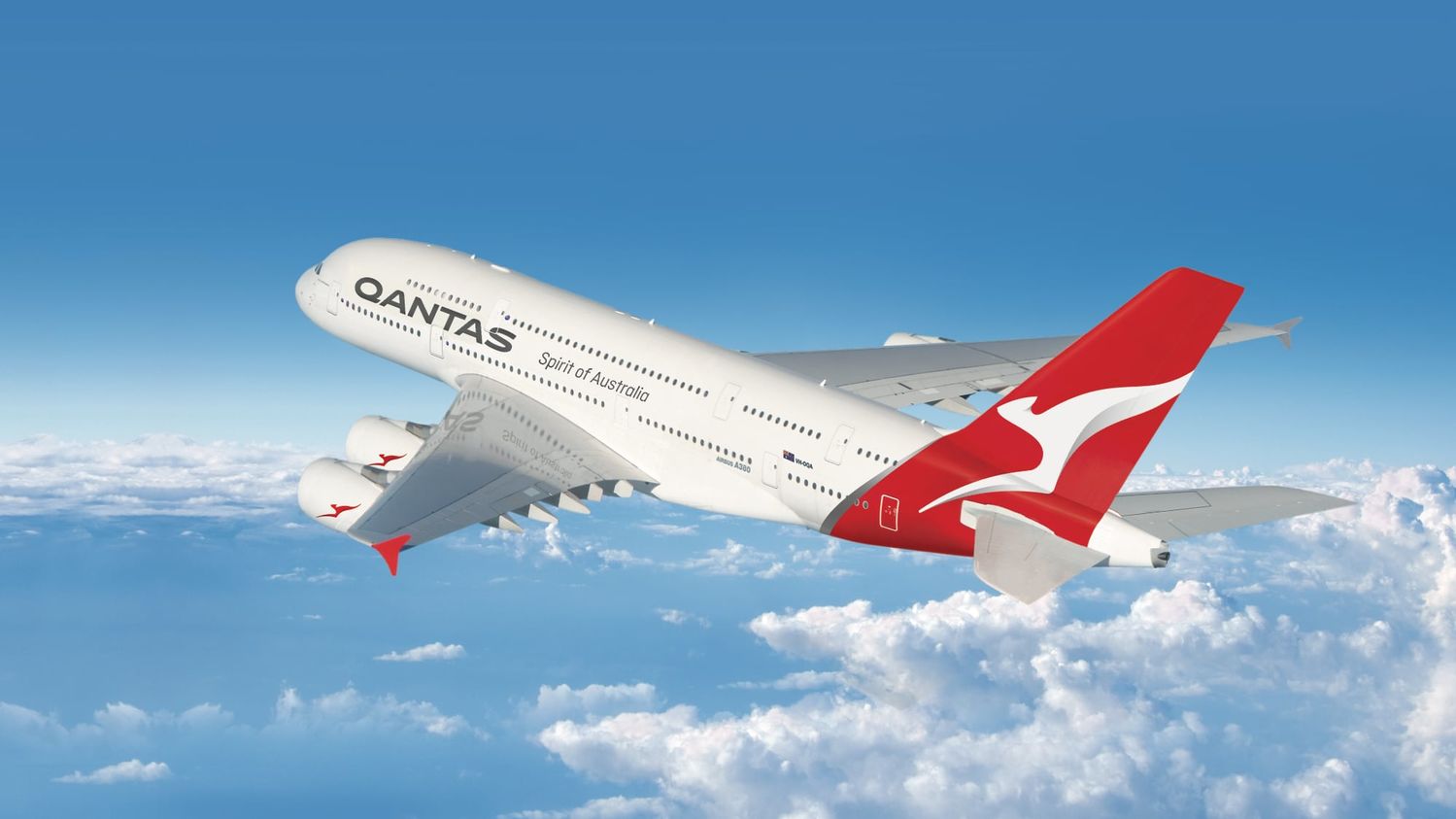
The Qantas A380s will be able to tap into new broadband-grade satellites.
Inflight Internet access will continue to be free to all passengers, from seat 1A in first class to the last row of economy, but speed will be largely determined by where the aircraft is flying and which satellite in the global ViaSat network it’s connected to.
Downloads on recent Boeing 787 flights have ranged from a modest 10Mbps to a solid 50–100Mbps, especially when in the North American footprint of the newest ViaSat-3 constellation.
This relies on a trio of high-capacity ‘broadband satellites’ parked in orbit some 36,000km above Earth, with F1 over the Americas.
“Qantas is (already) leveraging ViaSat-3 F1 connectivity today on certain routes that enter its coverage area,” a ViaSat spokesperson tells Executive Traveller.

A trio of high-speed ViaSat-3 satellites are now in orbit.
“Passengers are seeing strong, consistent performance that supports high-quality streaming, browsing and real-time applications across multiple devices.”
ViaSat is now testing the F3 satellite, which launched in late April 2026 with coverage of the Asia-Pacific region, ahead of being fully switched on by September.
“Qantas will be among the first airlines to leverage this next-generation satellite in the region,” the ViaSat spokesperson says, adding that “each of the new ViaSat-3 satellites is expected to support more bandwidth capacity than our entire existing satellite fleet.”
Also read: Qantas A350 early flights – Sydney-Melbourne, Auckland, LAX

Hi Guest, join in the discussion on The Qantas A380s are finally getting Wi-Fi