

Do Qantas’ non-stop London, NY flights really need economy class?
We’ll soon find out just how appealing it’ll be to spend 20+ hour flying in economy.
By David Flynn, July 13 2026
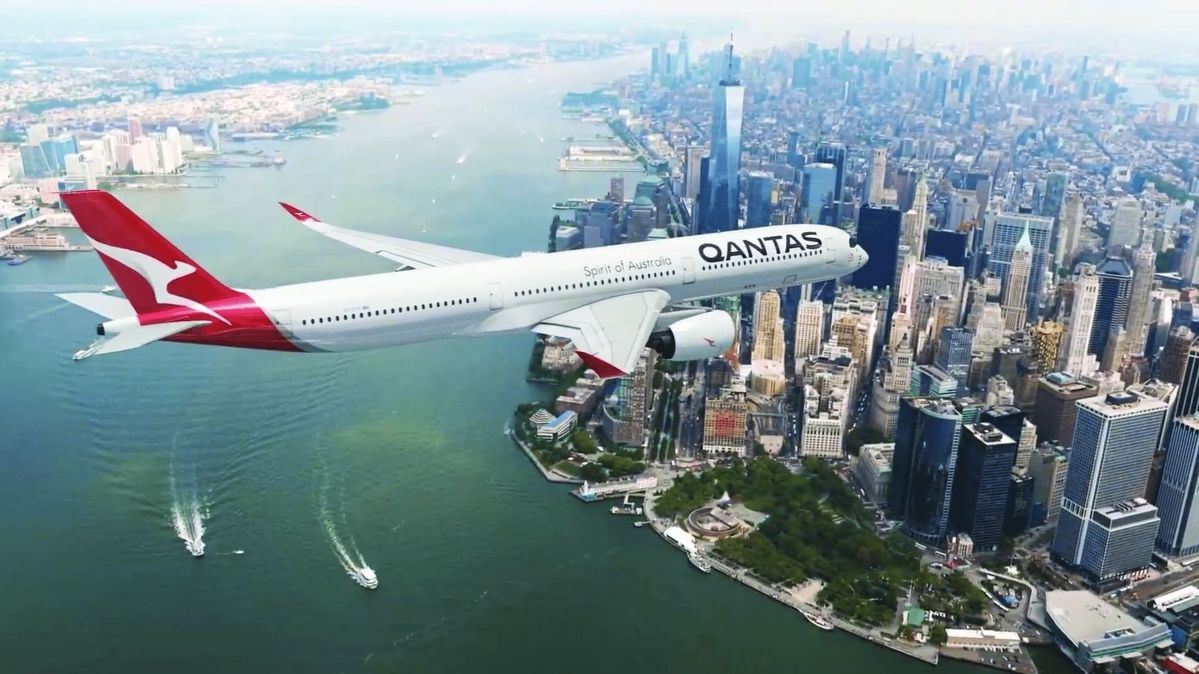
Today, the world’s longest flights – Singapore Airlines’ daily services between Singapore and New York, to both JFK and city-adjacent Newark airports – are aloft for 18 to 19 hours.
Step on board, and you’ll see only two types of seating: business class and premium economy.
There’s no first class (although a refit to add private first class suites is on the cards), and definitely no economy class.
Next year, Qantas will steal that crown with non-stop flights from Sydney to London and New York, stretching up to 22 hours.
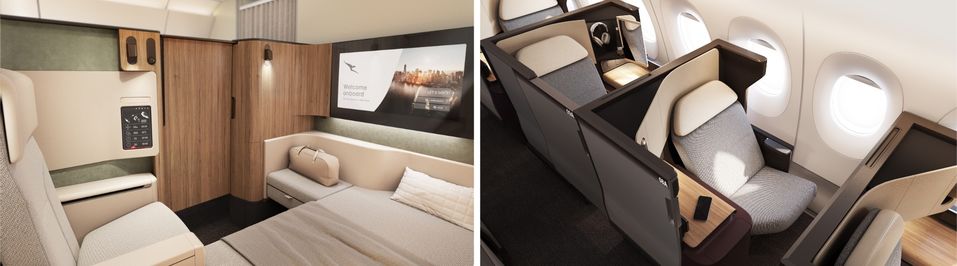 Not every Project Sunrise passenger will be up the pointy end of the plane...
And in addition to cosy first and business class suites and premium economy recliners, those custom-built Airbus A350-1000 jets will also carry 140 economy seats.
Economy legroom will vary from a relaxed 34” down to a tight 32”, with an innovative Wellbeing Zone where passengers can stand and stretch.
But does economy class belong on these globe-striding Project Sunrise marathons?
After all, passengers will essentially be sitting upright for almost a full 24 hours, barring self-motivated stints in that Wellbeing Zone.
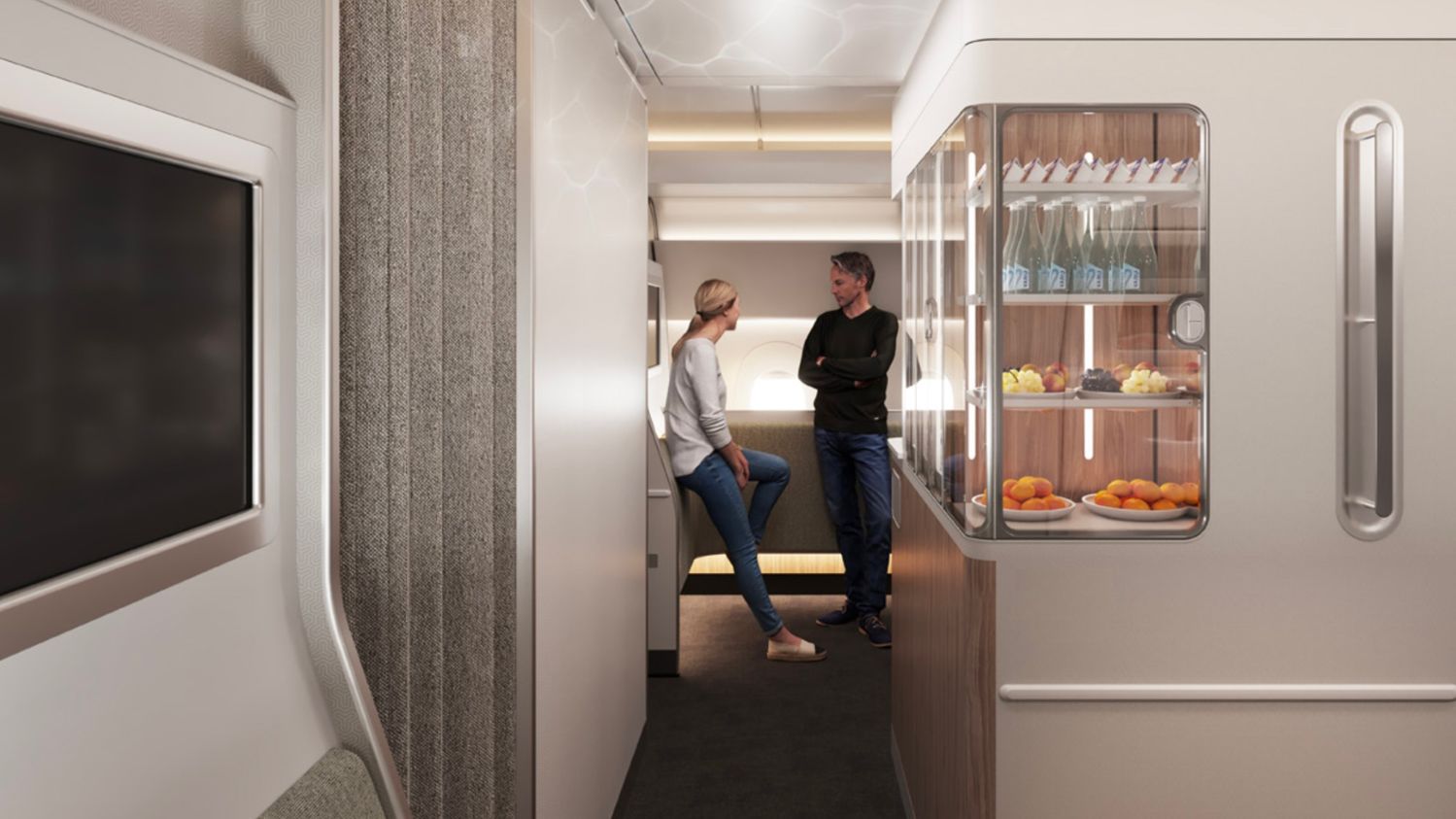
Qantas' innovative Wellbeing Zone.
It sounds more like a gruelling endurance test than the beginning of a relaxing holiday.
How confident is Qantas that it’ll fill those seats – why are they there in the first place – and could they be scrapped if the bookings don’t eventuate and the numbers don’t pan out?
Executive Traveller put those questions to Qantas Group CEO Vanessa Hudson, Qantas International CEO Cam Wallace, and Qantas’ A350 cabin designer David Caon on the sidelines of a Project Sunrise media briefing held in Toulouse, the home of Airbus, last month.
Developing the Project Sunrise A350 layout
Did Qantas ever consider an A350-1000 Project Sunrise layout without economy – a purely premium three-cabin layout of first, business and premium economy?
“Absolutely,” asserts Hudson, who as Qantas’ Chief Financial Officer worked closely on the project alongside then-CEO Alan Joyce, before she took the reins of the Flying Kangaroo.
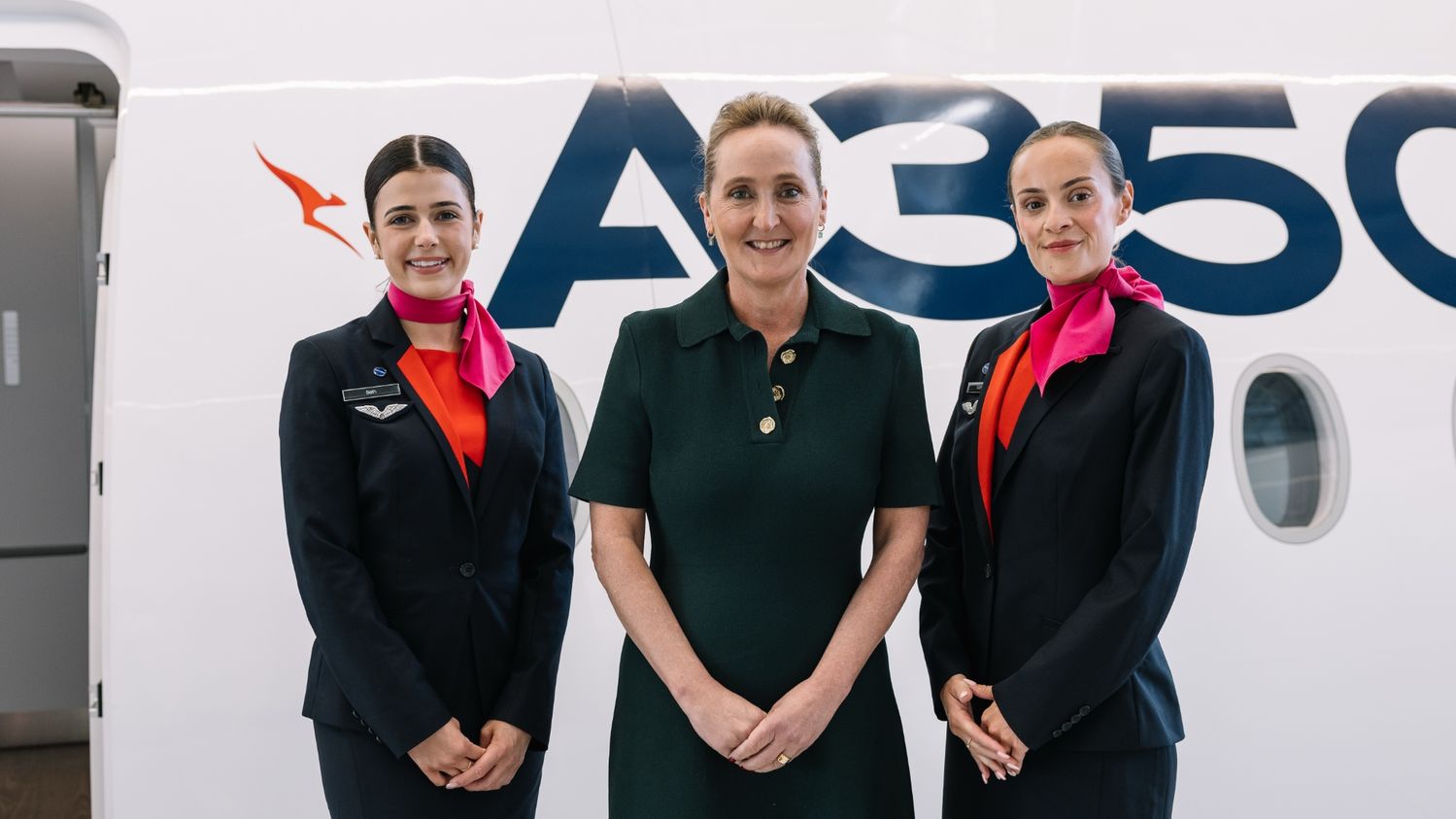
Qantas Group CEO Vanessa Hudson, centre, says economy class on the A350 is the key to maximising revenue.
But Qantas landed on the full four-cabin LOPA (Layout Of Passenger Accommodation) “based on what we think will maximise revenue.”
“You can put more business class seats in”, at the expense of economy for example – “but you then actually have less seats.”
“So when we looked at all of the LOPAs, we landed on the one that we felt maximised the revenue generation of that aircraft.”
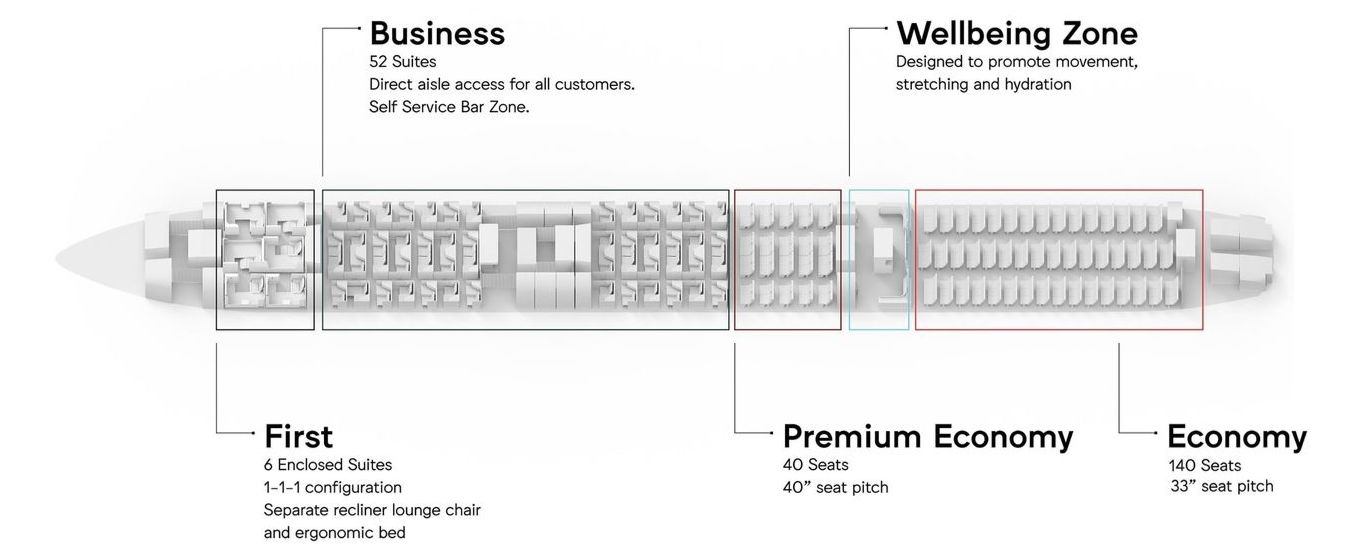
Qantas adopted a four-class layout for its ultra-long range Airbus A350s.
Hudson says Qantas’ non-stop Perth-London route – which clocks in at just under 18 hours – served as a yardstick for the appeal of economy on ultra-long range flights.
“Our business case was based off the model of what we were achieving on Perth–London, where economy performs very well and we’ve had a lot of great feedback from customers ,” Hudson adds.
“We’ve also got a lot of data and science from those flights, and we’ve studied the effects of being seated for a longer period of time.”
Also read: First look: Qantas A350-1000 seat map
Why the SQ model doesn’t apply to Project Sunrise
That said, Singapore Airlines’ direct flights to New York are only a few hours shorter than Qantas expects for Project Sunrise, and they seem to work fine with premium economy as the entry point.
“Singapore-New York is a very unique city-pair, with premium-heavy business traffic at both ends of the route,” suggests Cam Wallace, drawing a comparison against the broader passenger base of Qantas’ Sydney-London and Sydney-New York routes.
“That it works for them actually gives us more confidence in Project Sunrise, that there’s other people doing well with ultra-long haul.”
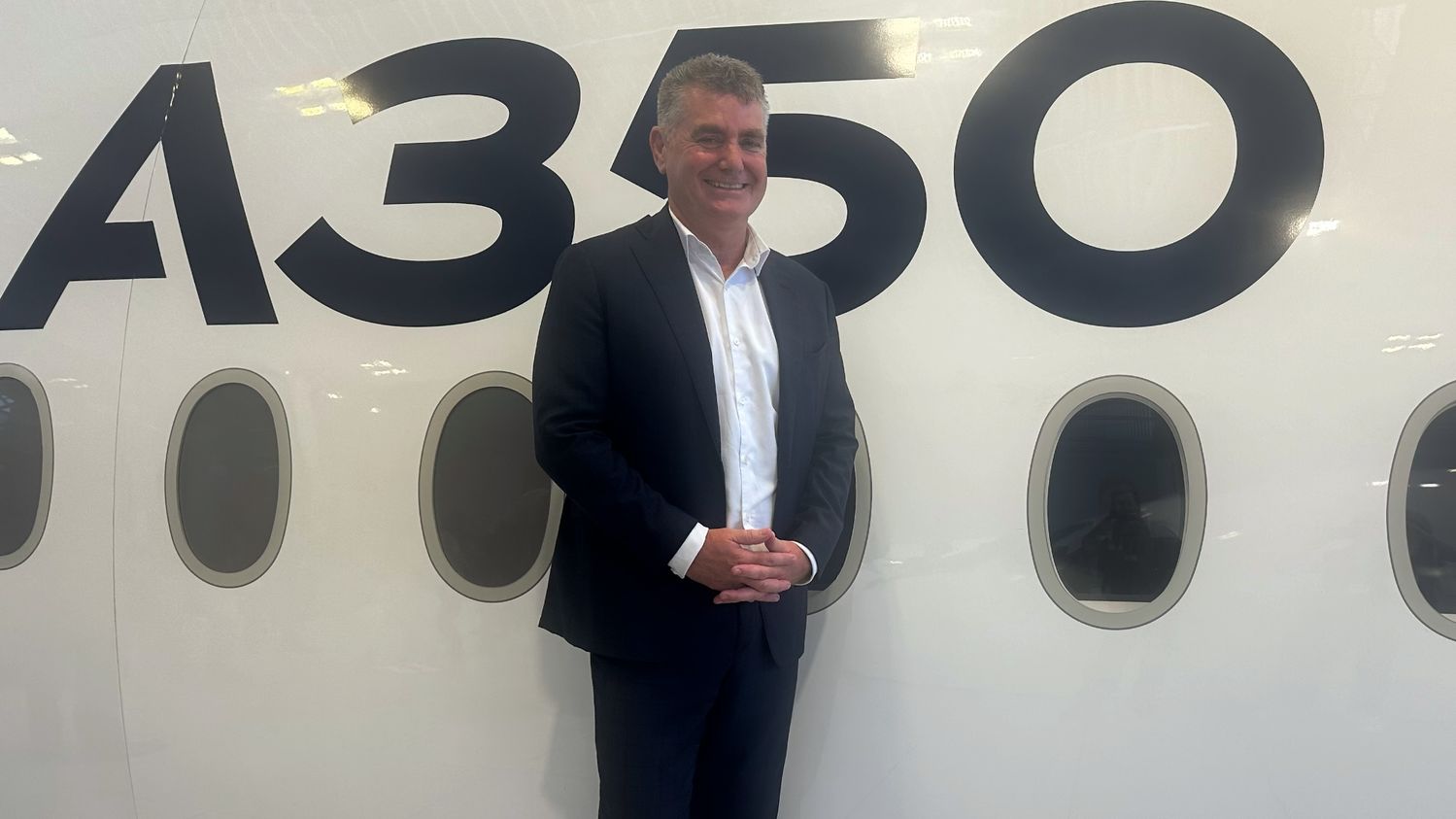
Qantas International CEO Cam Wallace.
There’s also the fact that Singapore Airlines flies its ultra-long range A350s – which have just 161 seats across two classes, compared to 238 passengers on the four-class Qantas A350-1000s – solely between Singapore and the US.
“Having four cabins also gives our aircraft way more versatility,” Hudson believes.
“We’ve got a whole network that this A350 is going to fly over, so we need to make sure that the configuration is just not so niche that it can only do certain routes.”
Beyond the two Sydney-based Project Sunrise routes, these Qantas A350s are also expected to appear on the Perth-London and Auckland-New York routes, in turn freeing up the current Boeing 787-9s to spread their wings elsewhere.
Also read: Will Melbourne miss out on Qantas Project Sunrise flights?
An additional twelve A350-1000s are slated to arrive from 2028-2029, and could tackle selected Boeing 787 and Airbus A380 routes.
These will come in a ‘standard’ long-range configuration of four classes but without the Wellbeing Zone or Sunrise-grade premium economy and economy seat pitch.
Also read: Qantas to retire A380 superjumbo, replace with A350
Designing Qantas’ Project Sunrise economy seat
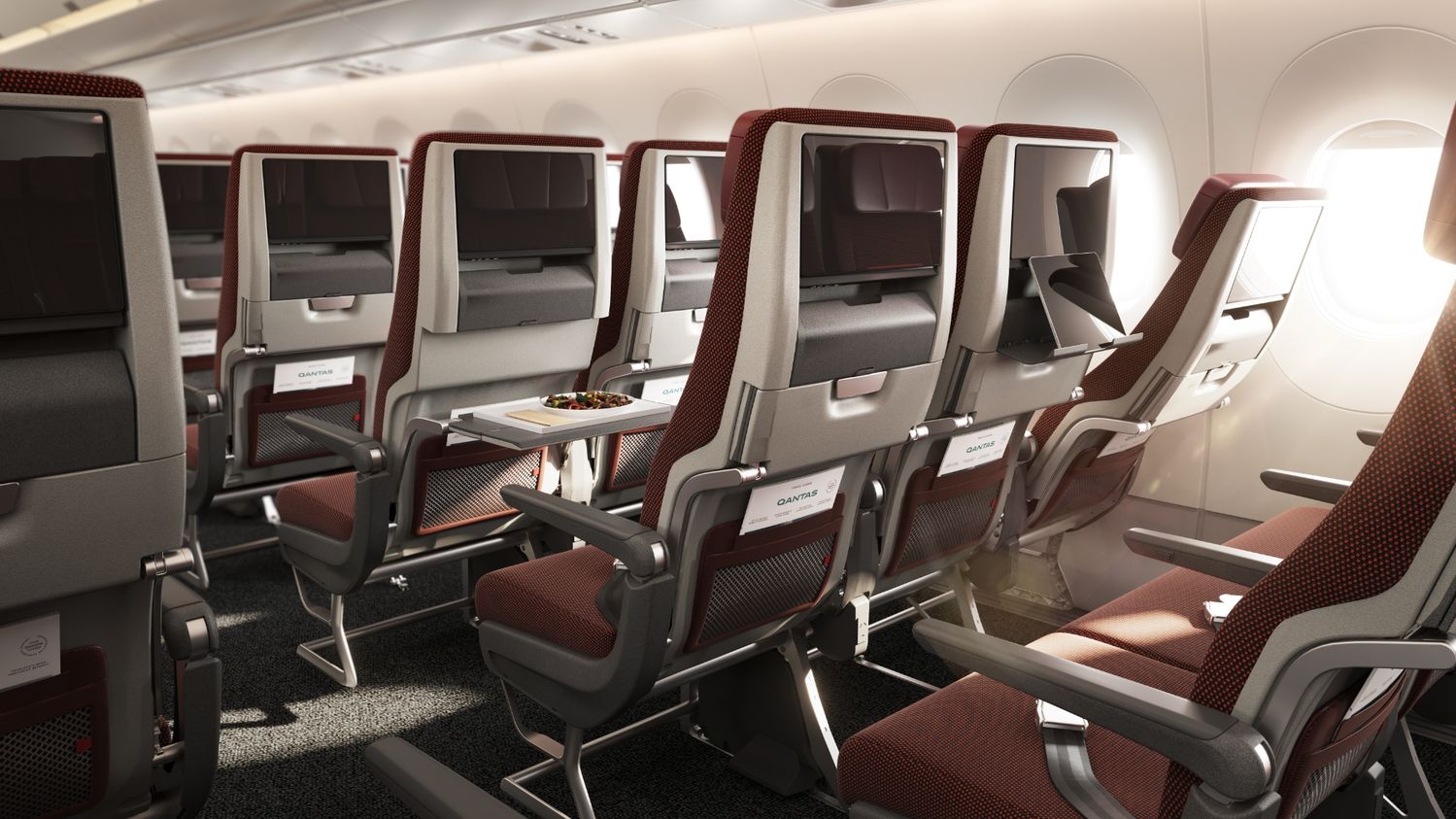
Qantas’ A350 economy seat was sourced from German manufacturer Recaro and is “very bolstered and contoured to give passengers can have as much support and comfort as possible,” says designer David Caon.
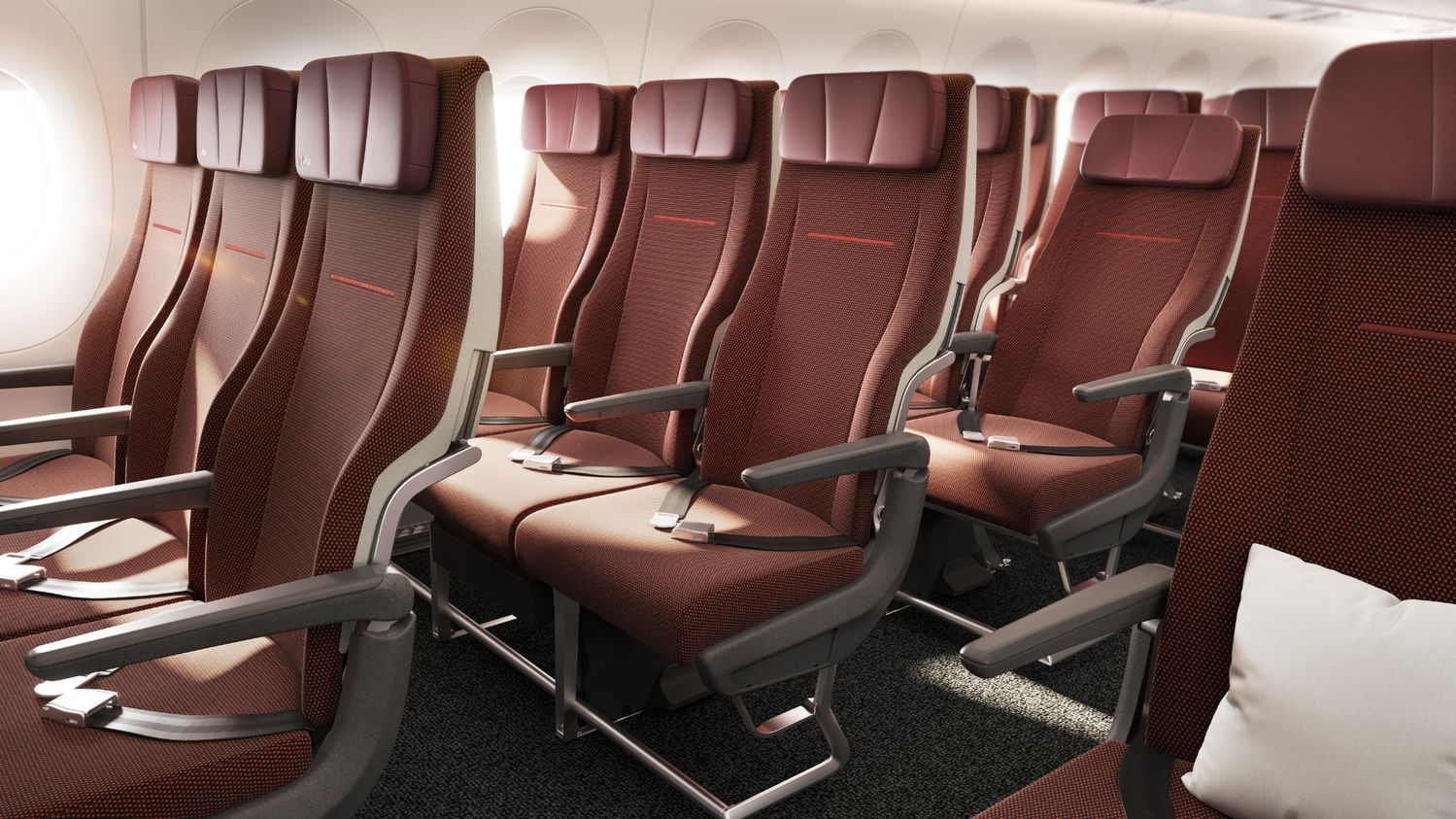
Qantas' new-look A350 economy seats.
Caon’s team undertook “pressure mapping” of how and where people positioned themselves in the seat, along with extensive trials of the foam under the upholstery – which in turn is “100% wool, very breathable”, he says – “so that we can make sure that we have a very, very comfortable product.”
“With the design of the seat itself, we’ve done as much as we can within the confines of the cabin to have as wide a seatback as possible, and to have as much knee clearance forward as possible.”
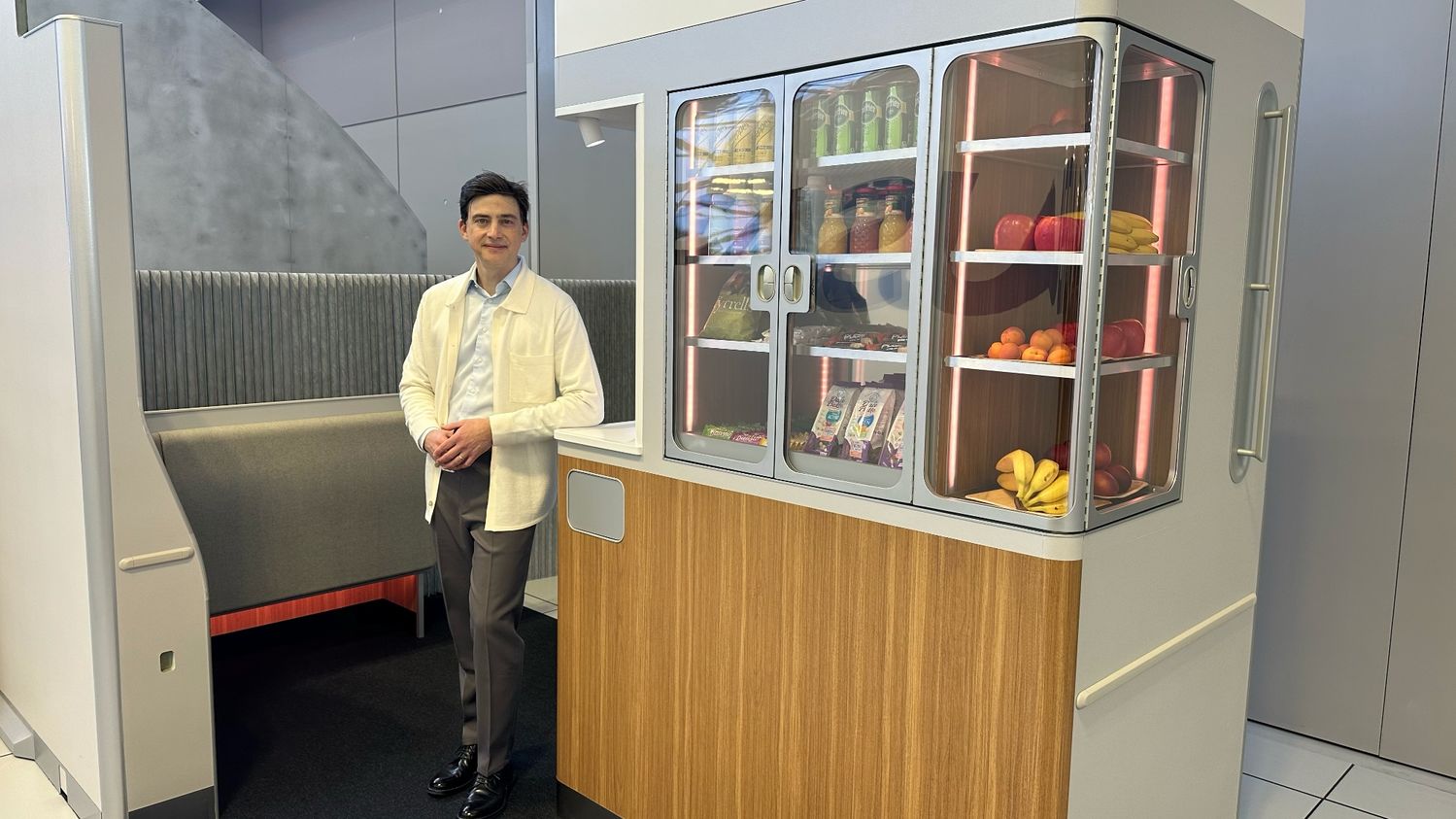
David Caon and a mock-up showing part of the A350's Wellbeing Zone.
The standard pitch will be 33 inches – three more than the average economy seat on Qantas’ domestic Boeing 737s and Airbus A321XLRs.
There’ll also be 42 Economy Plus seats with legroom boosted to 34 inches.
However, to eke out that extra inch, Qantas has reduced the pitch of some economy seats in the rear of the cabin to just 32 inches.
Read more: Qantas A350 gets Economy Plus, and ‘economy minus’
“Pitch is important, but customers also said what’s important is a space to be able to get up and stretch mid-flight or multiple times during the flight,” Hudson recounts.
“That’s what the Wellness Zone is there for. We’ve got a specially-designed kind of workout that you can do to help that in-flight experience.”
She says Qantas has even researched the pillows which economy passengers will find on their seats.
“Do you want just a square kind of block, or do you want a pillow that can give you more neck support?”
The seat has also undergone a cosmetic change from earlier concept diagrams, with a new ‘Pilbara red’ cover (named after the rust-red soil of northwestern WA).
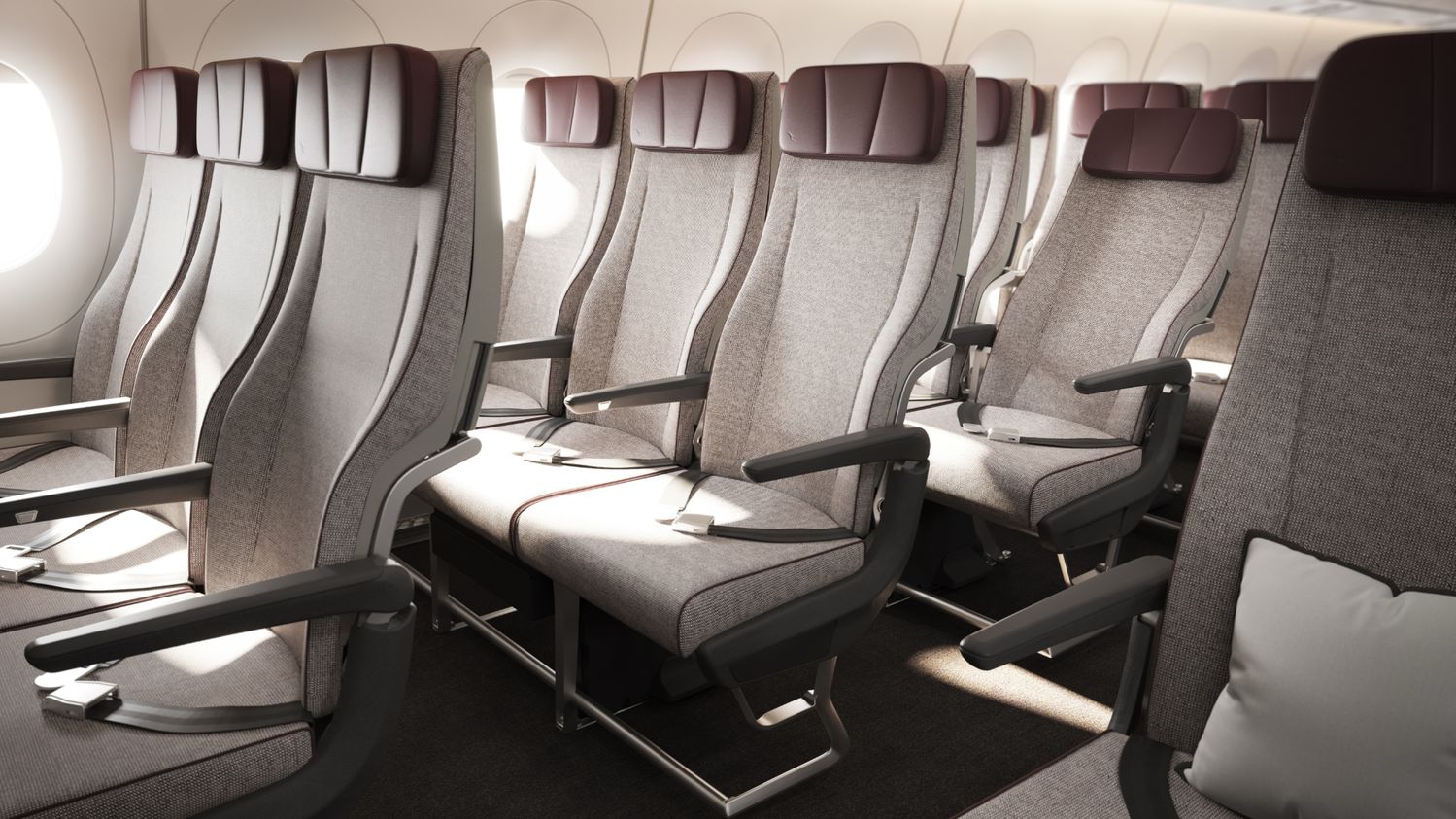
The colour scheme of Qantas' original A350 economy class.
This is not only in keeping with the rest of the Qantas fleet but will be more resistant to showing the inevitable grime that’ll slowly build up as these planes ferry travellers halfway around the world.
Beyond the seat itself, the A350s will rely on efforts such as:
- sophisticated in-cabin ‘circadian lighting’ schemes which transition from sunrise to sunset
- three meals served across the flight, with each menu customised to encourage either rest or wakefulness
- “protected sleep” periods of darkness in the cabin to encourage sleep and help reset a passenger’s body clock to the time zone of their destination.
Project Sunrise 2.0?
Given the relatively small gap between 18 hours for Perth-London and 21-22 hours for Sydney-London, plus the A350’s extra legroom and Wellness Zone, doing a Project Sunrise flight in economy could prove to be more of a psychological barrier than purely a comfort barrier.
But what if Qantas’ passenger projections for the back of the (Air)bus are wrong? Would Qantas consider a revamp of the A350 to either reduce the size of the economy cabin or remove it altogether?
“You can always change the configuration,” Hudson says.
“When you buy an aircraft like the A350, like the A380, like the 747, you’re making a 20-year investment – and 20 years is a long time to assume that a LOPA is fixed.”
“Over the life of an aircraft it’s highly probable that with different demand scenarios (and) changes in different markets that that LOPA might change over time, and a reconfiguration is a relatively simple thing to do if you are in a situation where something changes.”
David Flynn travelled to Toulouse as a guest of Qantas and Airbus.
Also read:

Hi Guest, join in the discussion on Do Qantas’ non-stop London, NY flights really need economy class?