

Pack these five things and you’ll actually feel human when you land
Go beyond the basis: here are some items that savvy travellers rely on, especially for long or overnight flights.
By David Flynn, June 25 2026
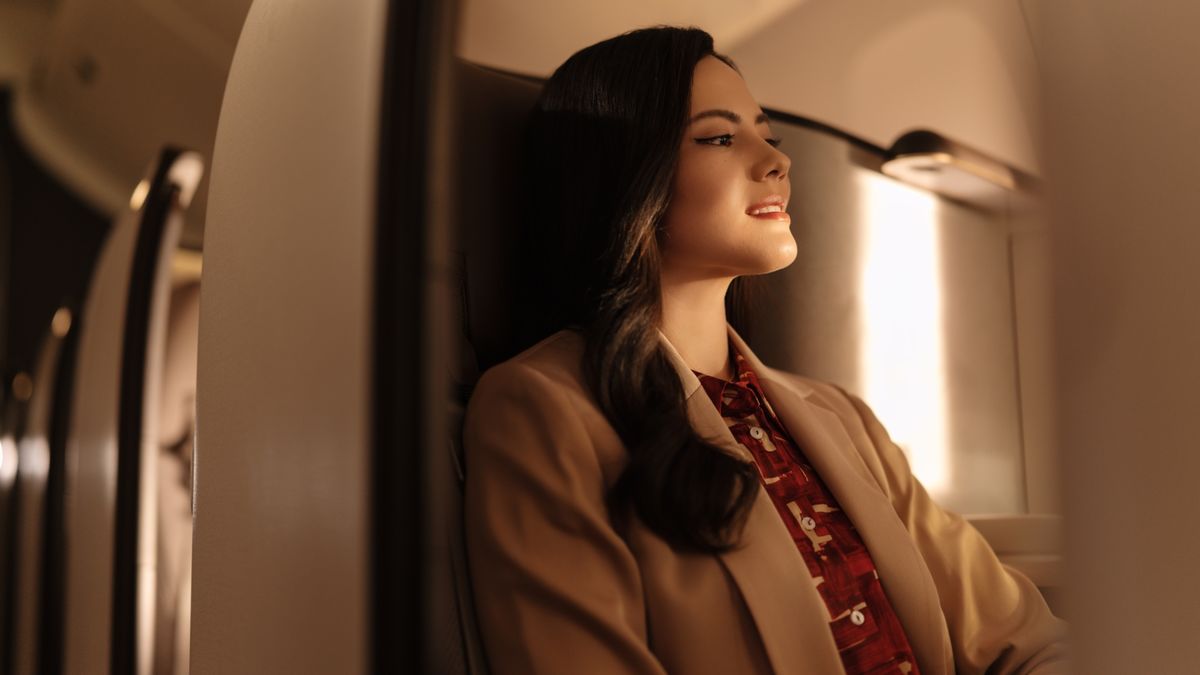
Most airlines hand out a business class amenity kit with the essentials.
But savvy frequent flyers take a BYO approach, and that goes beyond adding a comb or hairbrush.
It often includes selected skincare products from their preferred brands, and something to help them sleep – whether that’s magnesium glycinate, melatonin, or something stronger obtained on prescription.
They know their body and they know what works for them.
Here are some other extras worth having on hand for long flights – especially overnights, and doubly so on the Kangaroo Route between Australia and London, where you’re stacking up 22+ hours across two long-range legs.
These items make a real difference to how you feel at the end. Some may already be in your kit. Either way, they’ve earned their place.
Effervescent vitamin B and C tablets
First in the kit: a tube of effervescent vitamin B and C complex tablets – the ones that dissolve in a fizzy glass of water, turning it a satisfying shade of orange.
Vitamin B complex (typically covering B1, B3, B6 and B12) supports your body’s energy metabolism and helps keep your internal clock from going completely haywire when crossing multiple time zones.
B vitamins also support adrenal function, which matters when your body is under the particular kind of low-grade stress that long-range travel reliably imposes.
Vitamin C, meanwhile, gives your immune system a hand at a time when recycled cabin air and close quarters with several hundred strangers provide the ideal conditions for picking up whatever is going around.
The brand that first springs to mind is of course Berocca, but Voost works equally well, as does the less-expensive Essential Health line from Aldi.
I take one during the flight itself, and another each morning for the first few days after arrival.
Electrolyte tablets
In the same dissolve-in-water category but doing a different job: electrolyte tablets.
Hydrolyte is the most widely known brand, but again, Voost and the Aldi’s Essential Health equivalent work perfectly well.
Why take electrolyte tablets? The cabin environment on any aircraft is extraordinarily dry.
Cabin humidity typically sits at around 10 to 20%: far below the 40 to 60% your body is used to on the ground.
Even on modern aircraft like the Airbus A350 and Boeing 787, which are pressurised to the equivalent of around 6,000 feet above sea level (a meaningful improvement on the 8,000-foot equivalent of older jets) and carry marginally higher cabin humidity, you are still losing moisture steadily without realising it.
Electrolyte tablets – containing sodium, potassium, magnesium and chloride – help your body actually absorb and retain water, rather than simply passing it through.
Plain water alone is considerably less effective at rehydrating you when your electrolyte stores are running low.
I recommend getting ahead of this by taking one tablet before your flight, so your stores are already topped up before you board; then another fizzy shot during the flight; and then, one in the morning after arrival.
Think of it as giving your body a head start rather than playing catch-up.
A proper eye mask
Airlines include an eye mask in almost every business class amenity kit.
They’re almost universally a thin, disposable affair with a flat profile, elastic that’s either too tight or too loose, and can admit light around the edges like a poorly fitted blackout blind.
It’s worth spending the money on a proper eye mask: think of it as an investment in your well-being.
Look for an eye mask that’s generously padded, soft against the skin, with an elastic that actually stays put, and a contoured fit that genuinely blocks out all the light from the cabin.
A small but worthwhile bonus: if you can find a small spray bottle of lavender sleep mist (check pharmacies, beauty shops and some travel accessory stores), a light spritz from a distance onto the inside of the mask before you put it on works better than it has any right to.
After a few flights you’ll find your brain starts to associate the scent with sleep, which is exactly the kind of conditioned response worth cultivating.
A hydrating face mask
Cabin air doesn’t just leave you thirsty. It dries out and tightens your skin. After a long flight, you can almost feel it.
Moisturiser helps, but a hydrating sheet face mask does considerably more.
These single-use masks – soaked in serum and pressed onto the face for 10 to 15 minutes – have become something of a travel ritual for those in the know.
The best ones tend to come from South Korea and Japan, where skincare technology is arguably the most advanced in the world, and you’ll find them at supermarkets and chemists at very reasonable prices (look for anything labelled as ‘hydrating’ or ‘moisture boost’).
Two timing notes worth keeping in mind. If your flight departs in the morning, consider using a mask the night before — your skin will already be better hydrated when you board.
If you’re going to use a hydrating mask during the flight – and I’d encourage it, however mildly self-conscious it might feel at 35,000 feet – make sure you’ve first cleansed your face to remove oils, so the mask can deliver its full benefit.
Dry shampoo spray
This last item is one I’ve only recently started packing for long flights; it’s also the one that tends to draw the most surprised looks when I mention it to other frequent flyers.
Dry shampoo has a well-established place in the kits of those who travel seriously.
After an overnight flight, a few seconds with a dry shampoo spray restores a little body and freshness to your hair, absorbing excess oil and reducing that built-up shine.
Two names worth knowing are Batiste, which is the most widely available, and Klorane, a French pharmacy brand that uses oat or rice starch and tends to leave a slightly cleaner finish.
Both Batiste and Klorane make travel-sized 50ml versions which tuck neatly into your carry-on toiletries bag.
If you’ve never used dry shampoo, I strongly recommend giving it a test run at home before you first use it in-flight.
Some formulas can leave a faint white residue if applied too generously, so try using a light hand and holding the can further from your hair than instinct suggests.
And if you feel the need to use the dry shampoo inflight, do not apply it in the washroom – the sensitive smoke detectors in airplane bathrooms can be triggered by an aerosol.
Instead, find a quiet corner of the plane or the galley and spray away.

Hi Guest, join in the discussion on Pack these five things and you’ll actually feel human when you land