Here is Qantas’ new premium economy seat
Expect more legroom and more privacy plus tech-forward comforts like USB-C charging and Bluetooth audio.
By David Flynn, March 18 2026
Executive Traveller exclusive
Qantas is embarking on a sweeping tip-to-tail transformation of its aircraft seats as the airline aims to reshape the passenger experience for the next decade.
First class roomettes will offer the ultimate privacy and space, with a separate armchair and bed, while business class becomes a cosy suite with sliding doors.
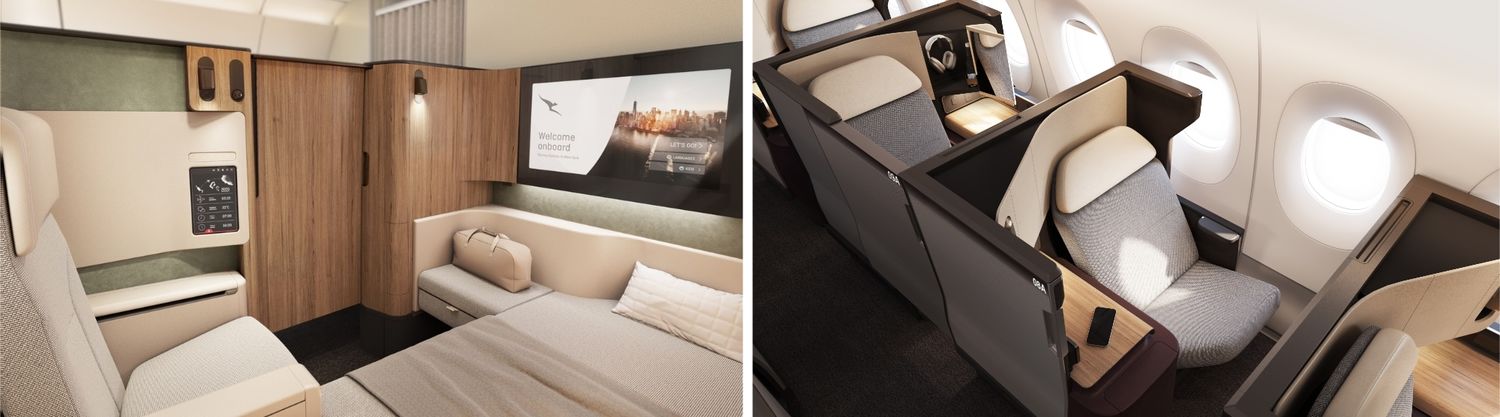
Qantas' new first and business suites.
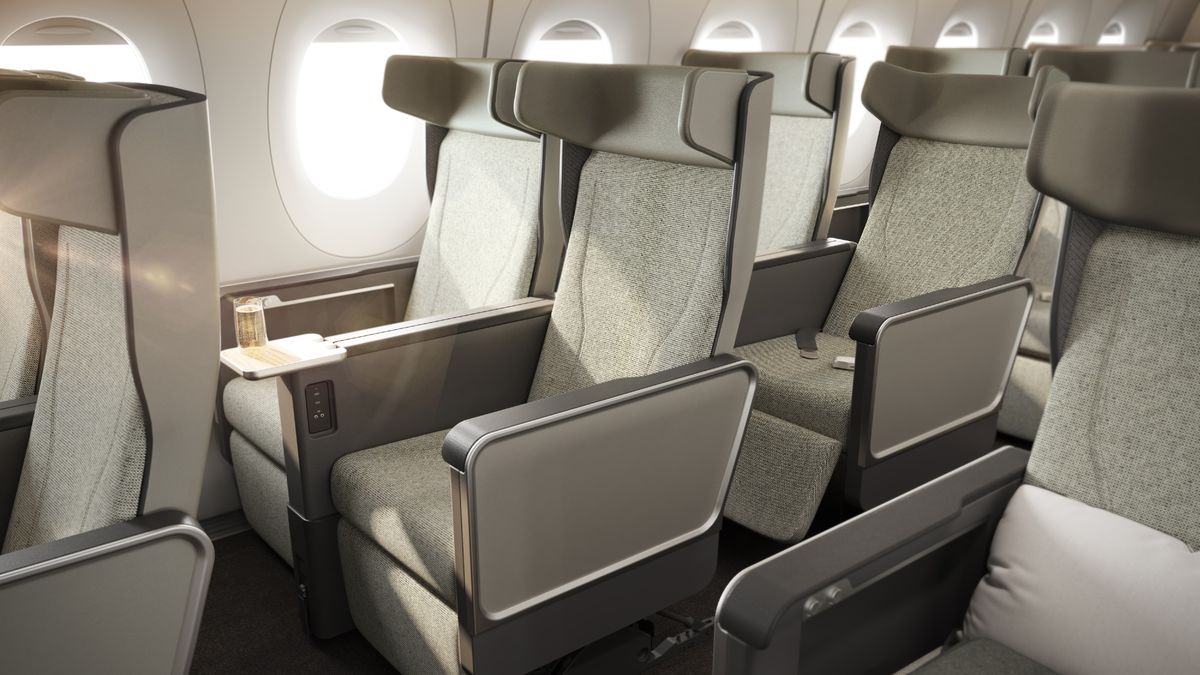
But for many travellers, premium economy remains the sweet spot between price and comfort – so Qantas is rolling out an all-new recliner with increased legroom and “body-cradling” comfort in recline mode.
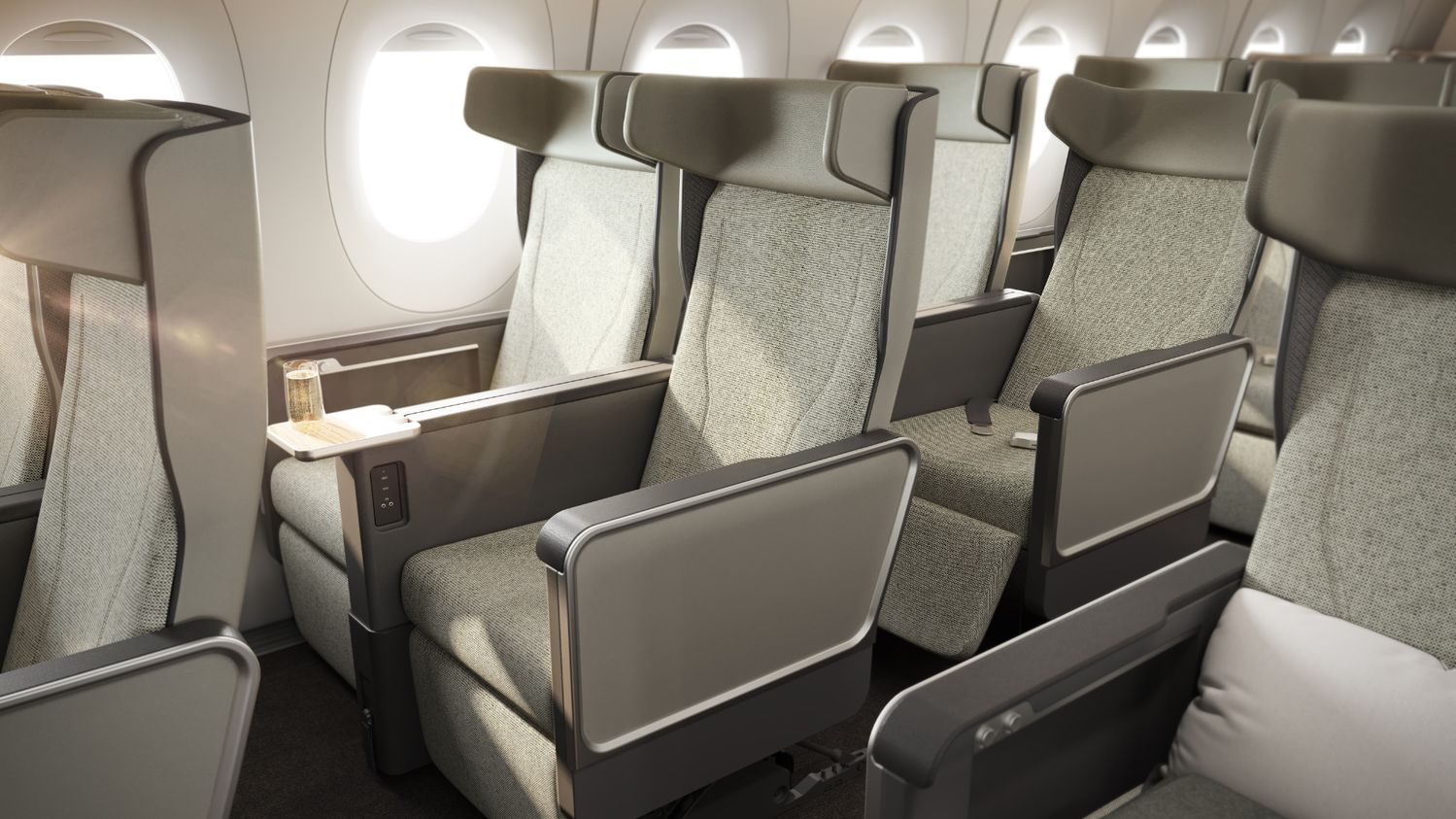
Qantas' third-generation premium economy seat in on the way....
Qantas’ new premium economy seat will debut at the end of this year on the first of 12 ultra-long range Airbus A350-1000 jets, which will launch non-stop Project Sunrise flights from Sydney and Melbourne to London and New York from mid-2027.
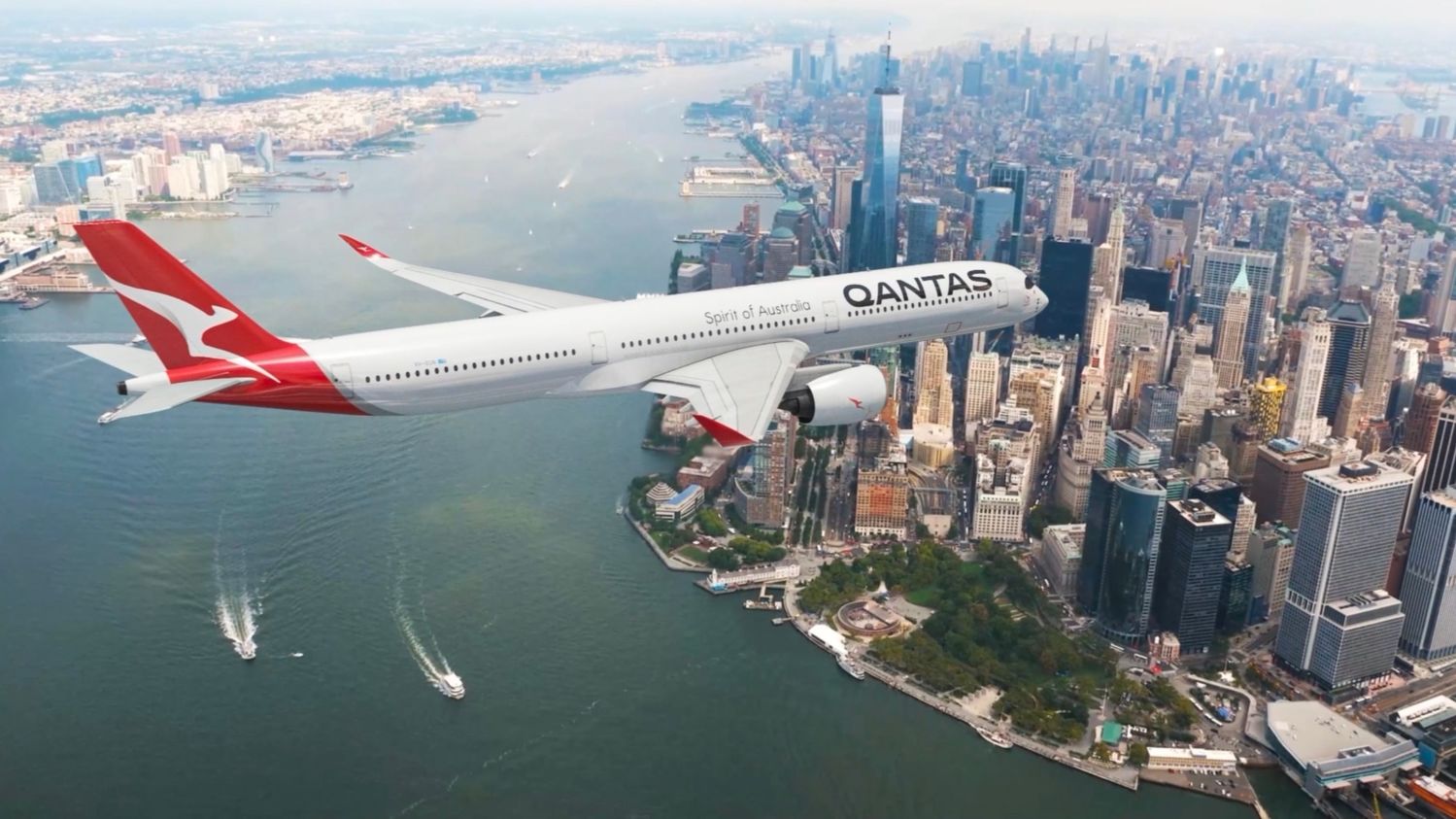
The Qantas Airbus A350s will pioneer non-stop flights to New York and London.
The same seat will also appear on a dozen more A350-1000s due from 2028 for selected international routes to Europe and North America.
The Qantas Airbus A350s will have a dedicated premium economy cabin of 40 recliners – a 42% increase from the Boeing 787 – set across five rows in a 2-4-2 layout.
So what can travellers expect from Qantas’ new A350 premium economy seat?
More legroom
Qantas’ premium economy seats on the Airbus A380 and Boeing 787 jets are spaced 38" apart, in a measurement the industry describes as pitch.
That’s pretty much the standard for premium economy across most airlines – but then, most airlines won’t be making those globe-striding Project Sunrise flights of 18–22 hours.
For that reason, Qantas will boost premium economy pitch on these special A350 jets to 40".
The result: more room to stretch out and comfortably cross your legs, as well as making it easier to hop in and out of your seat (something we expect a lot of travellers will be doing during these ultra-long flights).
Less fuss
Qantas has ditched the foot ‘hammock’ netting of its current premium economy seat – a feature which the airline initially spotlighted as among “a number of new bespoke design elements that we hope will really set the benchmark for this class.”
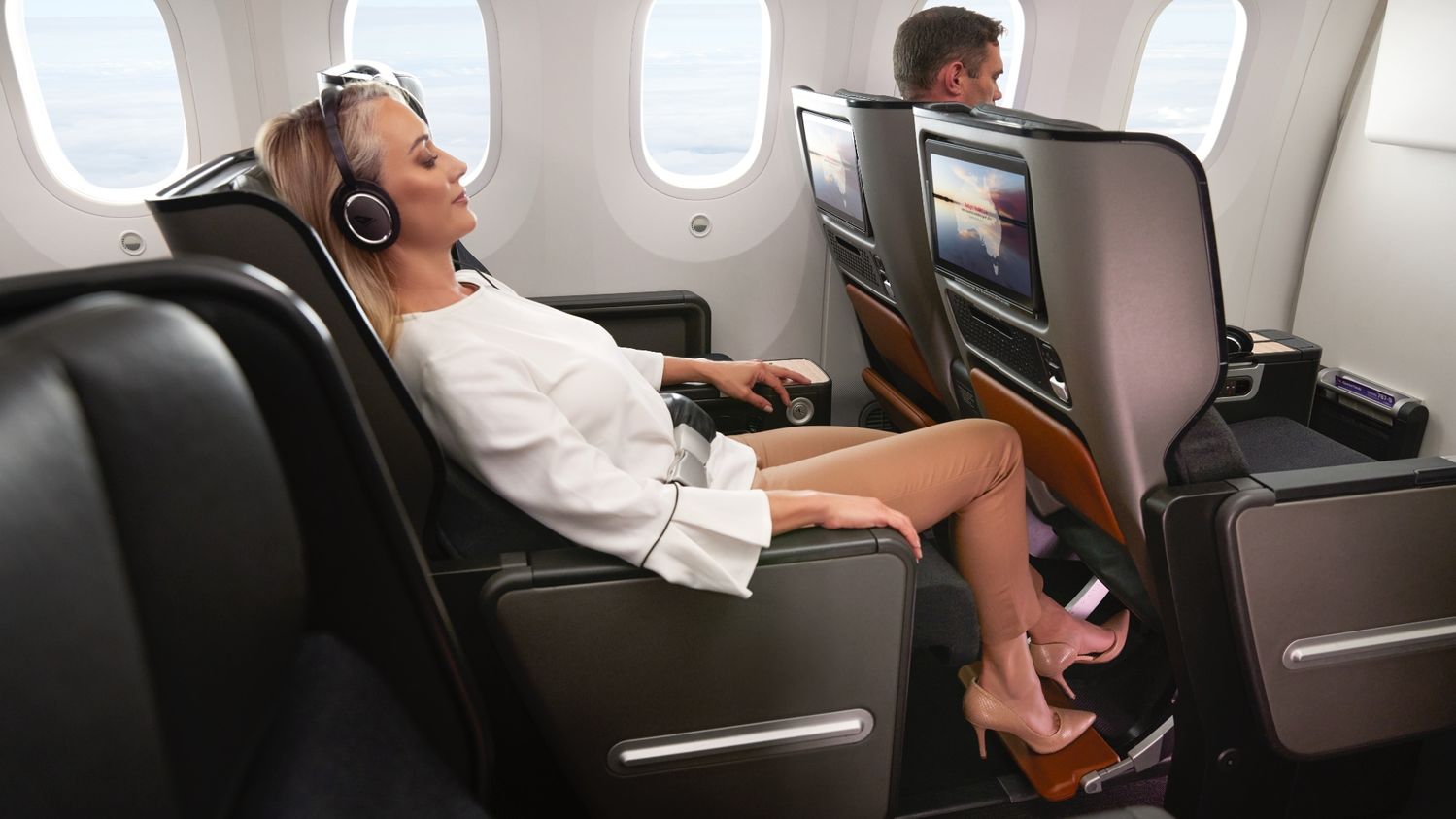
Qantas passengers often struggle with the 'foot hammock' of the current premium economy seat.
In practice this often proved overly complicated to use, especially when getting in and out of the seat during the flight – to the point where most passengers eventually ignored the hammock.
On its new A350 premium economy seat, Qantas opted for a more conventional calf-rest extending from the front of the seat, while a foot-rest swings down from below the seat in front.
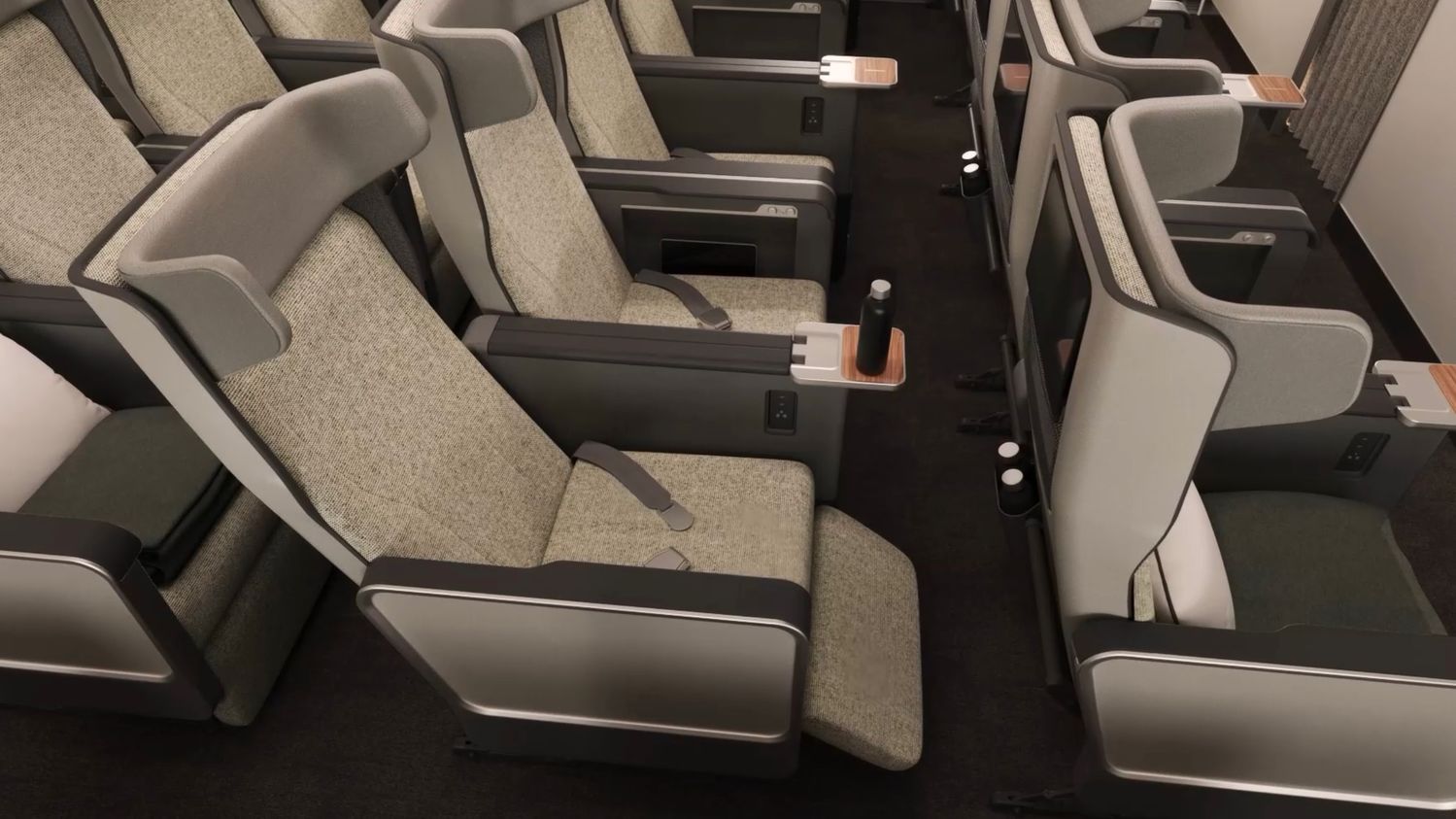
Qantas' new premium economy seat offers cradle-like support for passengers.
“We know that the foot netting presents challenges,” says David Caon, who has designed the A350 seats and cabin, “so we’ve developed something different down there.”
“What we’ve focused on is number one, ergonomics and number two, intuitive use... I think we've got it right on this product.”

David Caon has shaped Qantas' latest seats as well as many of its best lounges.
Greater privacy
A standout feature of Qantas’ new A350 premium economy seat is an 8" wing which extends either side of the height-adjustable headrest.
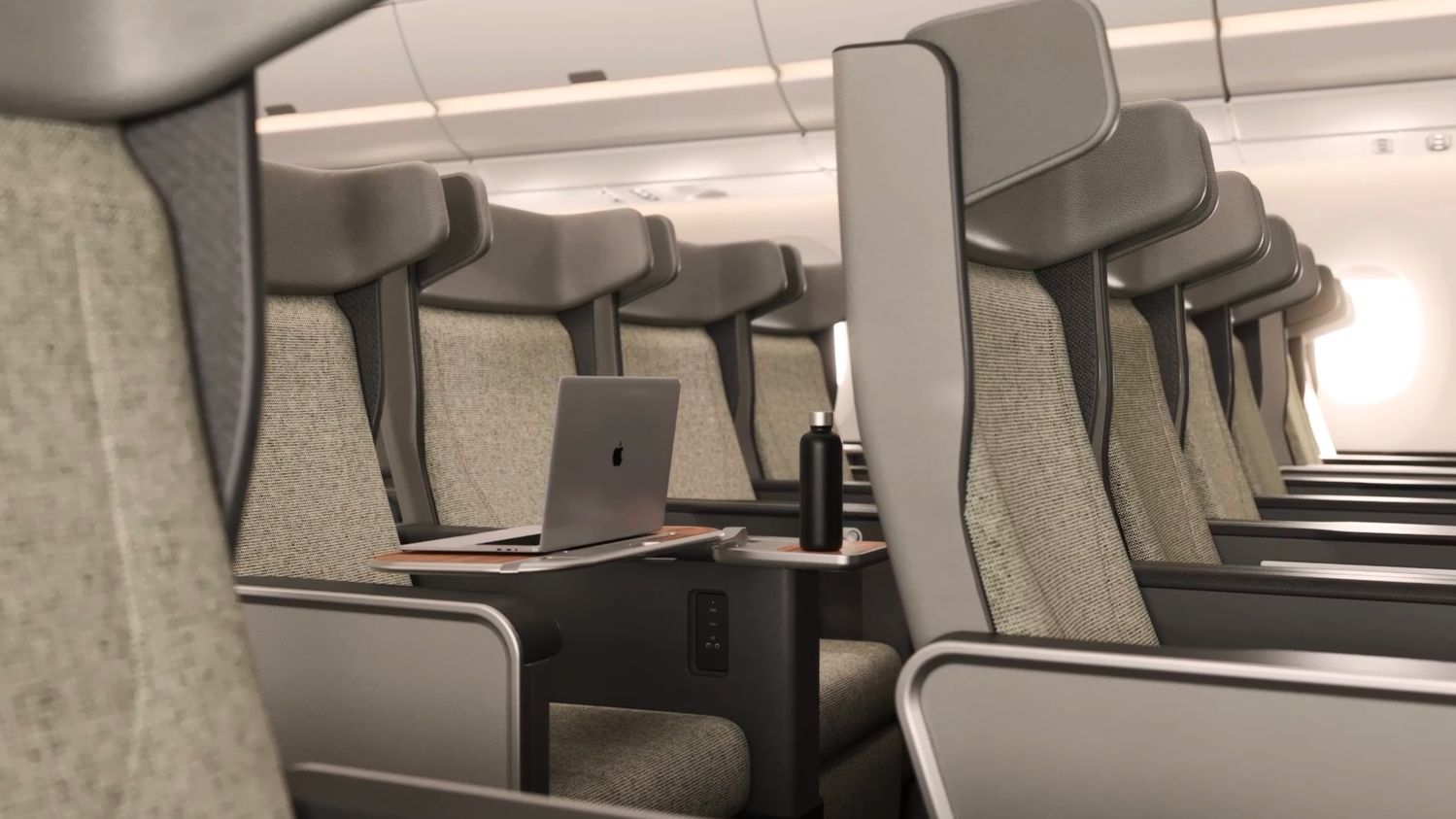
Qantas' new A350 jets will have 40 premium economy seats in their own cabin.
“I really wanted to give a little bit of privacy back to the passenger, which we’ve achieved with this winged headrest,” Caon tells Executive Traveller, describing the feature as “a sort of ‘cobra head’ that’s quite pronounced.”
Beyond that bit of privacy, the wings also provide a comfortable napping position when passengers rest their head at either side.
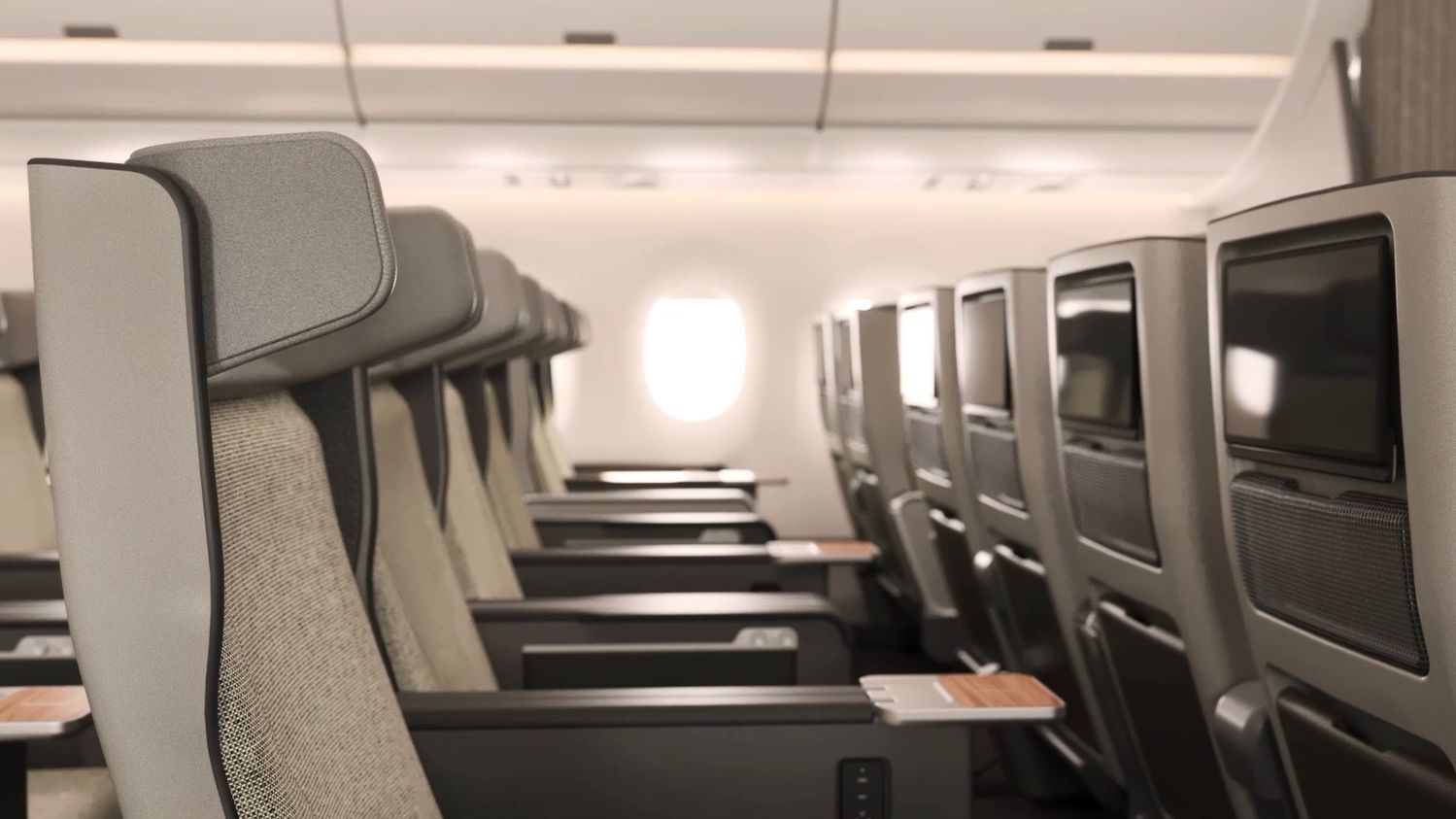
Qantas' new premium economy seat features these headrest wings.
Extra comfort
The seat itself is also more sculpted, with subtle touches such as scalloping the armrests to free up a little extra room around the waist.
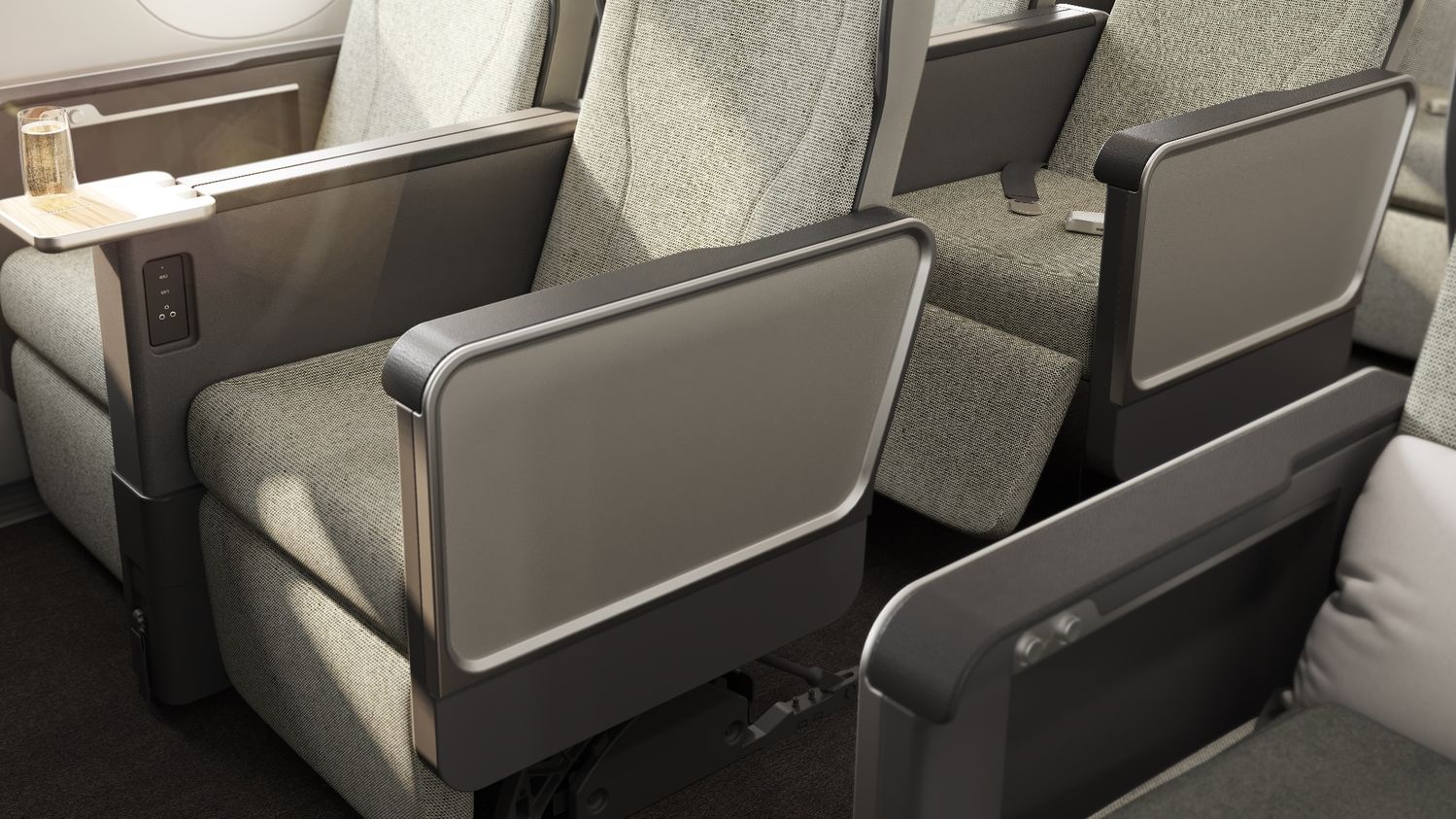
Seat designer David Caon says the airline has made the most of every inch.
“We wanted to maximise passenger space and comfort, and although the A350 is so wide we are still working on every single little inch,” Caon explains.
“We put the same level of detail and work into these seats as we do into first and business class.”
“There are more people sitting in those seats than in the seats at the front, so we attach a lot of importance to them.”
High-tech touches
Each Qantas A350 premium economy seat includes a crisp 4K video screen using the same high-contrast tech as most home flat-screen TVs, although the display measures the same 13.3" as today’s A380s and 787s.
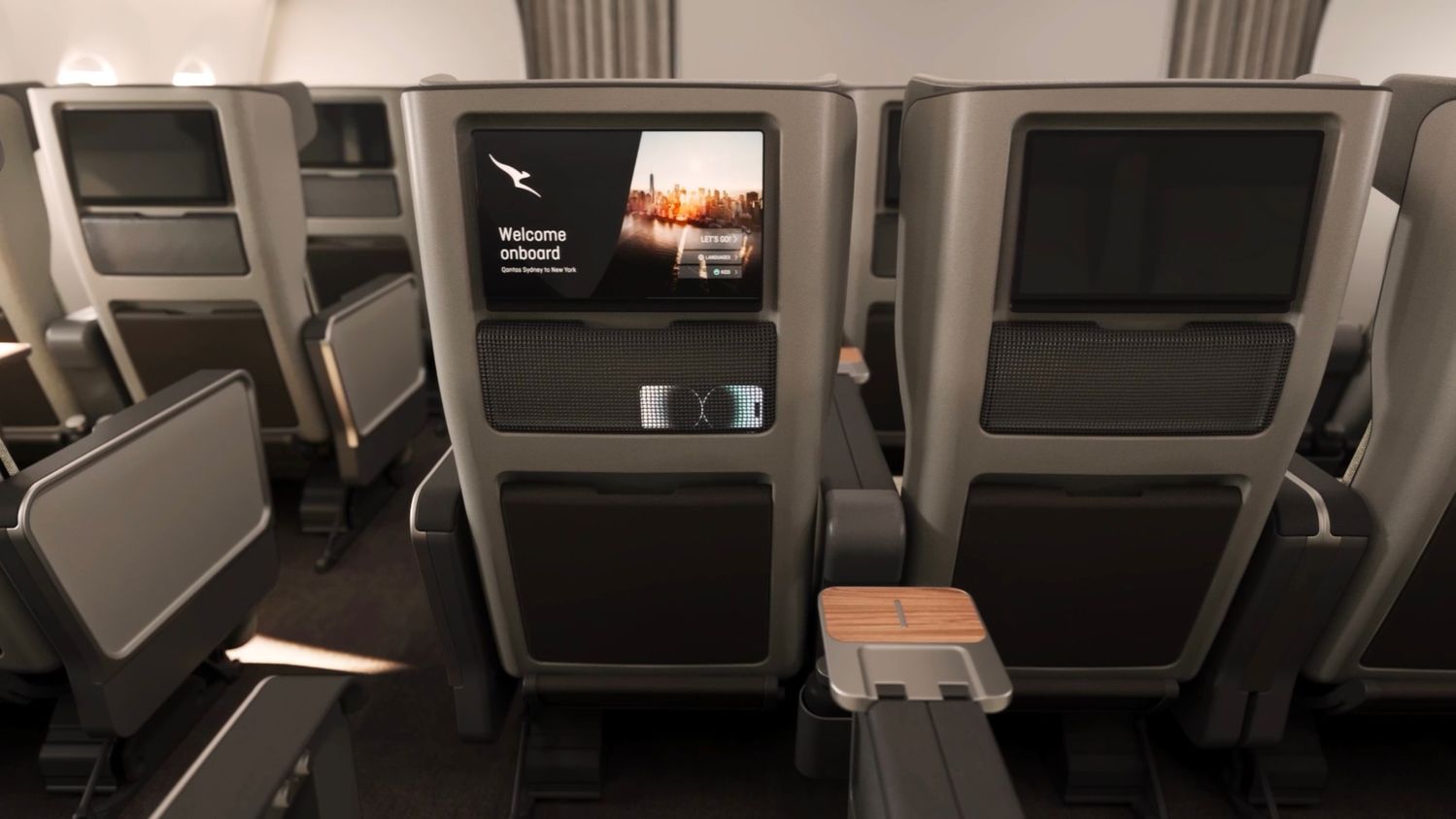
Inflight entertainment gets an upgrade on Qantas' new premium economy.
But there’s now the option of Bluetooth pairing to a passenger’s own headphones or earbuds (always a superior audio alternative to the supplied headsets), complete with support for ‘multi-channel spatial audio’.
It’s incredibly easy to set up: just tap the Bluetooth pairing button on the screen and the system will detect your headphones or earbuds (and perhaps those of the passenger sitting next to you).
If you’d rather BYO entertainment, just perch your phone or tablet into a clever groove in the tray table – although this will make it difficult to see that screen when there’s a meal sitting between you and your device.
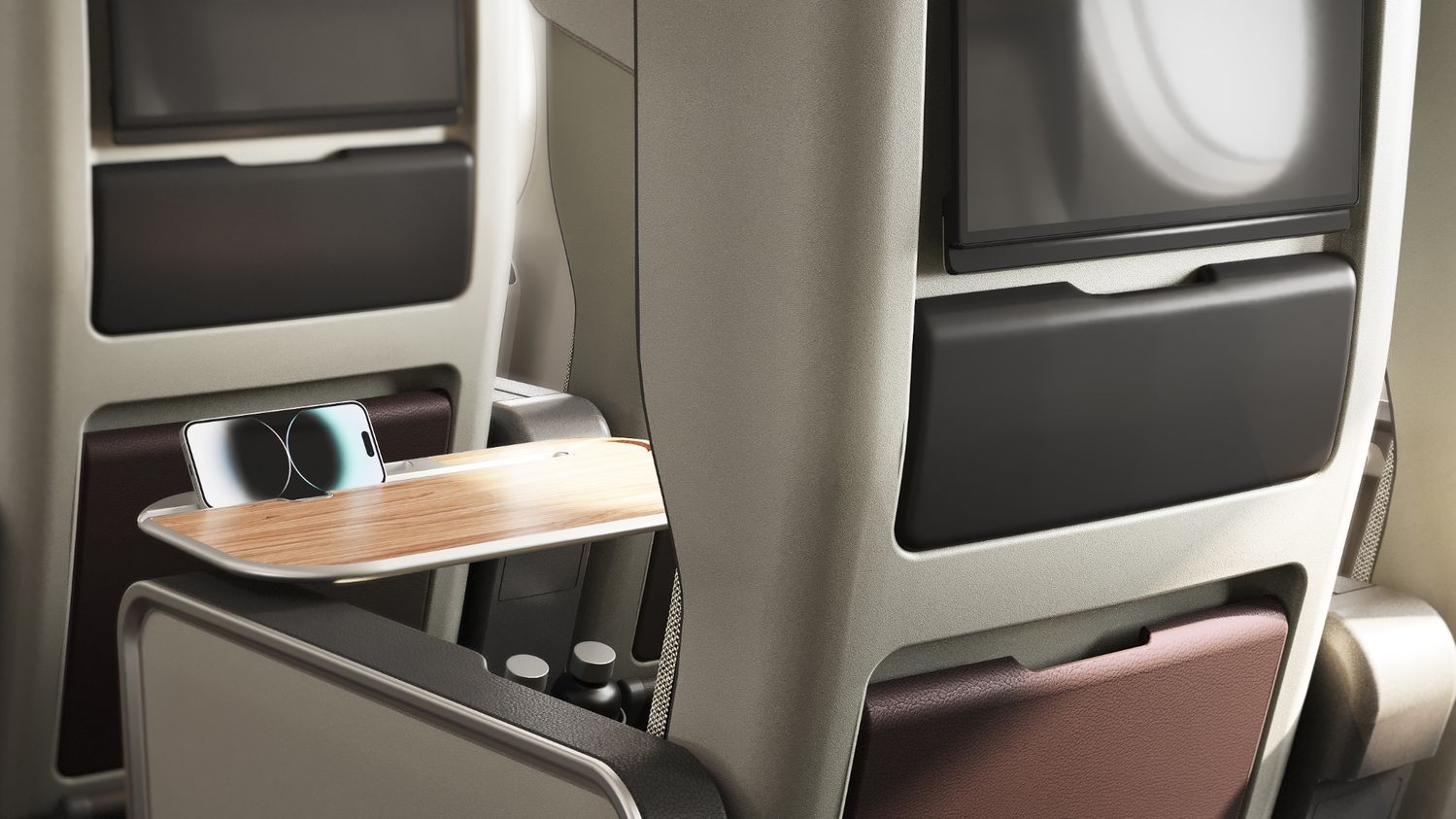
Slide your phone or tablet into the grooved tray table.
And to keep your tech topped up on those long flights, a pair of high-power USB-C ports is located in the armrest below the shared cocktail table.
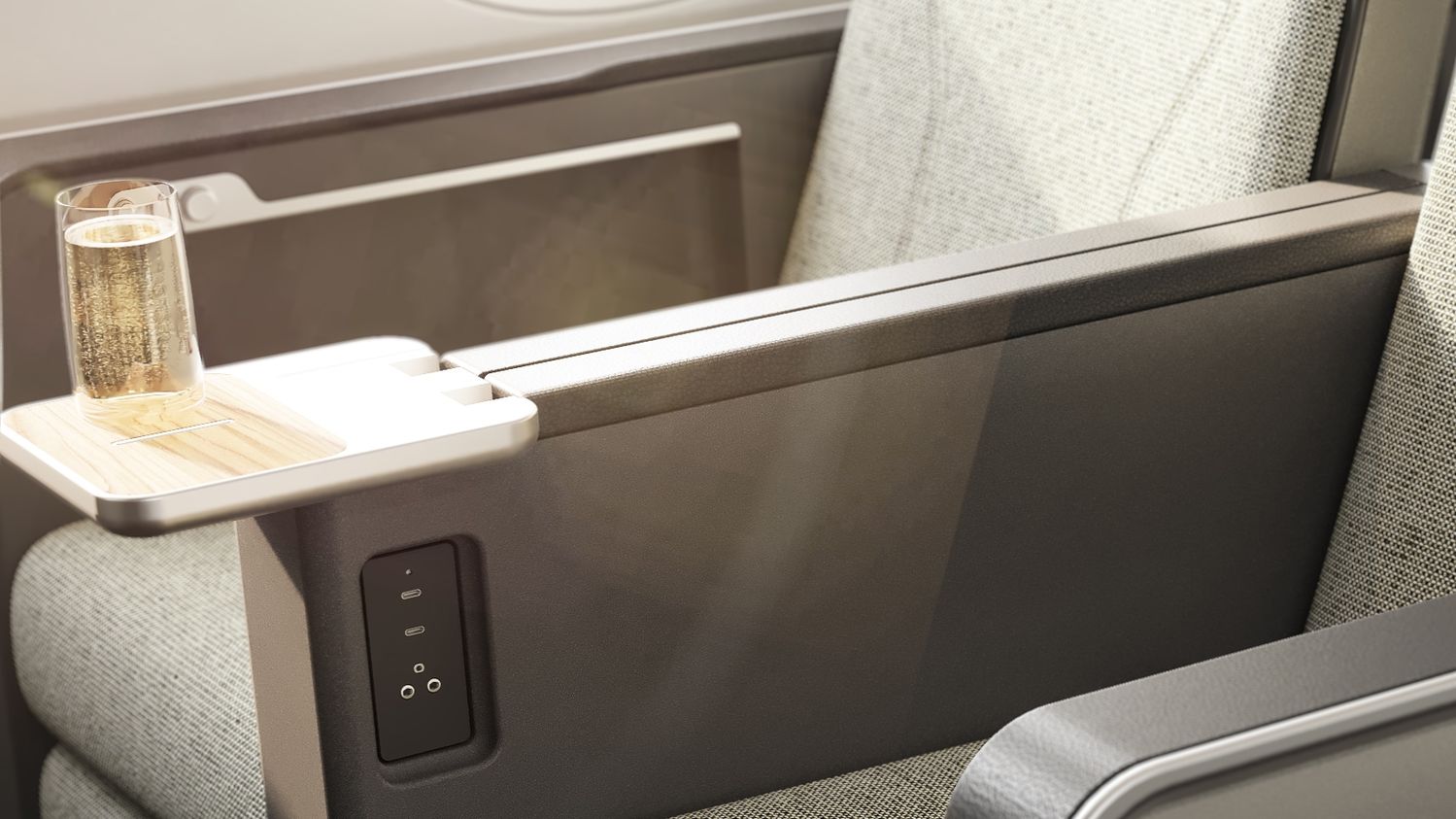
Two high-power USB-C ports for each Qantas premium economy seat.
Both sockets are rated to a maximum 60W output, which is sufficient to fast-charge a phone or tablet and also juice up most compact laptops.
What you won’t find in premium economy or economy are AC power outlets – which makes sense when you consider that pretty much every modern device now relies on USB-C.
A softer look
Less high-tech and more soft-touch is the colour scheme, with Caon developing a lighter palette for both the premium economy seat and its dedicated cabin.
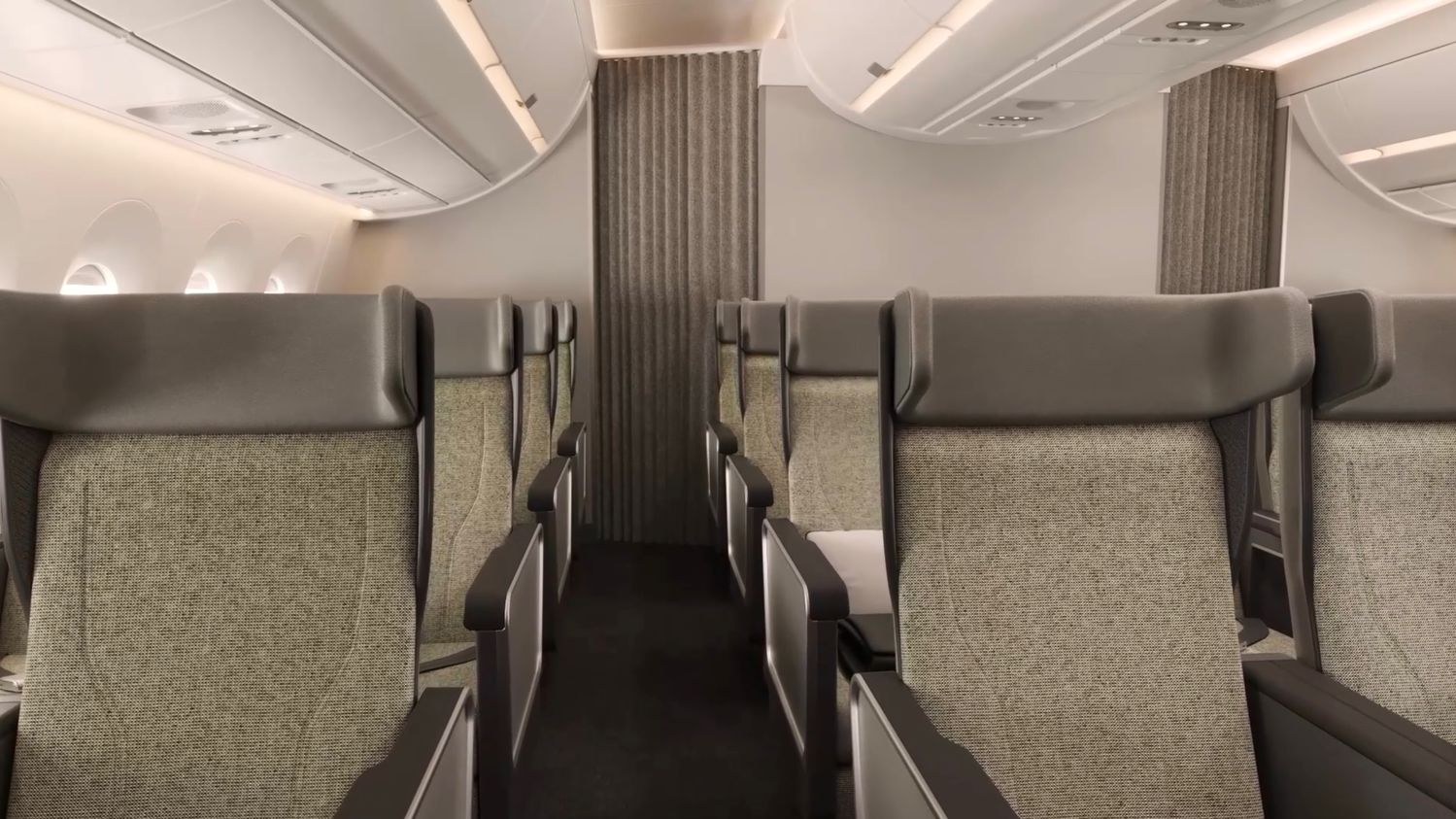
Qantas' new A350 premium economy cabin exudes a softer, lighter feel.
“In the past we've had dark fabrics and darker charcoal plastic, but in the A350’s premium economy cabin it's all a bit lighter and elevated,” Caon reflects.

The much darker premium economy cabin of the Qantas 787 and A380.
“There's a less contrasted look and feel to the entire cabin, it’s crisper and more refined, and that was a very conscious effort on our part induce ‘calm’ with colours, materials and fabrics.”
This is part of giving the aircraft a more coherent aesthetic in every cabin.
“We’ve purposefully tried to be very consistent with the materials and finishes all the way back” rather than giving each cabin its own character.
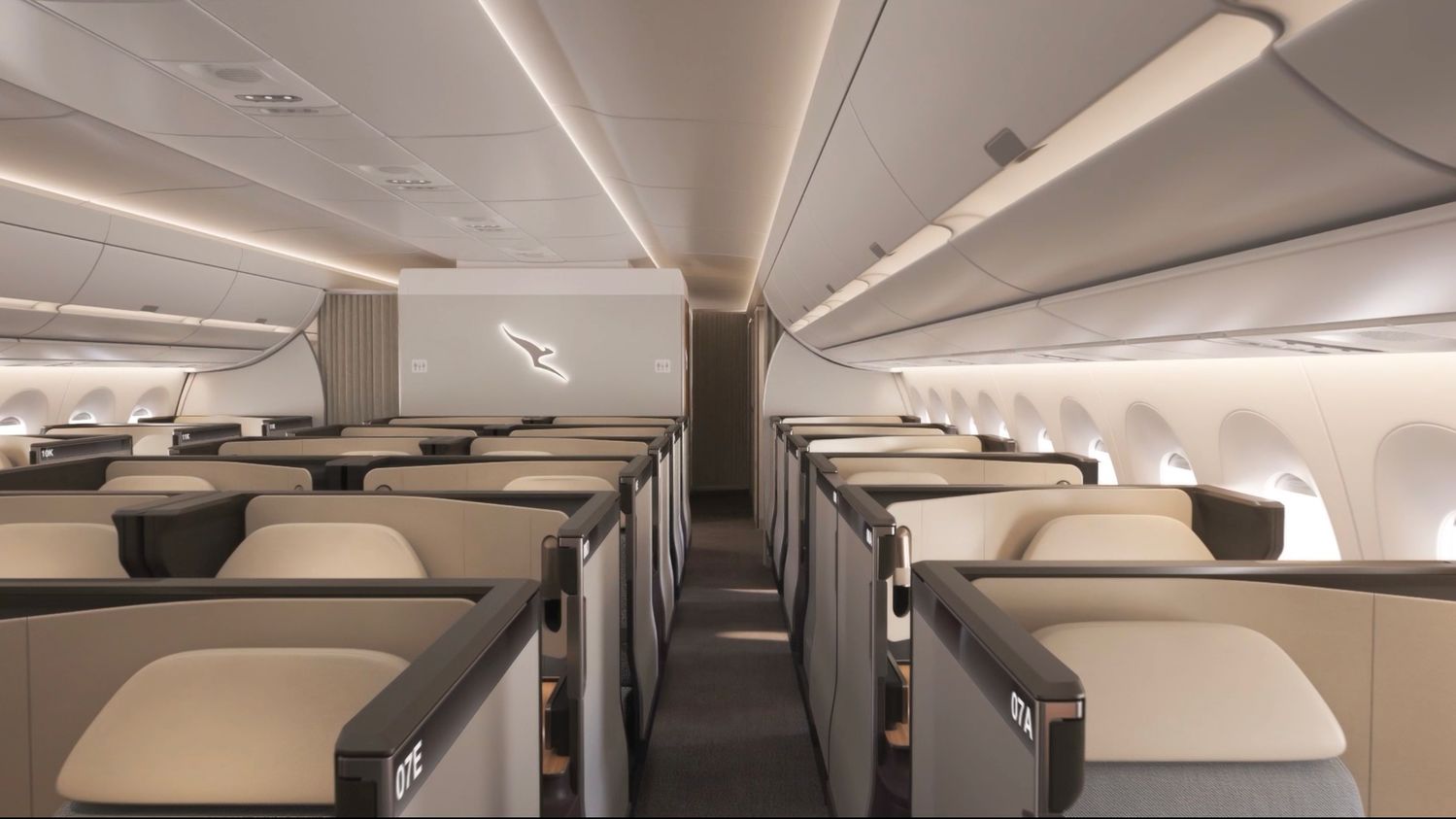
Qantas' new A350 business class shares a similar palette to premium economy.
“Aesthetically it’s carrying through a lot of the same language in terms of colours, lighting and mood from even first class, because we want it all to feel connected and holistic.”
Passengers will have their first chance to try the new seats – and even those first class suites – on a series of A350 flights between Sydney and New Zealand, which will help train pilots and cabin crew on the new jets.
Also read: Qantas is making it easier to find Classic Reward points-based seats