

This Airbus A350 will soon make a record-breaking 24-hour test flight
Inside the gruelling test campaign of the newest Airbus jet.
By David Flynn, June 16 2026
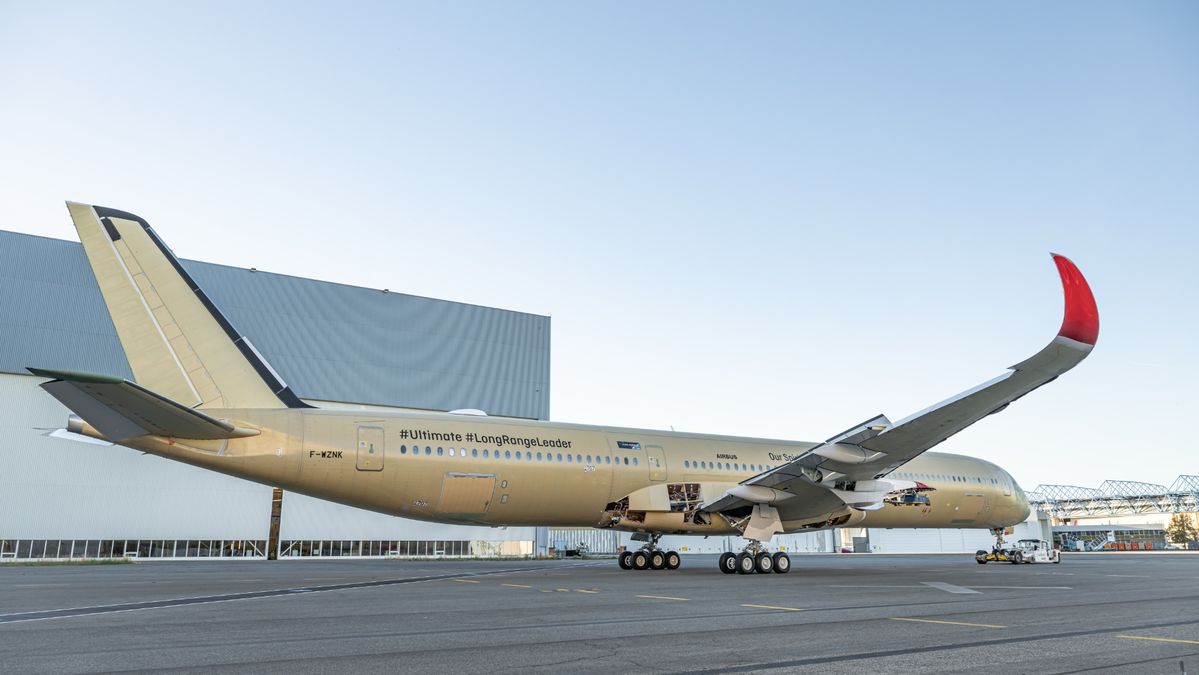
Sometime over the coming weeks, an Airbus A350 jet will depart from its base in Toulouse, France, and fly for the better part of 24 straight hours.
There are no stops, and no passengers – just a small Airbus crew of pilots, technicians and engineers, a cabin full of test equipment, and an aircraft being asked to prove it can fly for longer than any commercial aircraft in history.
That’s why Qantas has ordered a dozen of these A350-1000ULR (for ‘ultra long range’) jets, each fitted with an additional 20,000-litre fuel tank to deliver an extraordinary 18,000km range.
These long-legged jets will enable Qantas to launch non-stop ‘Project Sunrise’ flights from Sydney and Melbourne to London and New York beginning in the second half of 2027.
Each will carry up to 238 passengers on marathon journeys lasting up to 22 hours.
But before Qantas can sell you a seat from Sydney to London, Airbus needs to prove this custom-built A350 can actually get there.
 The Qantas A350s will fly non-stop to New York and London.
Testing times…
The A350-1000ULR began its two-month campaign of test flights on 2 June. The first step was pleasingly scenic.
Lifting off from Toulouse, it tracked south over the Pyrenees and then north past Bordeaux, before cutting a series of wide circuits off the Atlantic coast, then returning to land almost four hours later.
What comes next is considerably more ambitious.
Qantas’ non-stop Sydney-London and Melbourne-London flights will spend as much as 22 hours in the air.
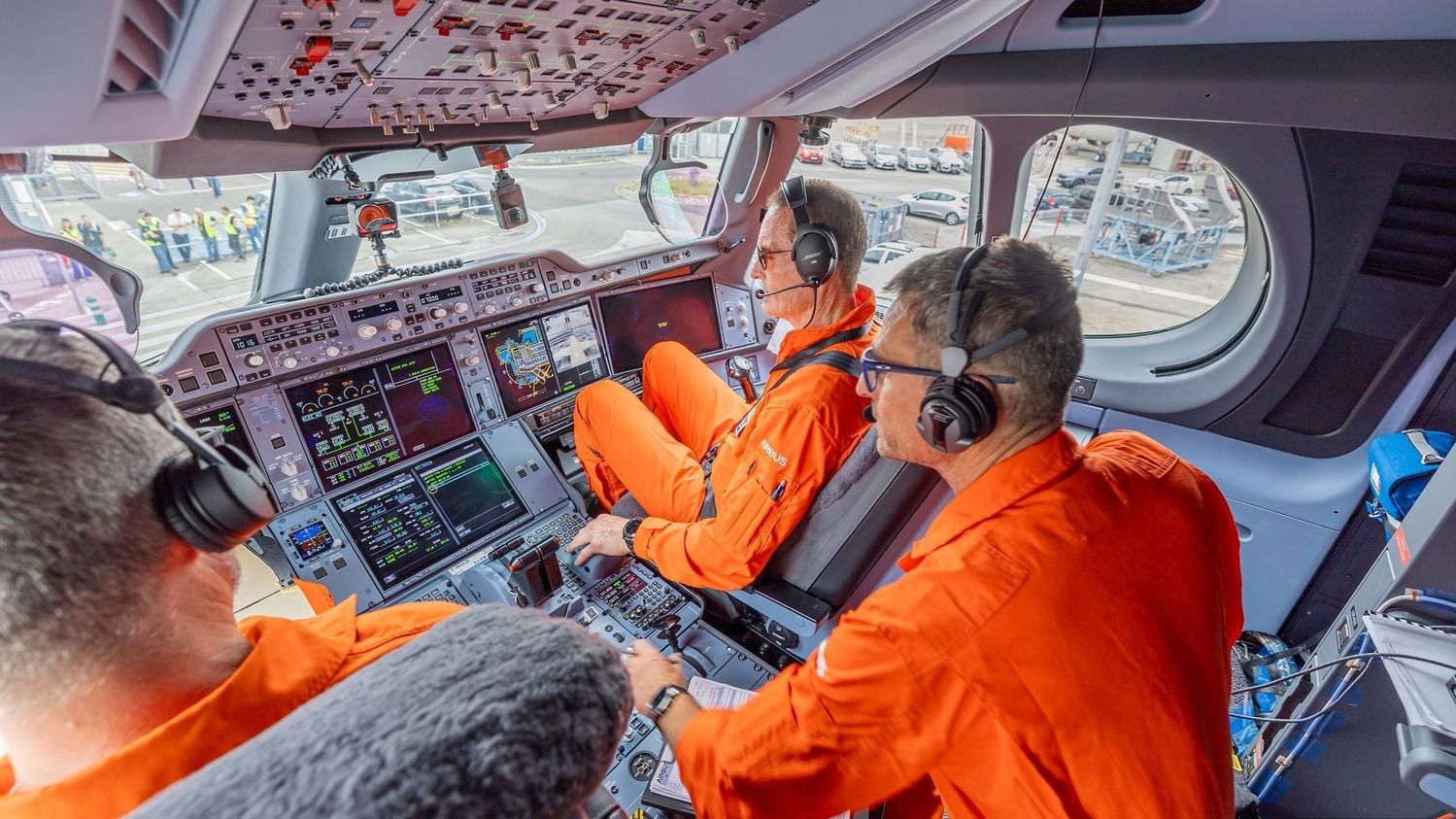
Airbus will send this A350-1000ULR test plane onto a world record flight.
European aviation authorities require Airbus to certify that this special A350-1000 aircraft can exceed that, with enough margin to handle whatever delays get thrown at it, especially near the end of a very long flight.
In practice, the critical test flight could exceed 23 hours – close enough to a full day that the distinction barely matters.
What’s on board
Five tonnes of custom monitoring equipment and more than a thousand specially-designed sensors run through this A350’s cabin, connected by kilometres of orange cabling.
They enable Airbus to capture vital statistics such as fuel flow, pressure, temperature, ventilation and structural behaviour through every phase of flight.
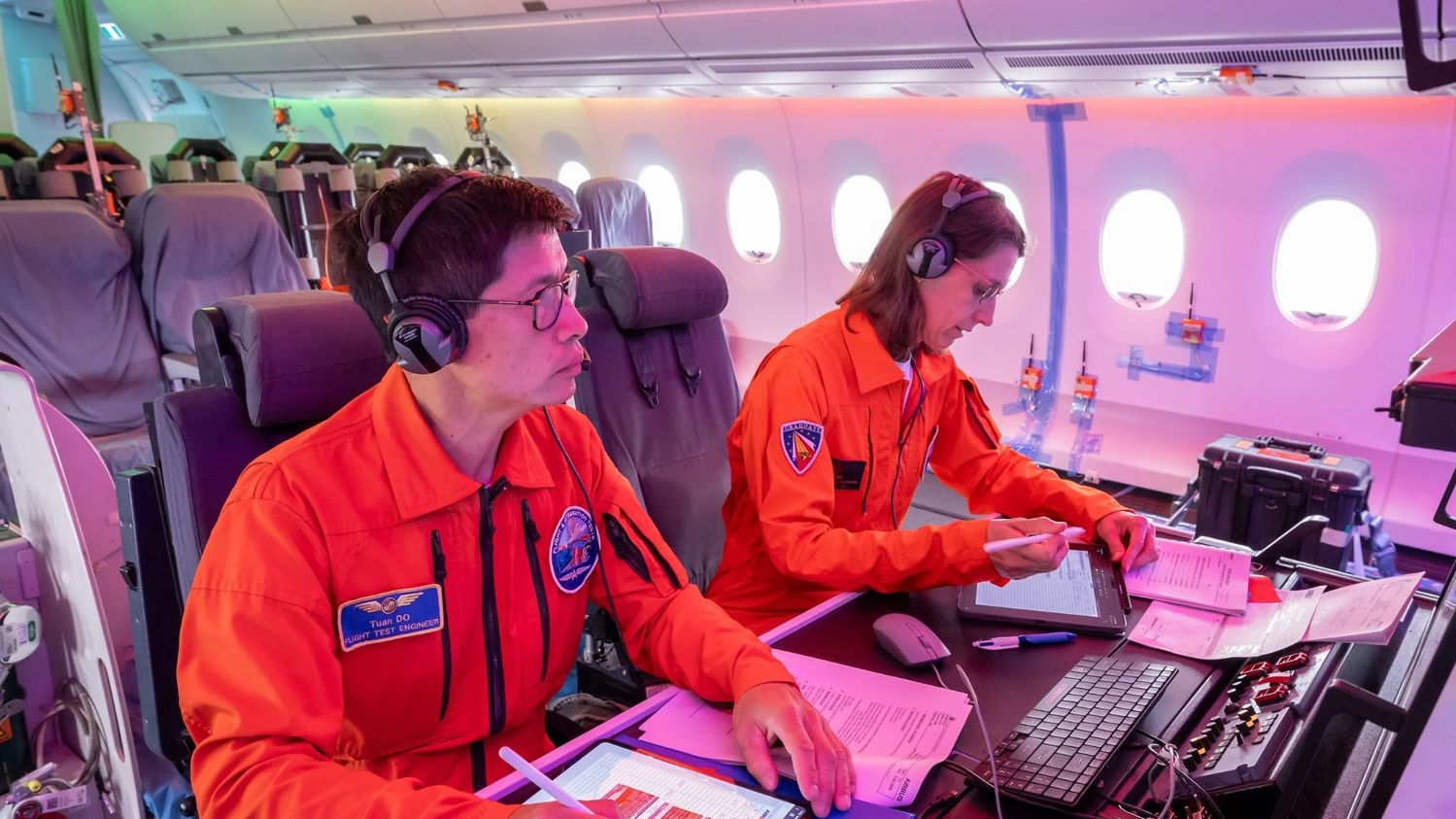
The monitoring station on Airbus' A350-1000ULR test aircraft.
Seats are fitted with heat-emitting systems to mimic the body temperature of passengers, to check the performance of the air conditioning and cooling systems.
It’s all geared to creating a test flight that, from the aircraft's point of view, behaves very much like the real thing.
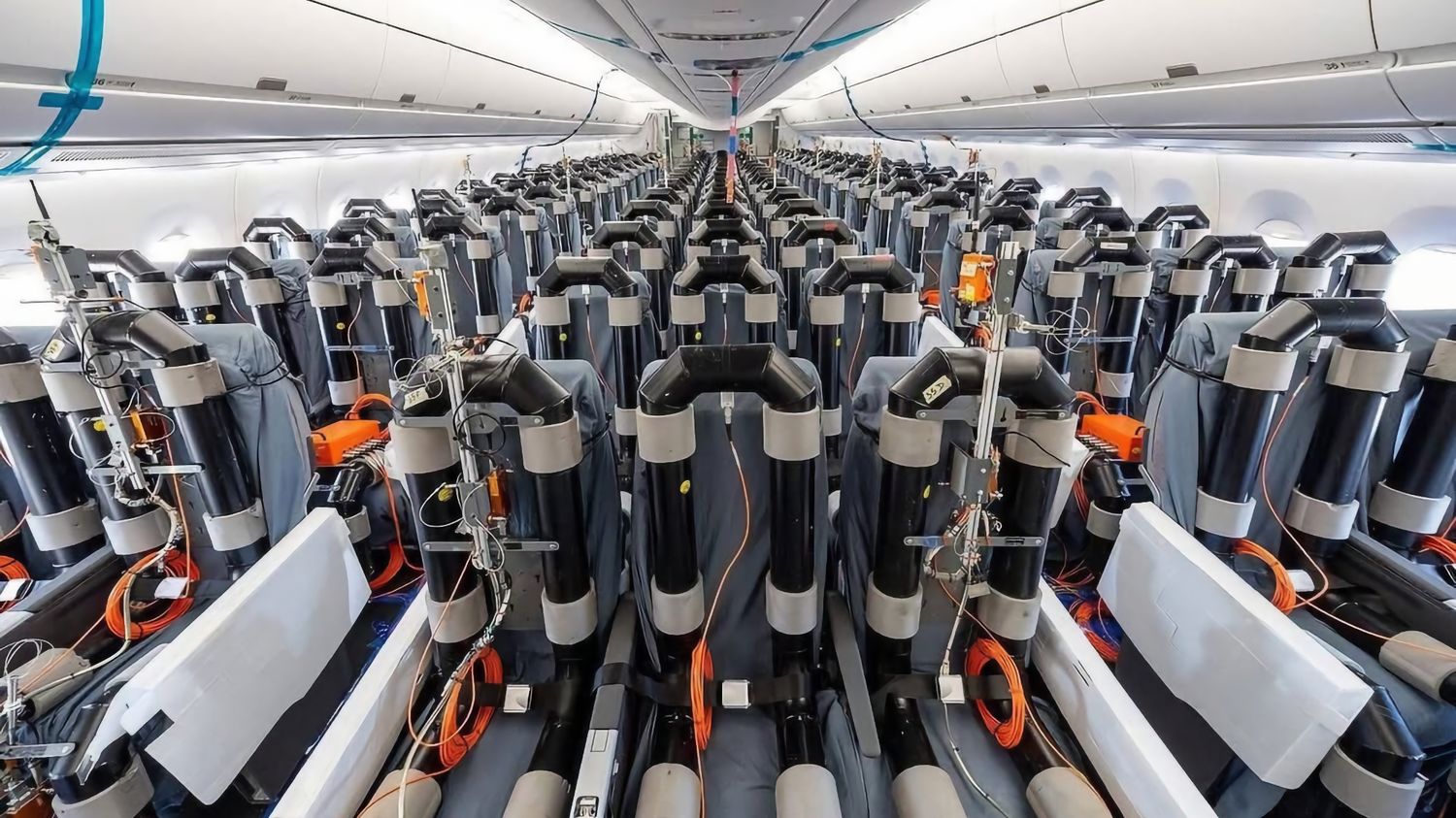 Inside the A350-1000ULR test aircraft.
“Flight testing a production aircraft adds a layer of extra pressure,” says Airbus test flight engineer Laurent Rossignol.
“You are sitting inside the actual product. The customer is trusting us with their future flagship.”
Airbus stress-tests every new type of jet the same way, culminating in a range-proving flight which pushes the edge of the envelope.
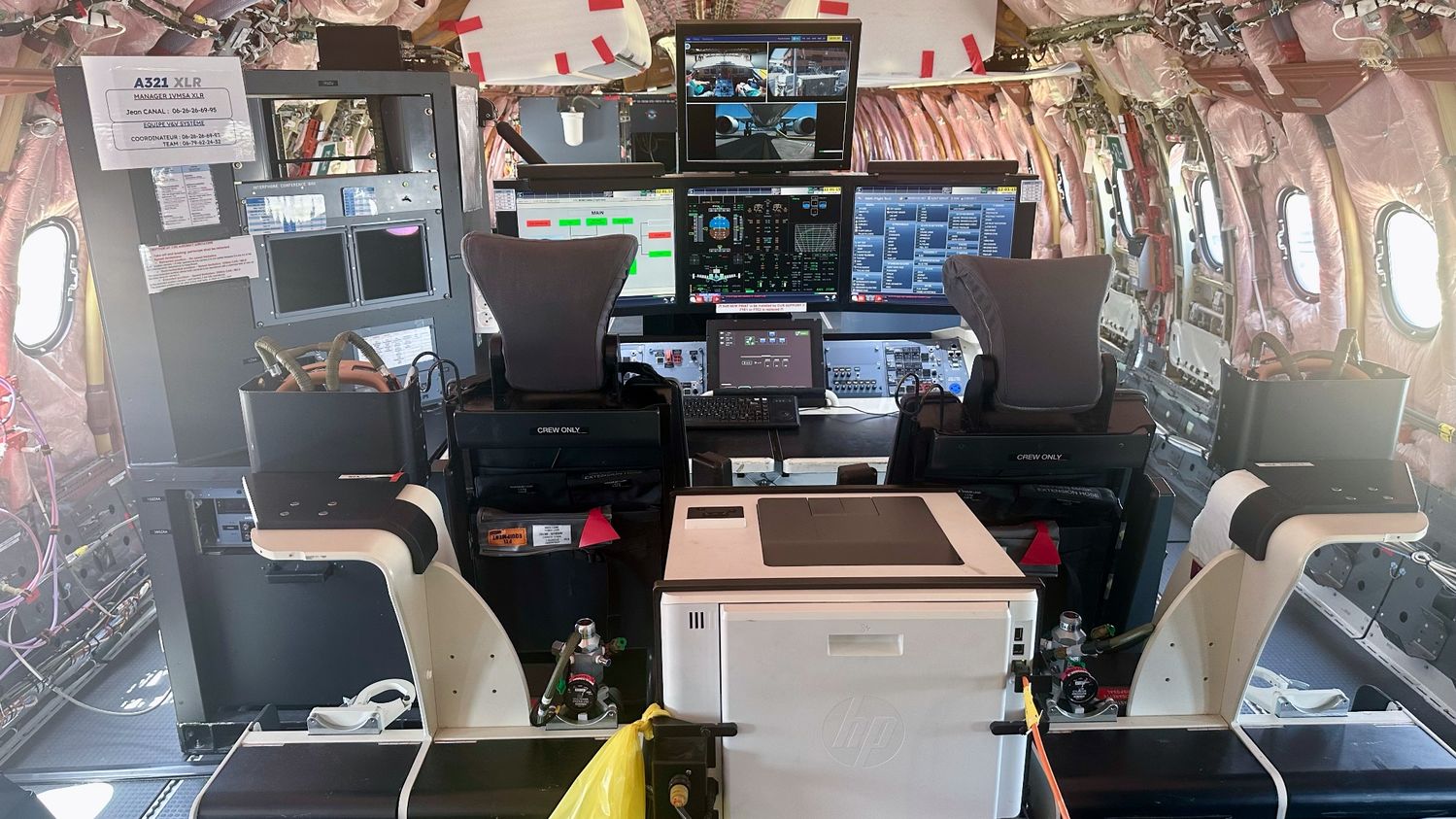 The monitoring station on Airbus' A321XLR test aircraft.
The single-aisle A321LR tackled an 11-hour flight carrying 162 passenger dummies to simulate a realistic airline load.
Similarly, the test version of the extended-range A321XLR was fitted with water tanks to simulate the weight of passengers and cargo.
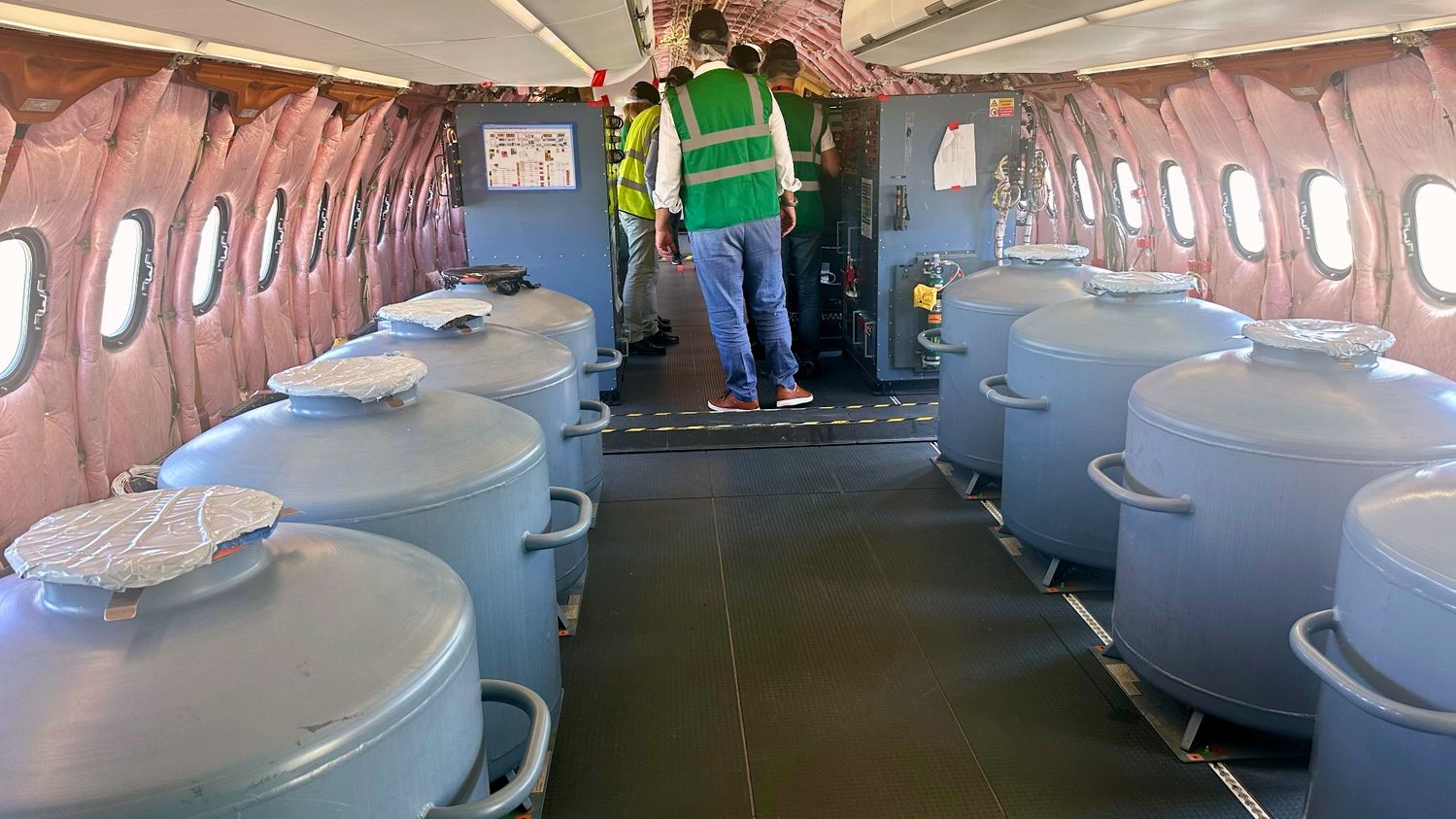 Inside Airbus' A321XLR test aircraft.
The shortest route to the world’s longest flights
Getting the aircraft certified is one challenge.
Operating these flights profitably and reliably for years is quite another.
Qantas will lean heavily on Constellation, a proprietary AI-powered flight navigation system which analyses millions of data points in real time to optimise flight paths across thousands of options.
This sophisticated software guides pilots to the most efficient route – avoiding rough weather and even surfing tailwinds to pick up time and reduce fuel consumption.
Already used across the Qantas network, Constellation saves the airline roughly $30 million a year by shaving a slim-sounding 1% off its annual $3 billion fuel bill.
Not quite the longest-ever Qantas flight…
Project Sunrise will set a new benchmark for the world’s longest non-stop commercial service, comfortably besting the current record of 18.5 hours for Singapore Airlines’ New York to Singapore route.
Yet it won’t be the longest non-stop flight Qantas has ever operated.
That title belongs to a very different era – one from which Project Sunrise gets its name.
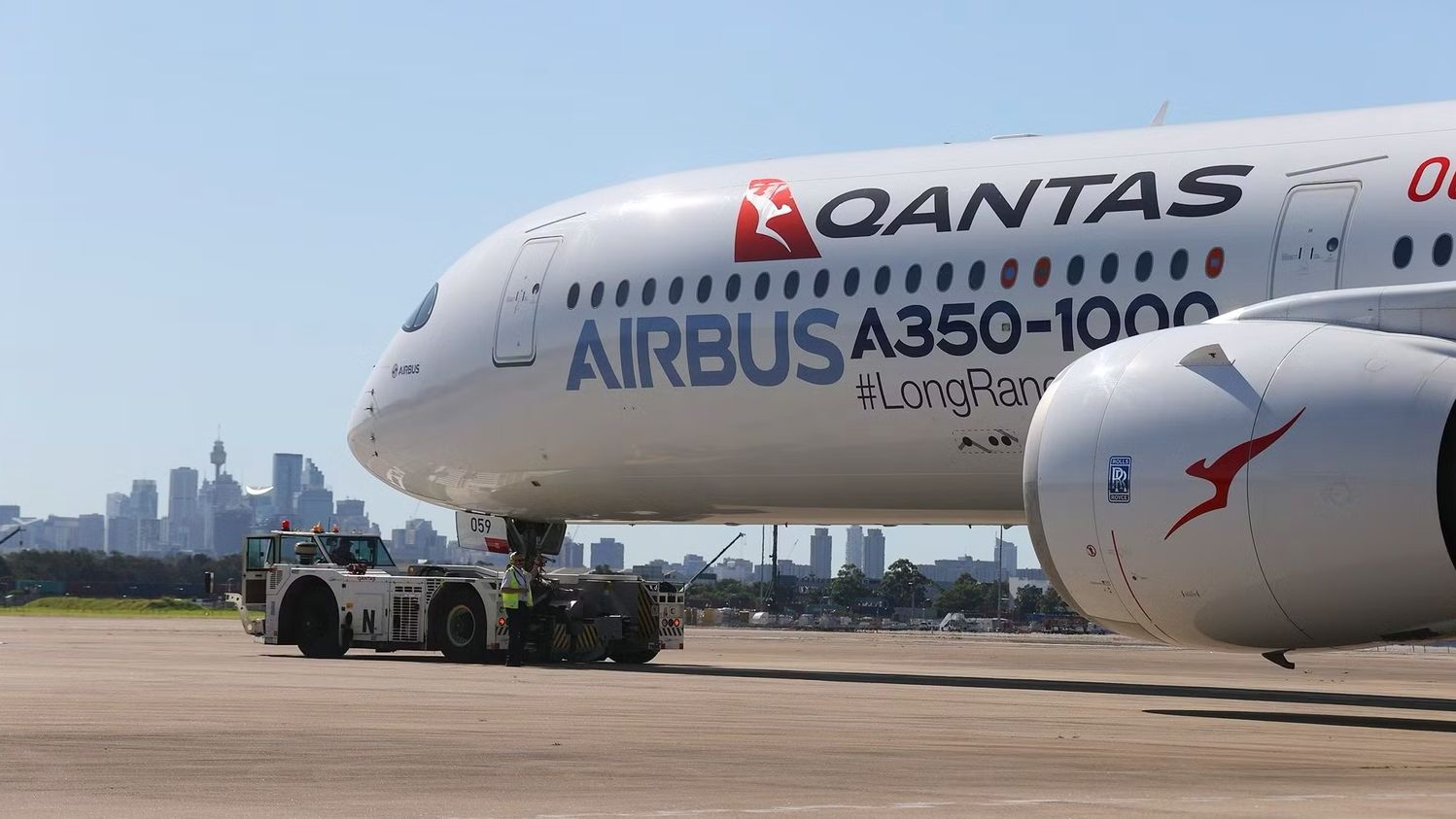
Qantas will begin Project Sunrise flights in the second half o0f 2027.
In 1943, following the fall of Singapore the year before, Qantas began a secret wartime service between Perth and Colombo in Ceylon, using Catalina flying boats.
The flights ran at night in complete radio silence, navigating across the Indian Ocean using only the stars as their guides to avoid Japanese forces.
Carrying only three passengers and 70 kilograms of essential mail, the flights lasted up to 33 hours – so by the time they landed, everyone aboard had watched the sun come up twice.
By comparison, each Project Sunrise A350 jet – which will be named after celestial bodies, in tribute to those stealthy Catalina flights – will carry 238 passengers in a cabin with private suites, lie-flat beds, and a dedicated zone where economy passengers can stand and stretch.

Hi Guest, join in the discussion on This Airbus A350 will soon make a record-breaking 24-hour test flight