

Turkish Airlines confirms A350 premium economy
The Star Alliance member will finally join the worldwide premium economy push.
By David Flynn, June 10 2026
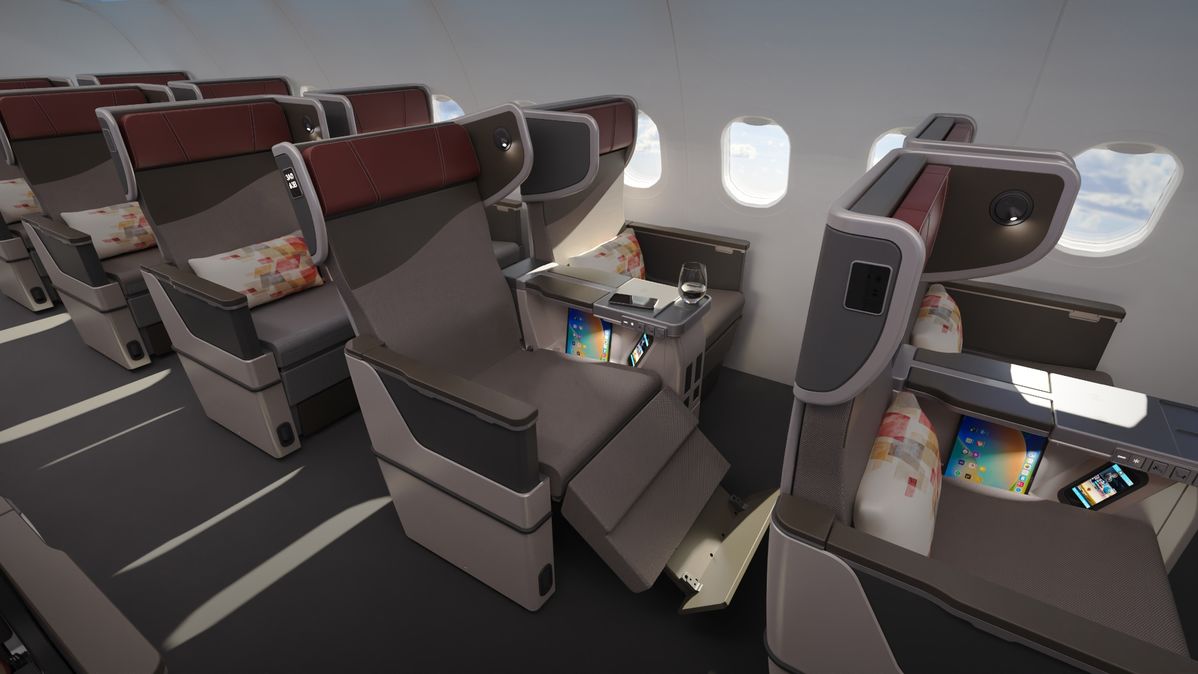
Turkish Airlines will add premium economy to its next generation of long-range Airbus A350 jets, including globe-striding planes which will connect Istanbul and Australia in one mighty non-stop flight.
Newly-minted chairman Murat Seker says the Star Alliance member is on course to launch the mid-market product, which is currently in development, in 2028.
Speaking at the IATA Annual General Meeting in Rio de Janeiro, Seker revealed that the airline is actively developing a new premium offering.
“We are going to have premium economy,” he confirmed to Skift on the sidelines of the International Air Transport Association Annual General Meeting in Rio de Janeiro, adding “our consensus is that the product is going to be very valuable for Turkish Airlines.”
“Our thinking is as early as 2028 – at the beginning of 2028 – we will be able to introduce a premium economy class in our Airbus A350s.”
As to how large the new premium economy cabin would be, Turkish Airlines CEO Ahmet Olmustur told Forbes the airline is planning for “around 8–9% of current economy capacity potentially allocated to the new cabin.”
If applied to the current A350-900 configuation, this would result in around 24 premium economy seats.
The number could be substantially higher on the A350-1000s dedicated to the non-stop Istanbul–Sydney route, which will adopt a premium-heavy layout led by 66 business class suites, up from 48 on the standard A350-1000s.
Turkish Airlines asks the premium economy questions
Earlier this year Turkish Airlines surveyed selected members of its Miles & Smiles frequent flyer program regarding premium economy, asking a number of pointed questions such as:
- the top features they would expect from a premium economy cabin
- which factors would influence their decision to purchase a premium economy ticket
- how they would “like the meal service offered in premium economy to be improved”, and
- willingness “to pay a fare difference to fly in a seat with greater legroom and a wider seating area” on flights of 2.5–5 hours, 5–8 hours, and more than 8 hours.
The poll also sought feedback on the premium economy product and experience of other airlines, and “overall expectations from the premium economy class.”
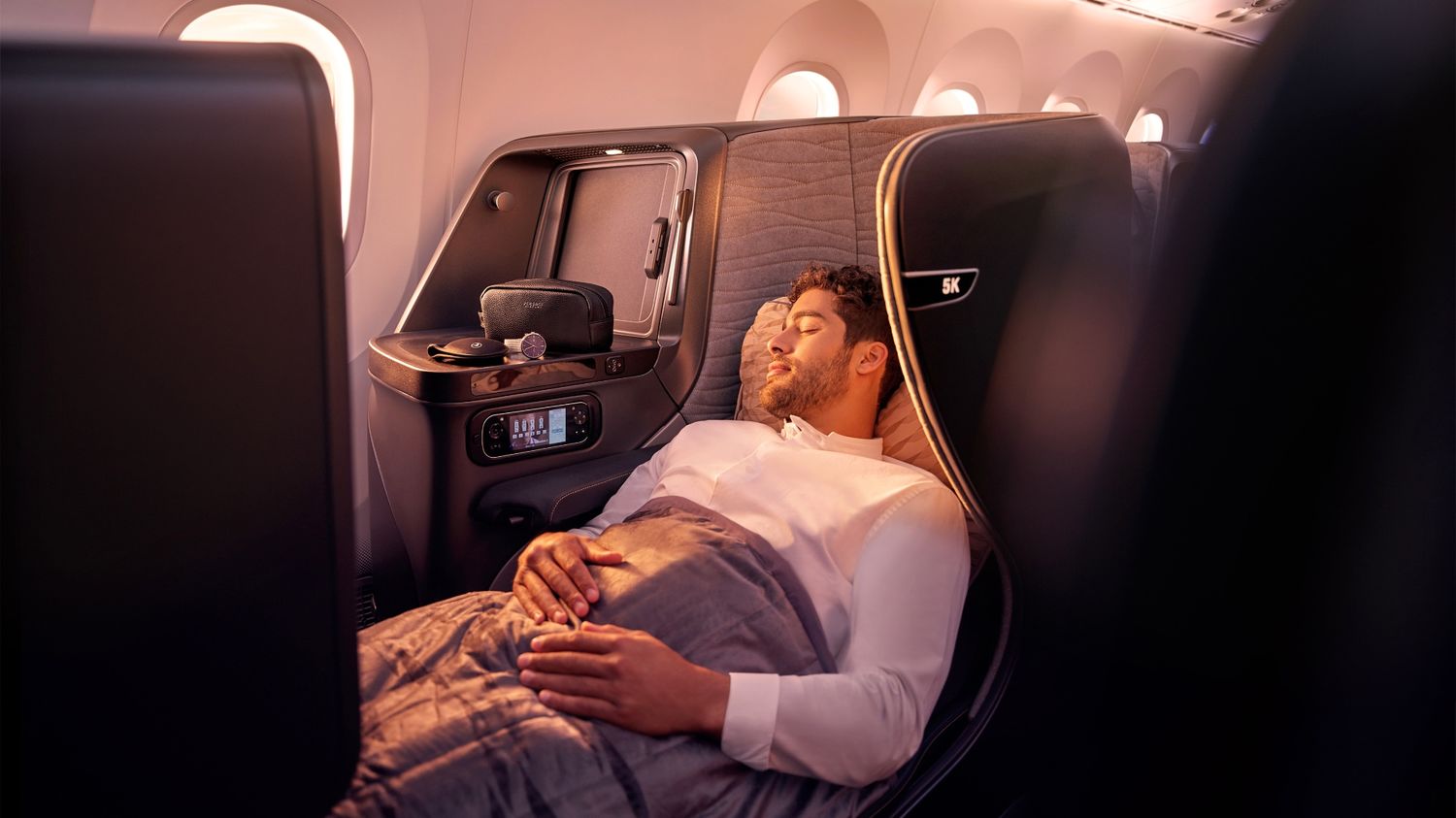
Business class is just one part of the booming 'premium travel' market.
Former chairman Professor Ahmet Bolat had solidly maintained “we are happy with our two-class configuration.”
However, this position was at odds with the bulk of Turkish Airlines’ competitors, which have embraced a better-than-economy product and are now profiting from a worldwide increase in the demand for premium travel.
The return of Comfort Class?
It’s also worth noting that Turkish Airlines is no newcomer to this market.
From 2010 to 2016, the carrier’s Boeing 777 fleet included a ‘Comfort Class’ premium economy cabin with a familiar set of benefits such as wider seats with more legroom, increased recline and an adjustable leg rest, in a relaxed 2-3-2 seating configuration.
Inflight dining in Comfort Class boasted white linens, proper crockery and cutlery and most importantly, better quality food served over multiple courses.
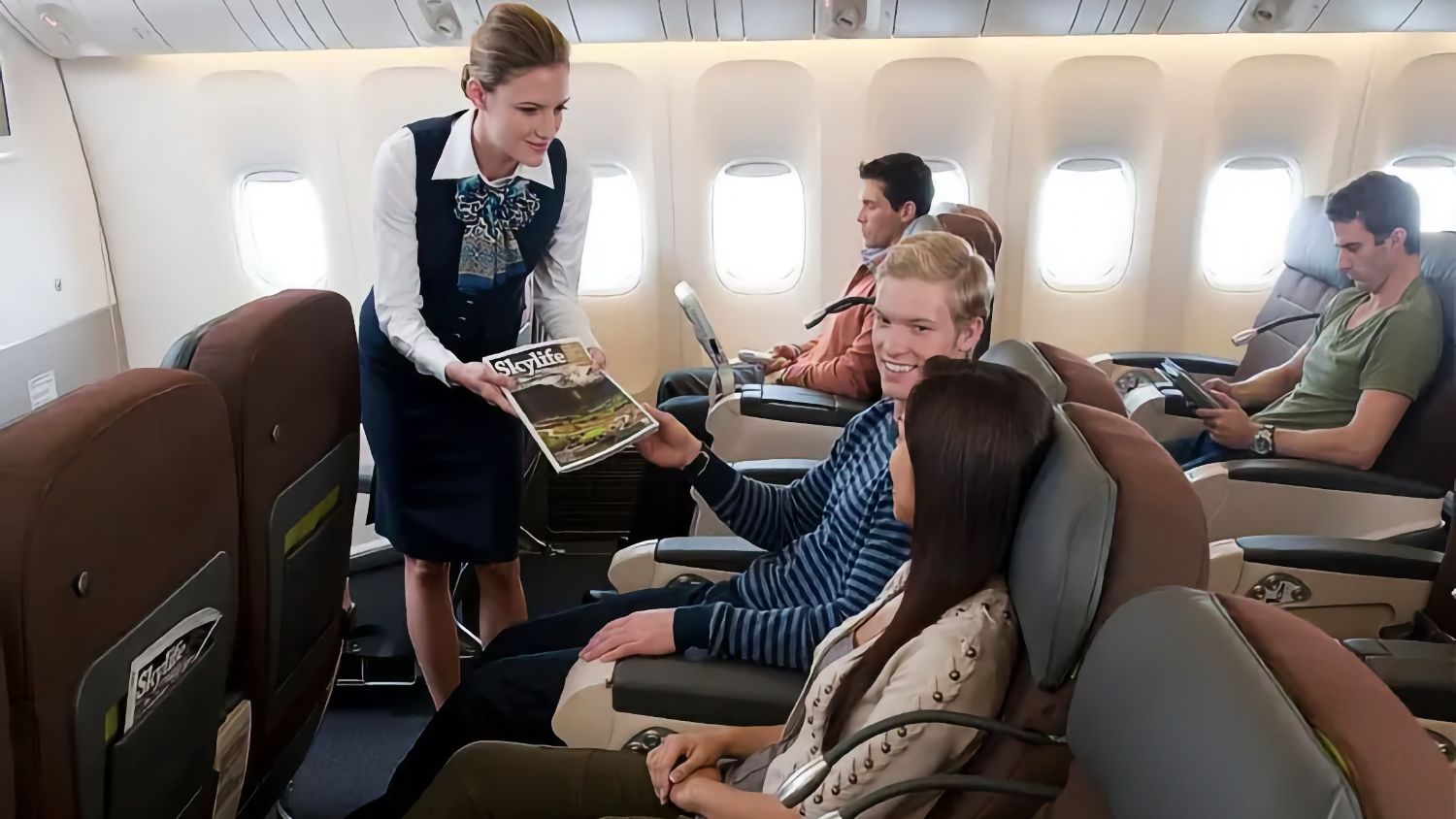
Turkish Airlines' original 777 'Comfort Class'.
So what went wrong?
As Seker admits, “it was probably not the right time and not the right configuration.”
Only the long-range Boeing 777 jets had Comfort Class, which meant passengers with a connecting Turkish Airlines flight to or from Istanbul – such as within Europe or to the UK – most often had to downgrade to a standard economy seat for the rest of their journey.
The 777’s Comfort Class cabin was arguably oversized, with a whopping 63 premium economy seats compared to just 28 business class seats – a ratio that’s generally reversed on other airlines.
Coupled with softer-than-expected demand, this meant Turkish Airlines had more premium economy seats than it could sell, while also facing a consistent shortage of the more profitable business class seats.
Is this Turkish Airlines’ new premium economy seat?
Should Turkish Airlines decide to re-enter the premium economy space, a suitable seat could be right at hand.

TCI's Royalux seat would be an ideal candidate for Turkish Airlines premium economy.
The carrier is a key stakeholder in TCI Aircraft Interiors (formerly Turkish Cabin Interiors), which lists its Royalux seat as being suitable for “business class for narrow-body aircraft or premium economy for wide-body fleets, adapting seamlessly to different cabin configurations.”

TCI's Royalux seat would be an ideal candidate for Turkish Airlines premium economy.
Royalux pairs the in-vogue privacy wings and six-way adjustable headrest with tech-forward traits such as a 15.6-inch screen; AC, USB-A and USB-C outlets, plus optional wireless charging.
Other key specs include a recline up to 10 inches, console stowage and LED lighting, and “ergonomically designed footrests.”
Also read: Turkish Airlines pips Qantas with non-stop Sydney-Europe flights

Virgin Australia - Velocity Rewards
24 Jan 2018
Total posts 870
Yep, good news indeed.
QF
11 Jul 2014
Total posts 1092
It is good news B-T, with SQ only letting First Class passengers into the First Class lounge rather than high tier Frequent Flyers I'm going via Istanbul and the wife can shop till she drops, on the way home of course.
10 Dec 2024
Total posts 34
Good Point!!!, No Loyalty with SQ, just an overcrowded Silver Kris Lounge
Air New Zealand - Airpoints
05 Nov 2014
Total posts 69
I have mixed feelings.
Currently if you book far enough ahead you can get Turkish Business Class from Singapore, Bali or Bangkok to Europe for $3500-5000 return. And it’s 80% of the journey from Australia.
My fear is that they put Premium Economy at that price point and we lose that deeply discounted Business Class.
Qantas - Qantas Frequent Flyer
16 Jan 2018
Total posts 133
Back when they operated Comfort Class on the 777’s, you could get HKG-EU return for about $1250 return. But it was priced comparably on other routes with other carriers. Not sure if HKG was a challenging route to fill at the time, but the v1.0 was the biggest seat ever in Premium Economy 2-3-2 configuration and almost 50” seat pitch. The size of business recliners from the late 90’s early 00’s.
Hi Guest, join in the discussion on Turkish Airlines confirms A350 premium economy