

Proposed UK frequent flyer tax would make airfares skyrocket
The controversial levy could add over £1,300 to the cost of a business class trip between London and New York.
By Staff Writers, March 10 2025
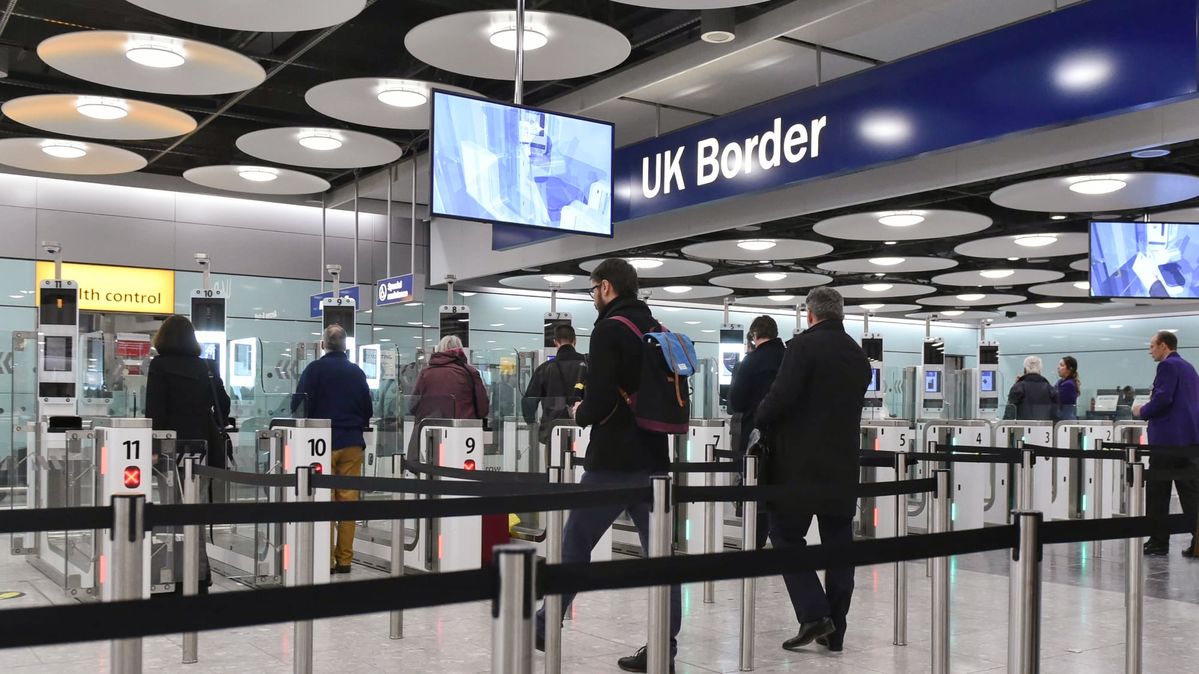
Frequent flyers would be front-line collateral in the war on climate change, under proposals from the UK Climate Change Committee to introduce a “fly more, pay more” levy.
“This is a tax that increases with the number of flights an individual takes,” explains the statutory body, established to advise the government on emissions reductions and chart a course towards aviation net zero by 2050.
In its Seventh Carbon Budget, published last month, the CCC argues that flying is a choice, not a necessity, and so “the cost of decarbonising aviation should be reflected in the cost to fly.”
While a person’s first flight of the year would escape the levy, subsequent trips would attract a tax based on the CO2 emissions of each flight – and this would be an incremental tax that increases with every flight.
Modelling prepared by researchers at the London School of Economics suggests the second trip within a 12-month period – with each trip being counted as a return flight – could attract £50 per tonne of CO2 emitted.
As a benchmark, a London-Paris return trip in economy on an Airbus A320 is responsible for 0.289 tonnes of CO2, according to the MyClimate.org CO2 Flight Calculator, so if this was your second flight of the year it would see an additional £14.40 charge – not a major impost on an average British Airways fare of £440.
But the more you fly, and the further you fly, the higher this ‘carbon tax’ soars.
That LSE modelling has the third trip of the year seeing the levy double to £100 per tonne, the fourth flight at £150 per tonne, and so on.
Frequent flyers would easily make six to ten trips per year, but even if we peg a mid-point at the fourth trip, that would see £1,320 added to a London-New York business class ticket (for 8.8 tonnes of CO2.)
Headed to Singapore? At 14.1 tonnes of CO2, the fourth-trip levy would add £2,115 to the cost of a business class return fare.
The UK government has no obligation to embrace the advice of the Climate Change Committee, but its broader recommendations are not out of step with other organisations calling for a ‘green tax’ on air travel.
This extends far beyond current ‘green tax’ surcharges such as those of Lufthansa and Swiss vary from €1 to €72, depending on both the length of the flight and what class you’re travelling in.
COP it sweet
At the United Nations COP29 climate change conference in November 2024, a tax on frequent flyers was tabled as one measure to help raise money from developed nations to support developing countries in transitioning to cleaner economies.
The Global Solidarity Levies taskforce – which is backed by United Nations Secretary-General Antonio Guterres – advocates “taxation of high-emitting sectors, which has the potential to raise significant amounts of revenue that could be used to fill the climate financing gap.”
Among the taxes outlined in the group’s COP29 Interim Progress Report are a ticket levy “which would be mandatory at a higher rate on luxury tickets (business, first, private)”, along with a “a frequent flying levy with a rate that would progressively increase with the number of flights taken by a passenger each year.”
Under the proposal, frequent flyers would be charged US$9 (AUD$14) on top of their airfare for their second flight within a year.
This surcharge would rise with every additional flight they take, up to US$177 (AUD$274) for their twentieth flight within the same year.
This is estimated to raise US$121 billion per year in financial assistance for developing countries as they move away from a high-emission culture.
The taskforce also suggests “a levy of US$30 on economy seats and US$120 on premium class seats with global coverage on domestic and international flights would raise US$164 billion per year with global coverage on domestic and international flights, and 58 billion per year when applied only to high-income countries and only international flights.”
A European frequent flyer tax?
As previously reported, environmental campaign groups Stay Grounded and the New Economics Foundation (NEF) have also floated the idea of a European ‘frequent flyer tax’ to raise money while discouraging unnecessary flights.
For the first two flights taken in a year there’d be a €50 surcharge for economy class passengers on medium-range flights, although this would be climb to €100 for travellers in business class and first class, as well as anybody on a long-range flight.
For the third and fourth flights, a €50 levy would be added to every plane ticket – with an additional €50 surcharge for medium-range flights, which would double to €100 for first class and business class travellers as well as everyone on long-range flights.
For fifth and sixth flights, the levy would again rise to a baseline of €100 per medium-range flight, plus the additional surcharges.
On the seventh and eighth flights the frequent flyer tax hit €200, before rising to €400 for every flight thereafter.
The rationale is to ensure occasional flights remain affordable for lower income groups, while targeting “excessive pollution” caused by wealthier frequent flyers.
“It doesn’t matter whether you’re flying to visit your family for the first time in years, or taking a tenth annual flight to your luxury house on the coast: you’ll be paying the same tax for that flight,” explains Stay Grounded’s Magdalena Heuwieser.
“A frequent flying levy would be a fair aviation measure, reducing excessive flights for wealthy passengers, while raising revenues – including to expand and provide affordable railways and public transport.”
The report says studies show 52% of respondents in Western Europe don’t fly at all in any given year, while 11% cent of people fly more than three times a year.
These travel habits are heavily skewed towards the wealthy: 35% of households earning over €100,000 take three or more return flights a year, versus just 5% of households earning less than €20,000.

Qantas - Qantas Frequent Flyer
05 Oct 2016
Total posts 155
What a tax scam and grift, based on a hoax. There is no such thing as human induced climate change and nothing humans do will change the climate.
Qantas - Qantas Frequent Flyer
28 May 2012
Total posts 95
And who is going to track your flights? Will BA have to ask Air France how many flights i took prior to calculating my airfare? I think not.
Most people who are frequent flyers are flying for work. So in the end the consumer will pay higher prices as the cost will be passed on.
11 Sep 2015
Total posts 269
This would probably be tied to your passport, although of course that wouldn't work for domestic flights, maybe this tax is not going to apply to short-haul domestic flights?
American Airlines - AAdvantage
02 Jun 2019
Total posts 24
This is the wrong type of TAX.
The Government mentality of "lets tax airplane travel" has been around as long as the wright brothers. Its already overtaxed, remember Tony Blair's Air Passenger Duty. Labor already has a huge aviation tax, do they want another? Lets Hope Not, if they add another I am flying from Amsterdam or CDG.
Delta Air Lines - SkyMiles
16 Oct 2017
Total posts 177
No doubt politician travel, junket or not, would be exempt.
Qantas - Qantas Frequent Flyer
10 Jun 2019
Total posts 8
So I travel all year for work and then get hit with a maximum tax / fee / levy for a family Christmas trip... seems fair.
Virgin Australia - Velocity Rewards
03 Oct 2016
Total posts 24
The Air Passenger Duty is already so high I don’t stop in London on the way through from Europe. If they add another I won’t even visit London anymore.
There are so many issues with this tax. On face value it seems fair but many reasons it is not. If I travel for work during the year then have a personal trip later it makes my personal trip sky high. The costs to track peoples travel across the globe will negate the money earned and finally it will make travellers avoid the UK, not air travel overall.
“Air travel not necessary” clearly these people don’t live in Australia. I don’t think spending months on a boat to cross the ocean is practical. Even travelling relatively close LHR to JFK is practically impossible any other way.
Lastly, yes let’s punish every “not necessary” habit that exists and live in a world devoid of optional experiences.
29 Jan 2012
Total posts 219
What a load of rubbish - as we all know it's nothing more than a luxury tax and money grab.
We will have no choice but to pay if implemented and this will be the bottom line.
Jetstar Airways - Qantas Frequent Flyer
03 Jul 2018
Total posts 58
I think a frequent flyer tax makes sense, but there needs to be better alternative travel before you penalise people. I love the Eurostar because it actually saves time going from city centre to city centre, but some journeys in Europe take DAYS to get from one country to another, often involving overnight trains, and scrambling from one train to another with all your luggage in tow. This is where the money can be better spent and Japan is a great example of how it can be achieved.
Hi Guest, join in the discussion on Proposed UK frequent flyer tax would make airfares skyrocket