

Superjumbo story: how the A380 soared, then slumped
Twenty years after its stunning debut, here is how the superjumbo went from hero to zero, and back again.
By Staff Writers, October 30 2025

When the Airbus A380 first lumbered into the skies in 2005, it was heralded as the future of aviation.
For Airbus, it was more than just another aircraft. It was Europe’s answer to the Boeing 747, and a declaration that Airbus could not only match its American rival, but surpass it.
The ‘superjumbo’ was a big, bold bet: a double-decker colossus capable of carrying more than 500 passengers, with almost 6,000 square feet of usable floor space – almost 50% more than a Boeing 747.

This thinking seemed sound at the time. Aviation was booming, and major hubs like London Heathrow, New York’s JFK and Singapore’s Changi were already bursting at the seams.
Airbus believed that airlines would need a giant aircraft to cope with demand. Airports, after all, couldn’t build runways and terminals fast enough.

The A380 would be the solution, engineered for a world of “hub-and-spoke” flying: pack passengers into giant planes, move them between megahubs, then sending them on smaller jets to their final destination.
Airbus’ designers tempted and teased airlines with concepts of how the A380 could “provide their passengers with a totally new flying experience”.
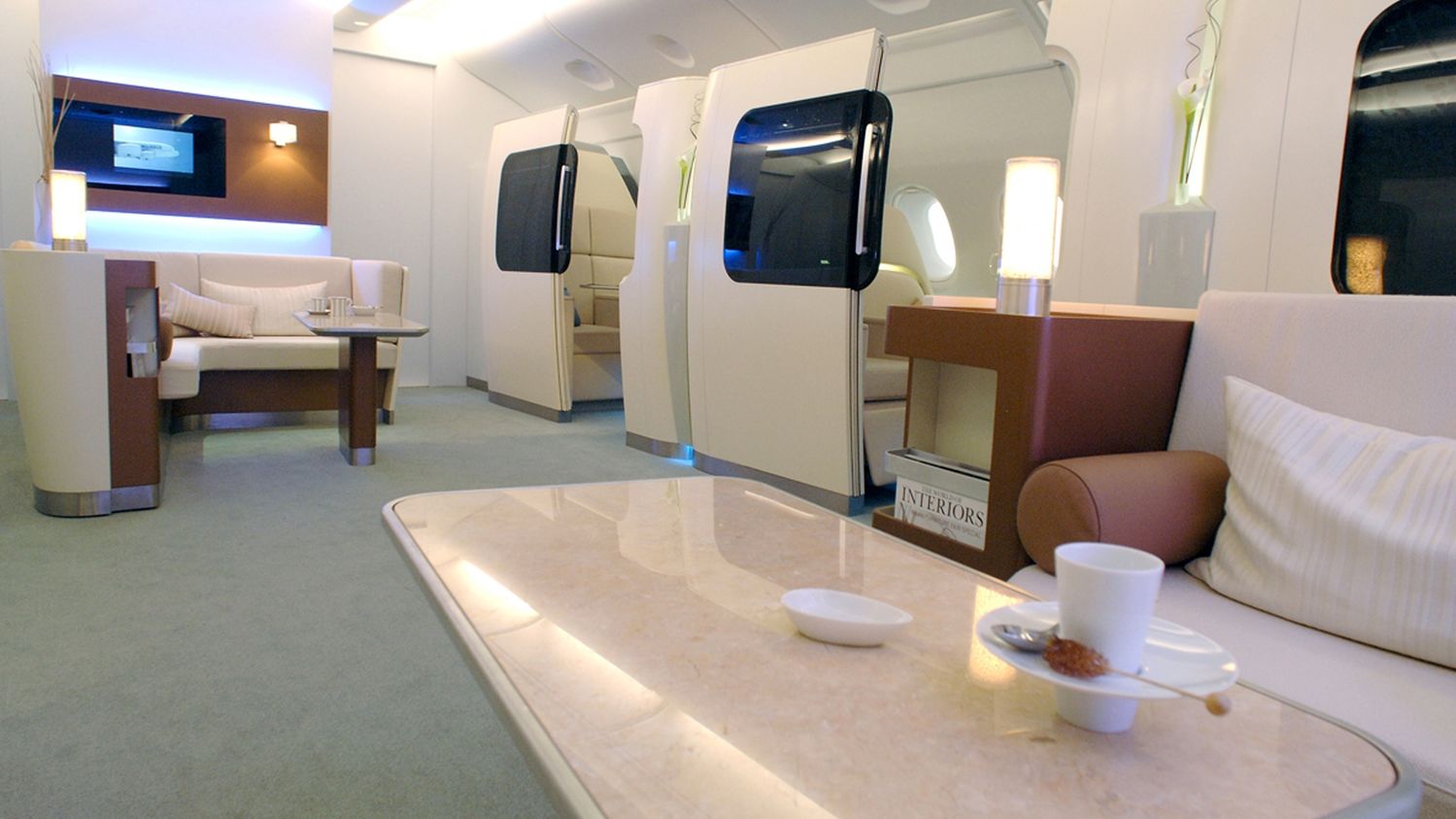
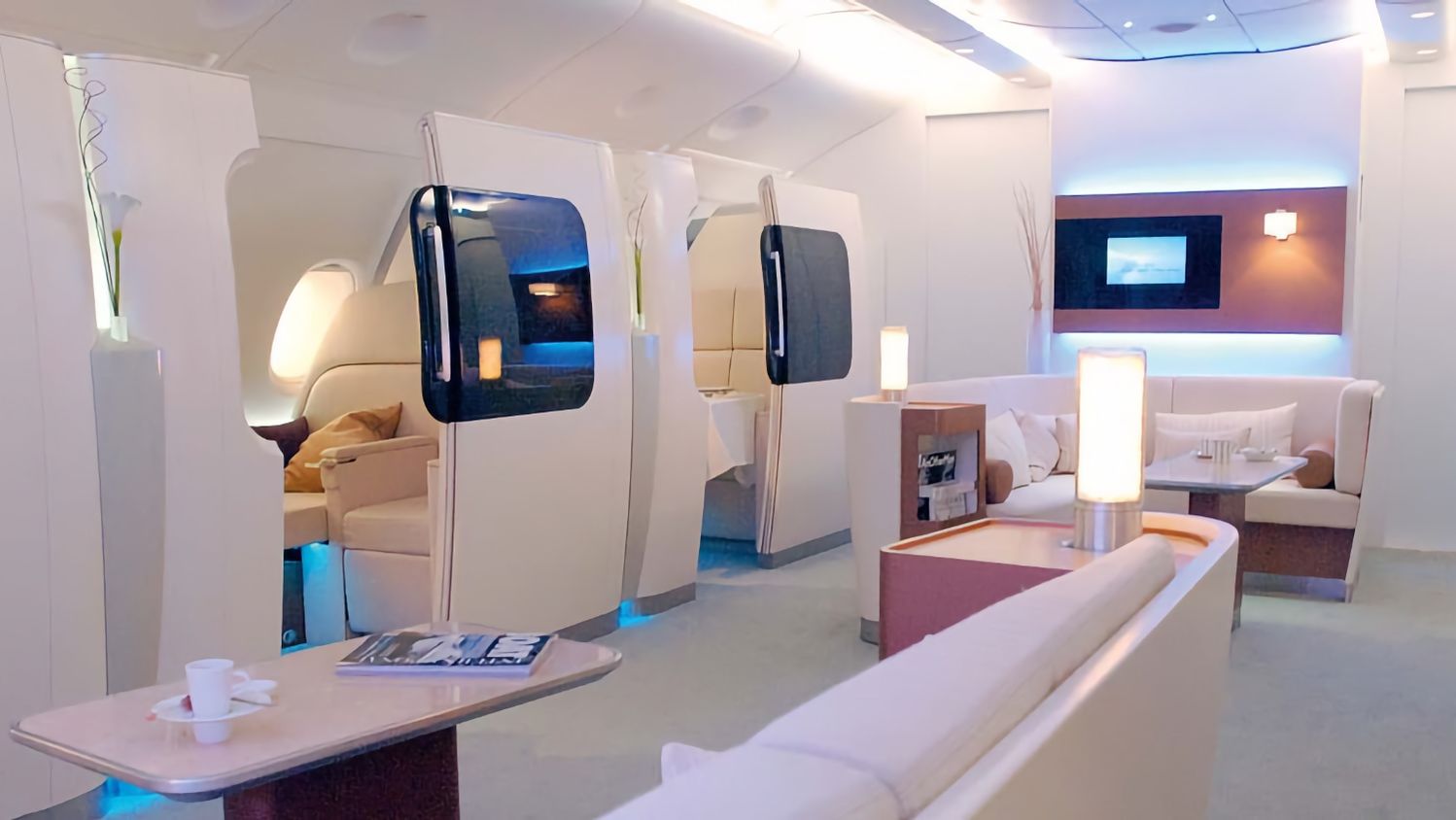
This mock-up showed private first class berths inspired by Europe’s luxury trains, with an inflight lounge in the middle of the cabin.
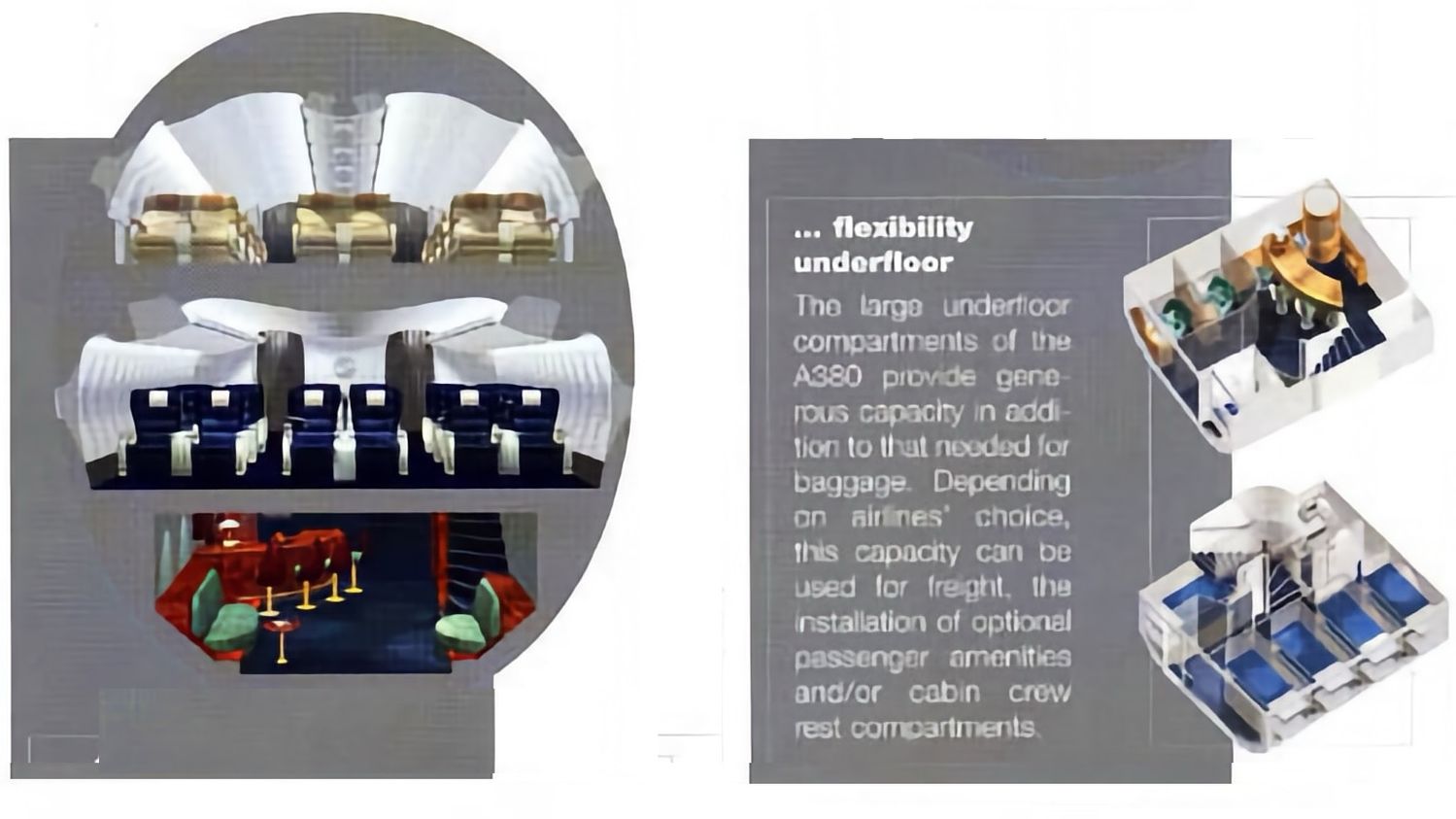
Airbus even went beyond the A380’s twin-deck design to suggest “the large underfloor compartments of the A380” could be used for “the Installation of optional passenger amenities and/or cabin crew rest compartments.”
When Singapore Airlines launched the first commercial A380 flight in October 2007, between Singapore and Sydney, the hype was off the charts.
Inside, the cabin felt like nothing else in the sky. Quieter. Roomier. Even in economy, there was an undeniable sense of space.
And in the premium cabins, airlines offered private first class suites that were more like cocoons.
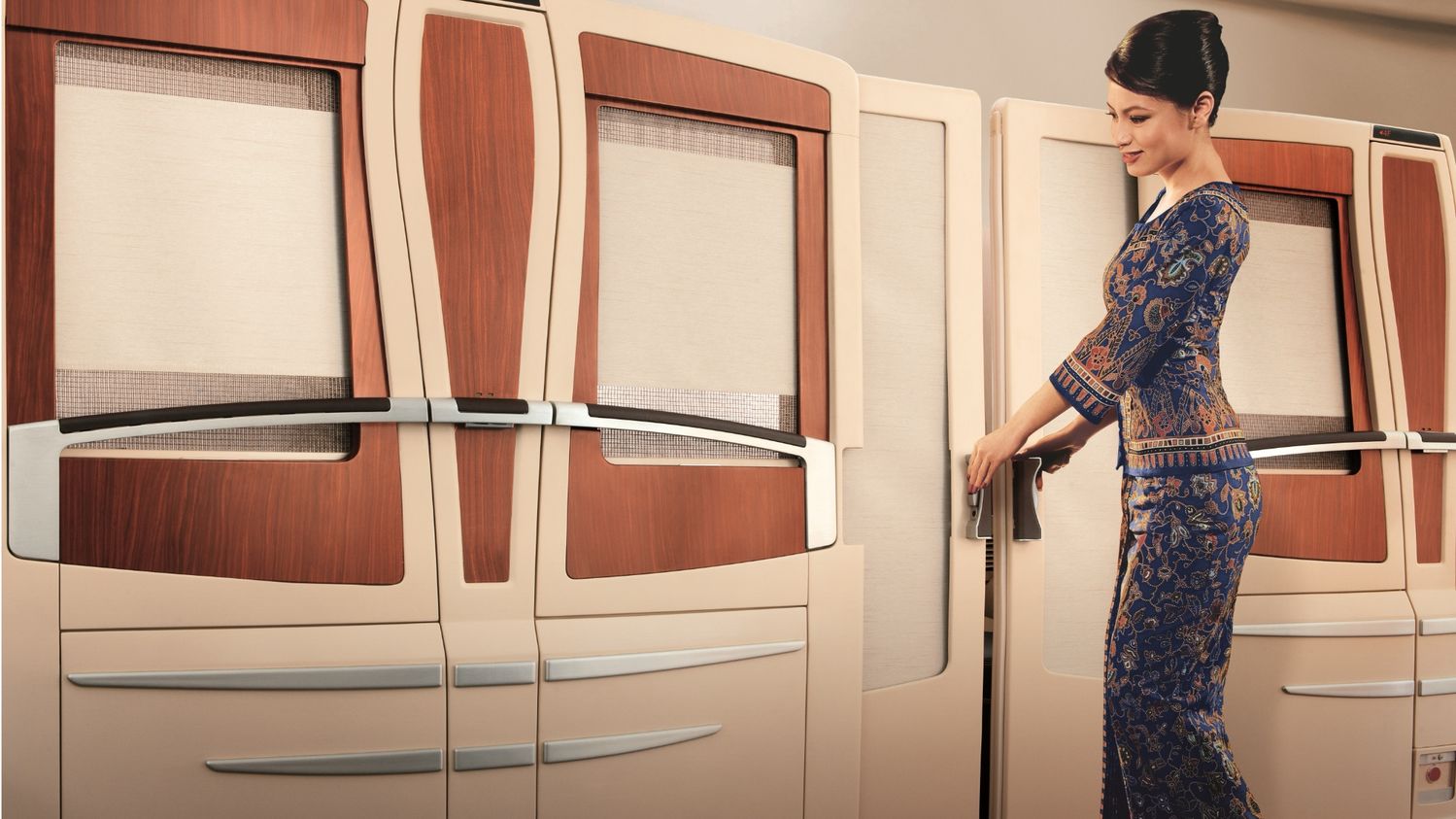
Singapore Airlines allowed the two middle suites to be converted into a shared suite with a double bed.
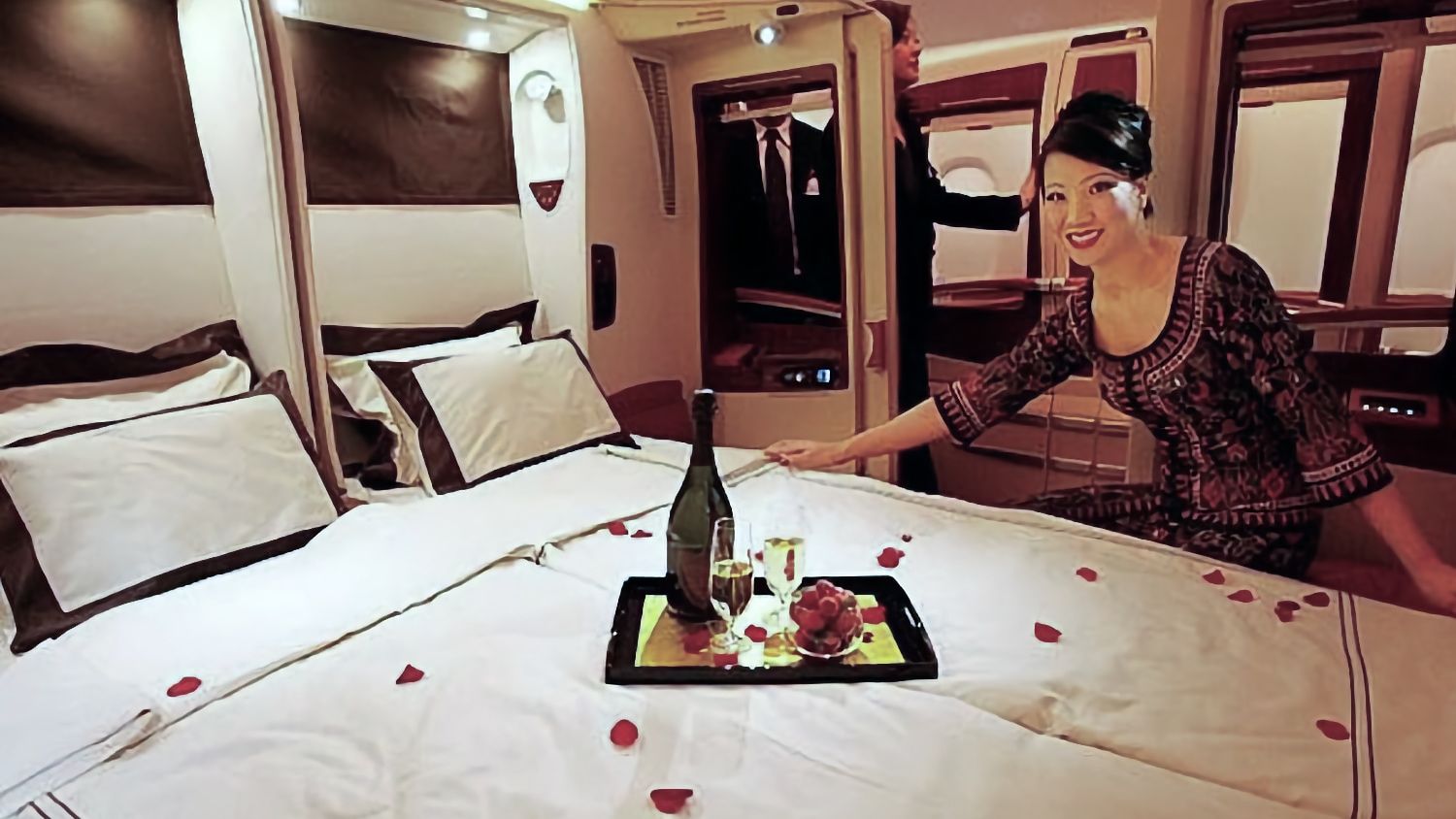
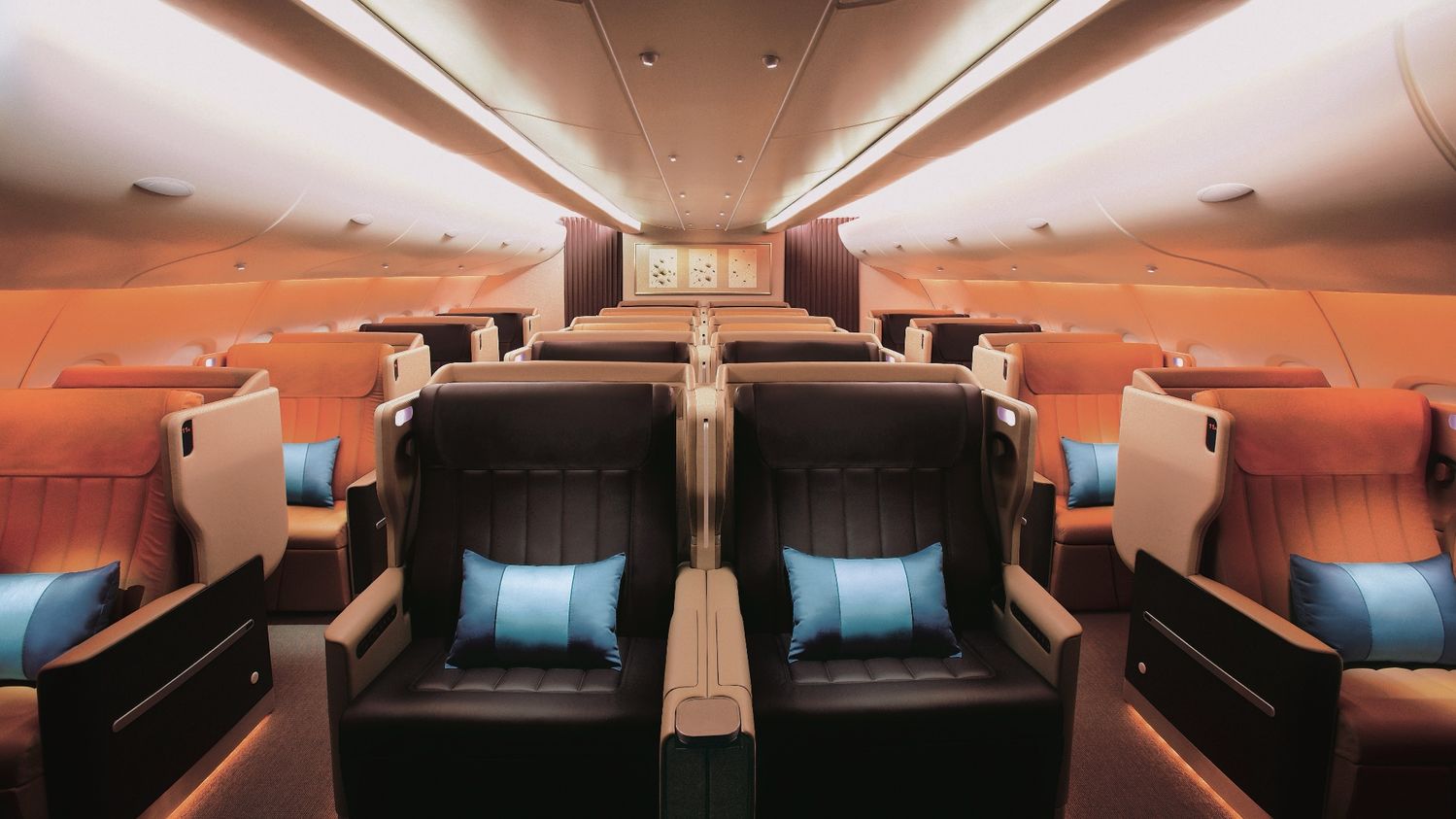
In business class, some passengers would complain the seats were too wide to nestle into and get cosy.
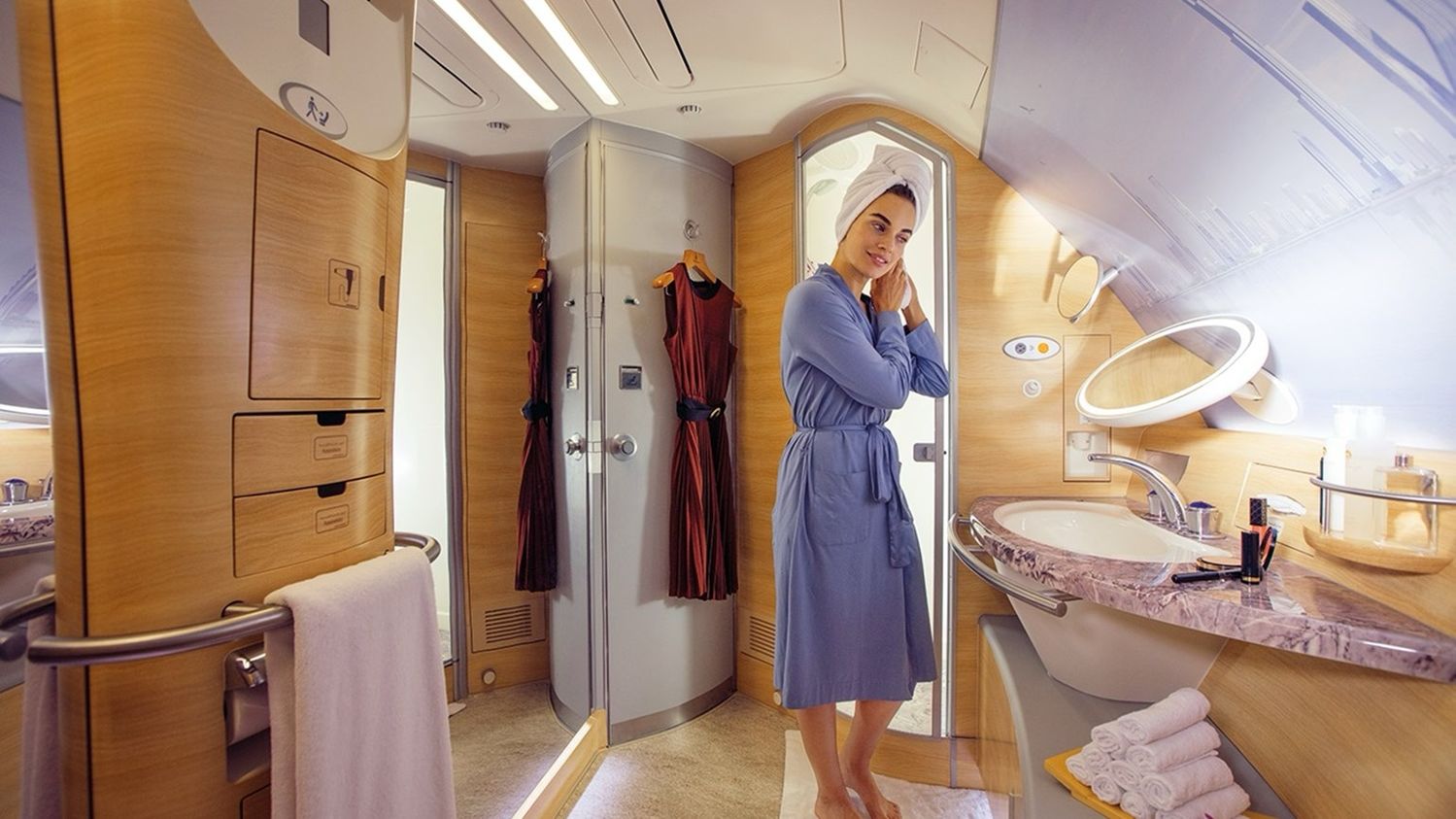
Emirates, the second airline on the A380 order book, went above and beyond with inflight showers for first class...
... and, at the rear of the upper deck, a cocktail lounge providing an exclusive sanctuary for business and first class passengers.
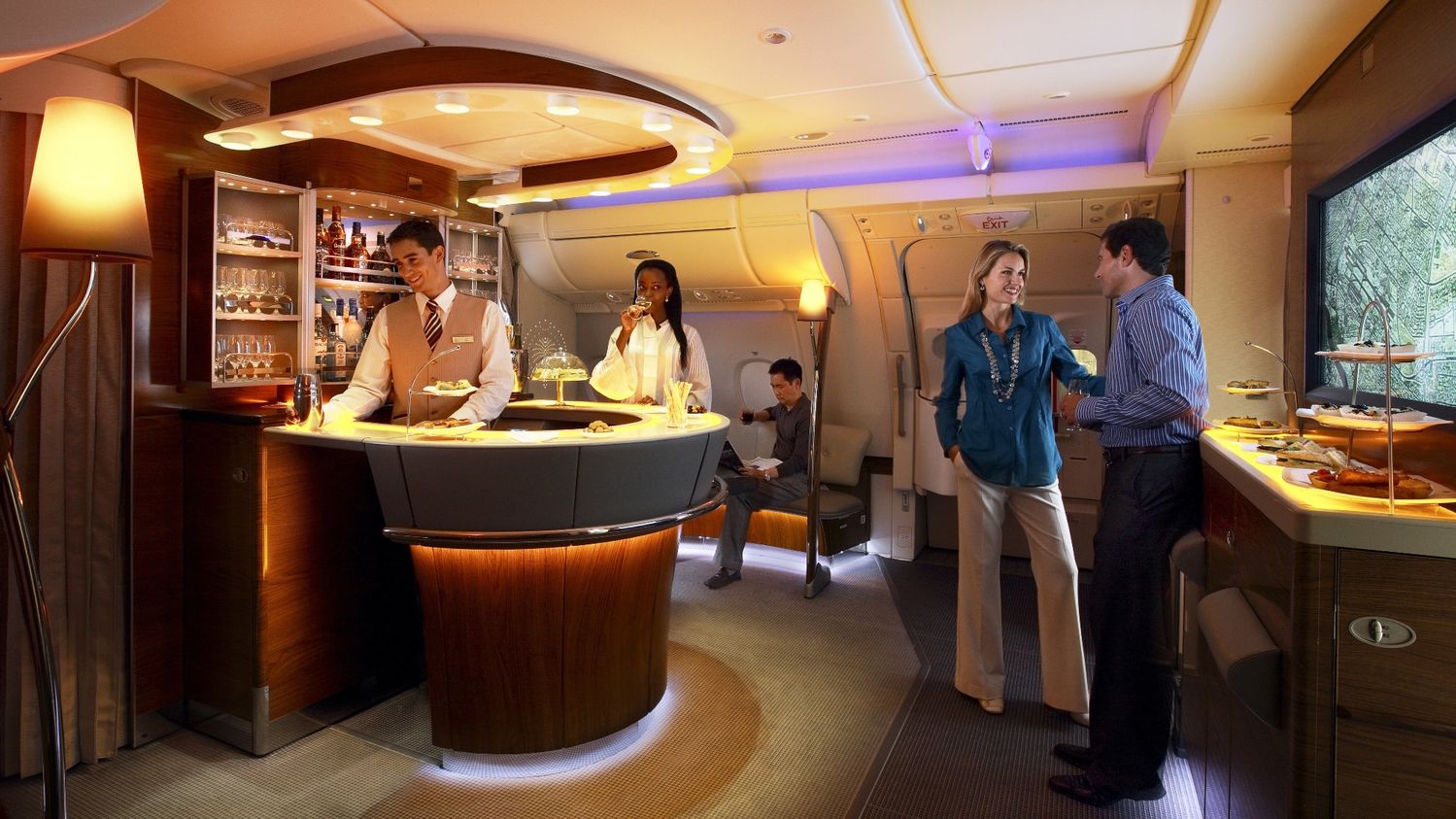
This horseshoe-shaped bar has since become a signature element of Emirates’ A380 experience, but at the time it was something of a gamble, so Emirates president Sir Tim Clark hedged his bets.
“I designed the bar at the back of the aircraft on the upper deck, on the understanding that if it didn’t work, we could remove it in 96 hours and put eight more business class seats in,” Clark revealed to Executive Traveller several years back.
That’s why the earliest Emirates A380s still have overhead luggage lockers in the space above the bar – to facilitate that quick conversion back to being a business class cabin.
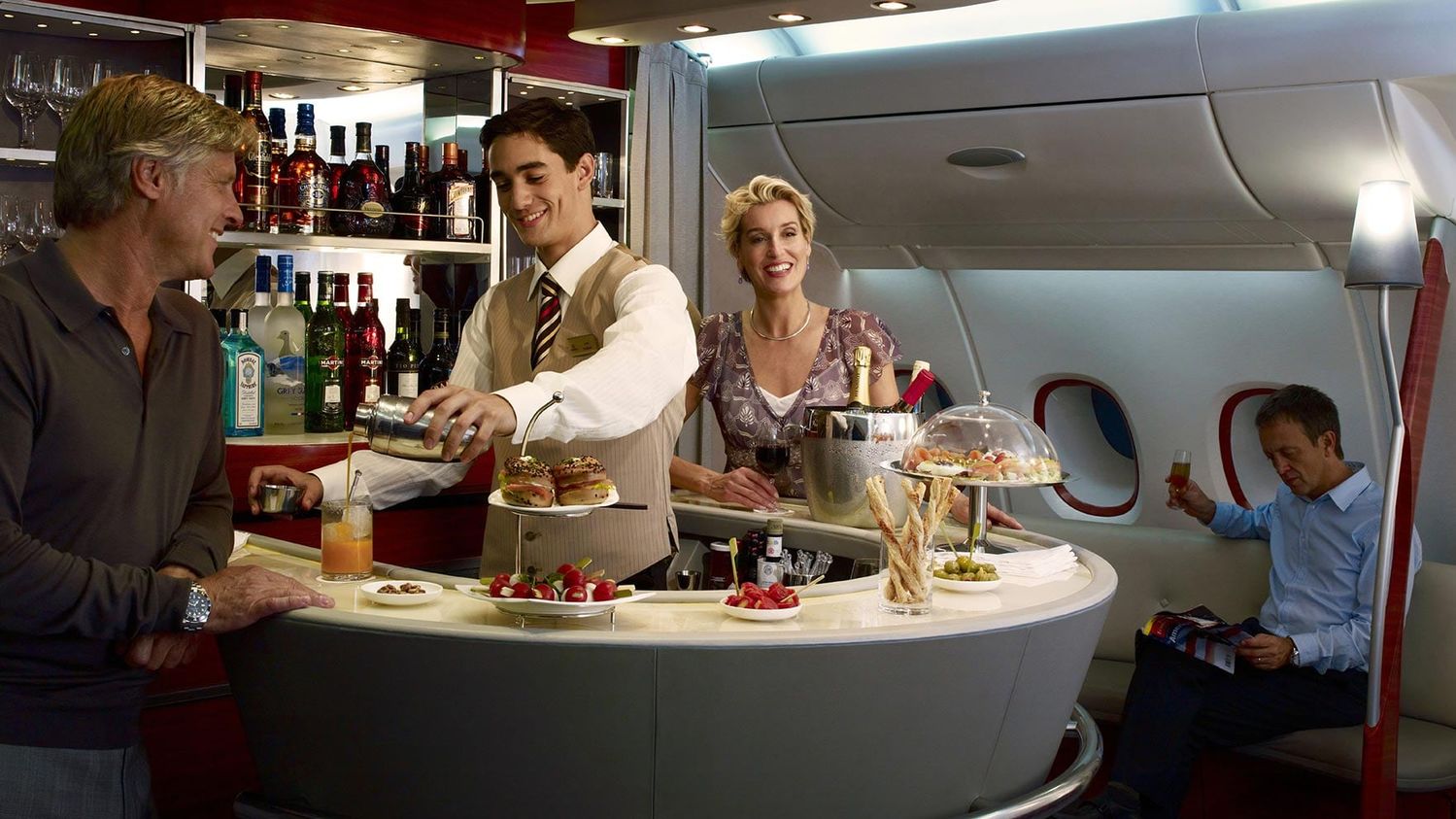
A 2017 redesign of the bar, which is now being rolled out across the A380 fleet, did away with the overhead bins while adopting a brighter aesthetic and adding more communal, cafe-style seating.

Etihad Airways leant even further into luxury with its three-room The Residence...
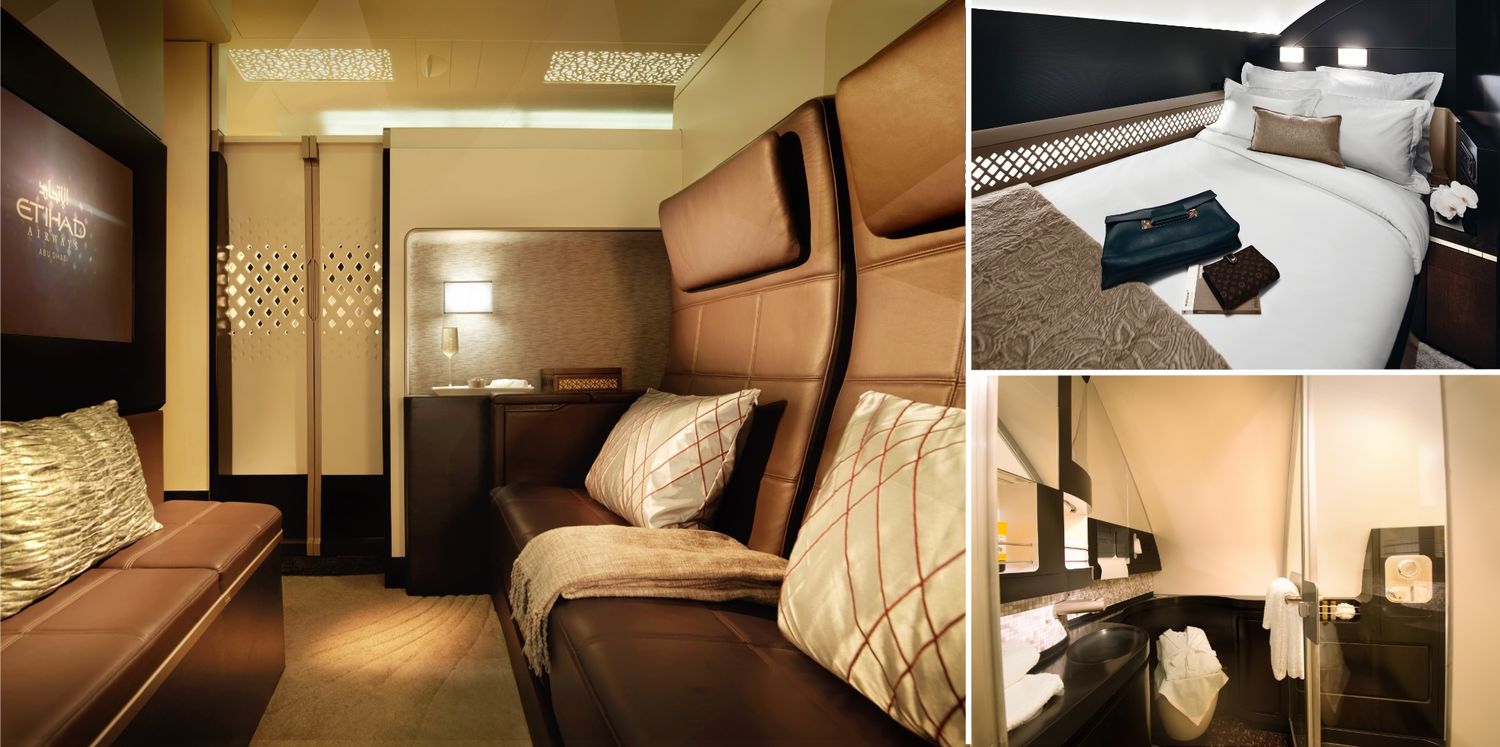
... while Korean Air ripped out several rows of economy seating to create a duty-free showcase.
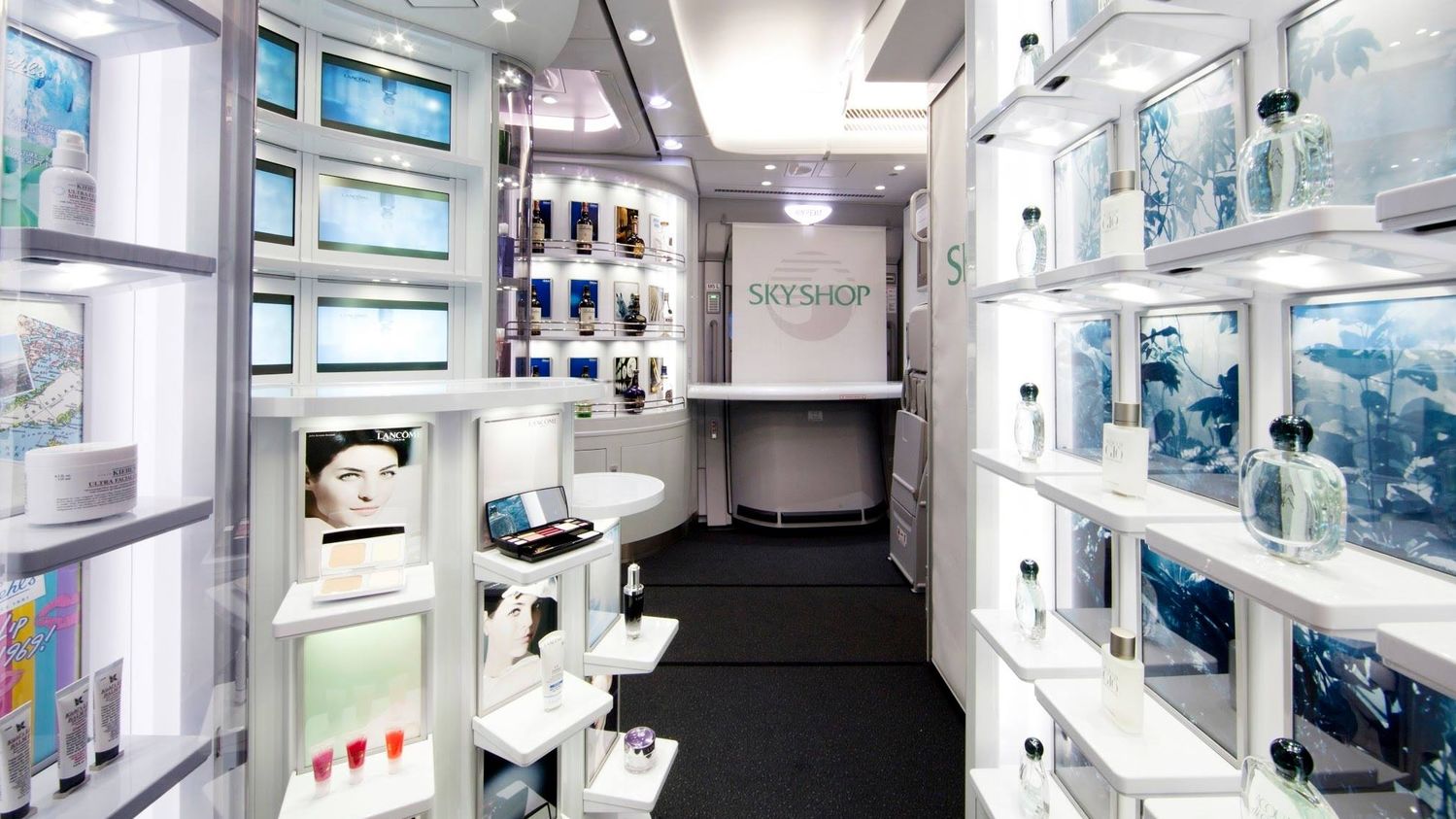
Some dismissed this as a folly, but Koreaan Air correctly calculated that revenue sacrificed by those missing seats would be more than recouped by increased inflight duty-free sales.

Behind the A380’s glamour, though, cracks were showing.
Air travel was changing – and not in the way Airbus expected.
Travellers were less enthused about making two flights via a megahub airport, than flying directly, without the trouble of a time-consuming stopover.
And while Boeing created a stretched version of its iconic jumbo jet in the 747-800, its real focus was on the all-new 787 Dreamliner: a smaller, more modern twin-engine jet that could efficiently fly long distances point-to-point.
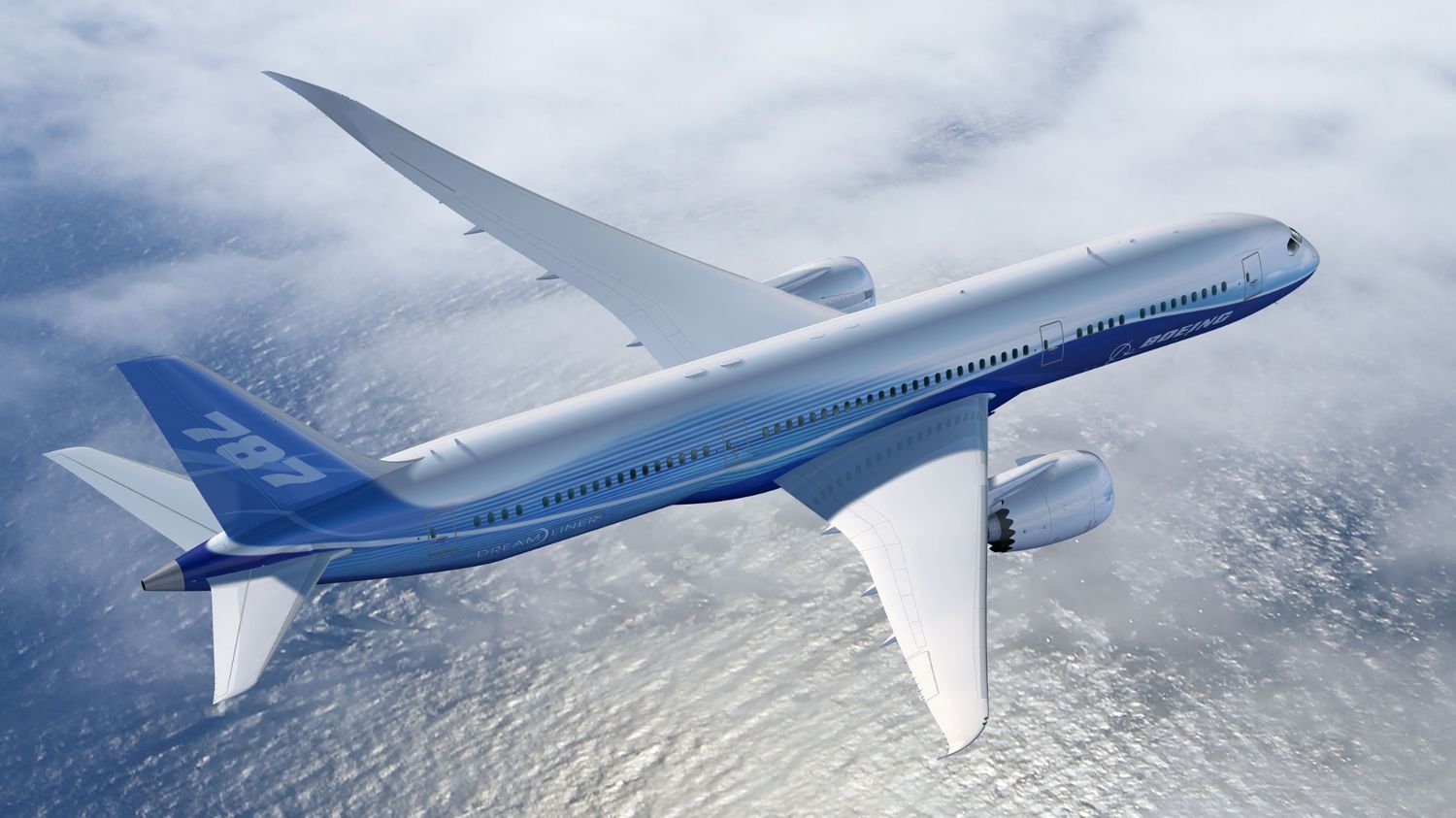
Airlines loved the Dreamliner: it let them open new routes, keep planes full, and save on fuel.
By contrast, the A380 – with its four engines and sheer size – became a gas-guzzling problem for airlines.
It was expensive to operate, hard to fill outside a few trunk routes, and could only land at airports willing to spend millions upgrading runways, taxiways and boarding gates.
Filling 500 seats day after day was a tall order, unless you were Emirates, which made the aircraft the jewel of its Dubai hub.
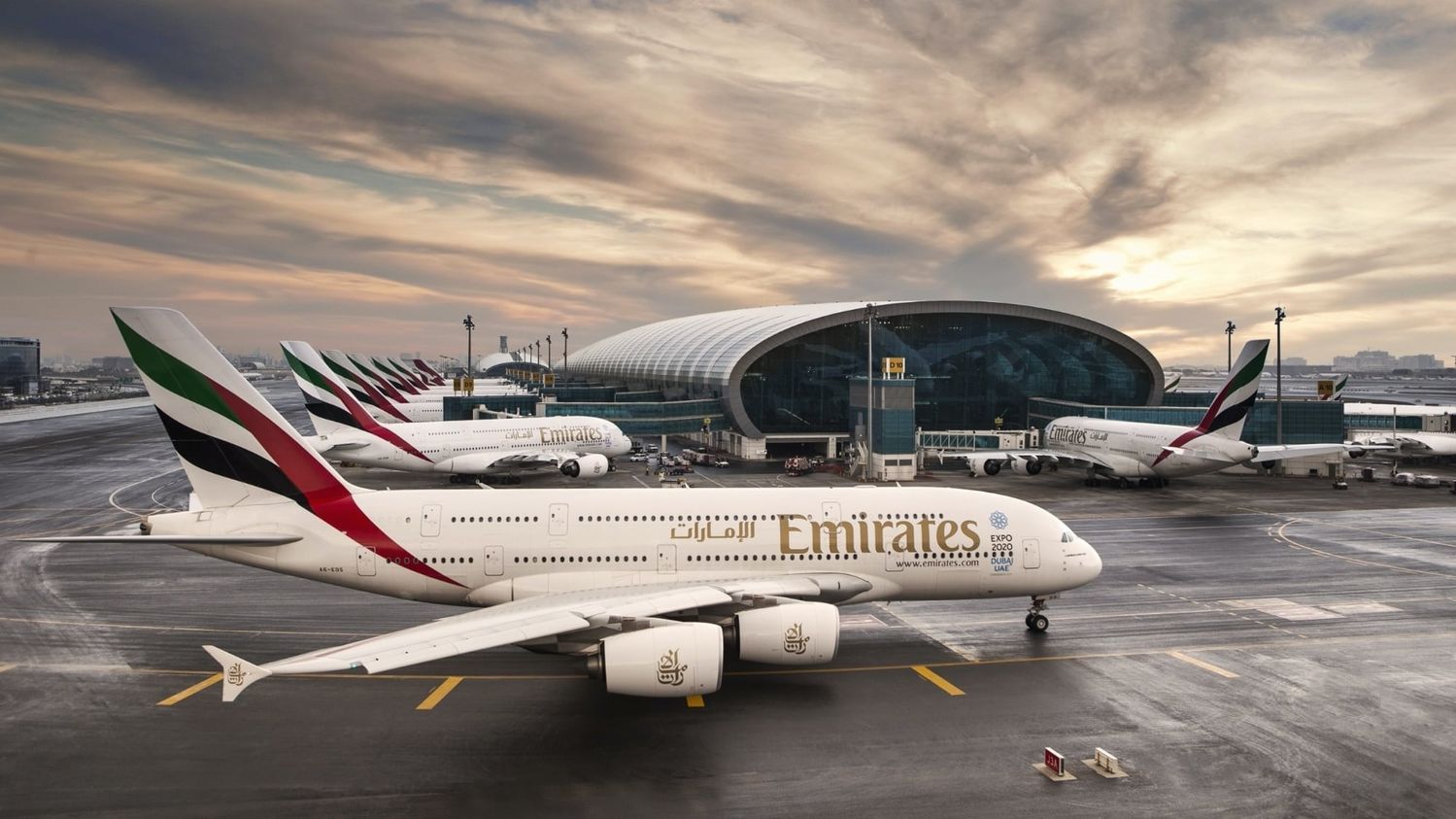
For most other airlines, the economics proved shaky at best.
Airbus pressed on, but the momentum was against it.
Orders dried up, and delays and cost overruns didn’t help a project which was already billions over budget, with Airbus struggling to sell enough of them just to cover costs.
Production limped along until 2019, when Airbus finally admitted defeat.
The last A380 rolled out of the factory in Toulouse in 2021, with just 251 built for only 14 airlines – at a cost of €30 billion, leading to a significant financial loss for Airbus.
An unexpected superjumbo surge
Then, as it did two decades ago, travel changed again.
After the global pandemic, demand came roaring back, while Airbus and Boeing faced a backlog in delivering new jets.
In the case of the Boeing 777X, first promised in 2020, today it’s still at least two years away from an estimated launch in 2027.
Airlines began dusting off their mothballed giants – some, such as Etihad and Qatar Airways, almost reluctantly.
The planes they had intended to retire were now coming to their rescue.
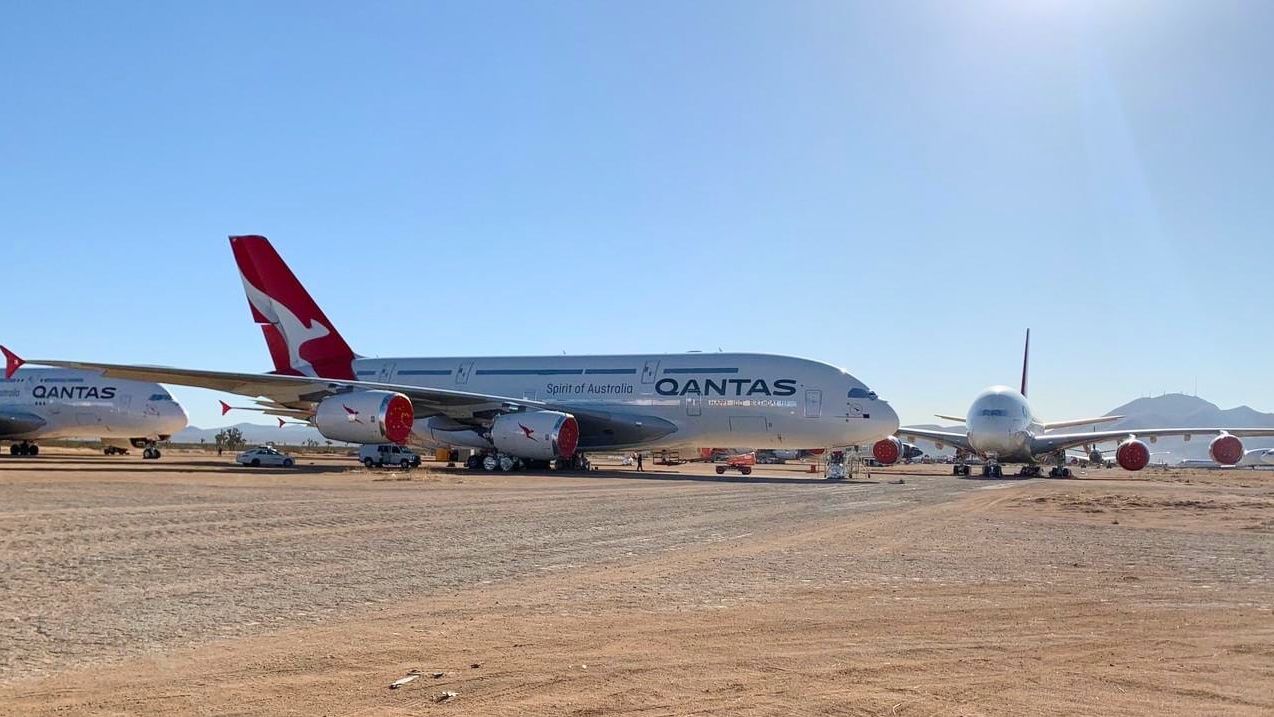
Today, the A380 is enjoying an unlikely revival.
For travellers, it remains a favourite. Smooth, quiet, and more spacious than anything else in the sky, it enjoys an incredibly loyal following.
The A380 wasn’t a failure of engineering, and certainly not of passenger appeal.
It was a failure of timing, and of a business case built around what proved to be vastly incorrect assumptions.
Airbus built the A380 aircraft for a world that never really arrived – a world of mega-airports and ever-bigger jets.
From mega-hubs to direct flights
Instead, travel went the other way: towards smaller, more nimble planes flying from anywhere to everywhere.
Those point-to-point flights are now pushing the envelope of 16+ hours, and mid-2027 will see Qantas launch its ambitious Project Sunrise flights connecting Sydney and Melbourne to London and New York in a single globe-striding leap.
Where does this leave the lumbering yet luxurious A380?

None of those single-deck jets have anything like the A380’s business class bar, let alone first class showers. Space is at a premium.
And yet, when you step on board a superjumbo today – when you feel that hush as the doors close and the giant lifts effortlessly into the sky – it’s hard not to wonder if perhaps the world gave up on the A380 too soon.
Emirates’ boss Tim Clark certainly thinks so.
The respected industry veteran continues to press the case for Airbus to build a second-generation A380.
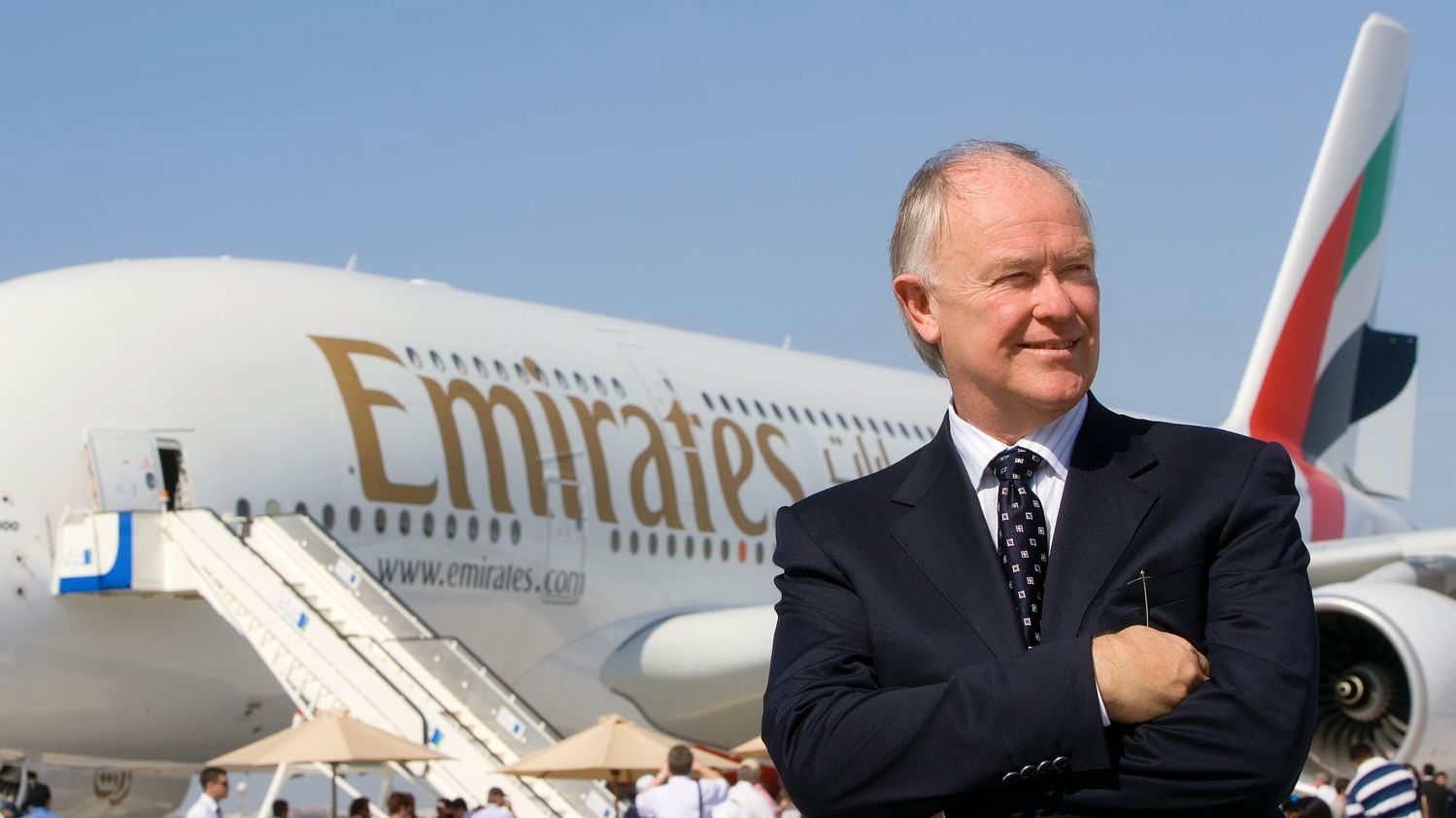
Dubbed the A380neo, the redesigned jet would be capable of overcoming many of the shortcomings that plagued its predecessor.
Clark believes the A380neo could be 20–25% more fuel-efficient thanks to lighter materials, improved aerodynamics and advanced engines like the Rolls-Royce UltraFan.
“I still have a design in front of Airbus,” Clark said. “If you build them, we’ll buy them.”
But the path is steep. Airbus has long been cautious. Even though it studied the idea in years past, it never committed to building a new model.
The costs are astronomical, as is the risk, and the market uncertain beyond Emirates itself, which remains the largest operator of the A380.
For Clark, and certainly for a legion of travellers, the world isn’t done with the grandest aircraft in the skies.

Qantas - Qantas Frequent Flyer
09 Jun 2017
Total posts 93
I absolutely loved travelling on the A380 in the decade or so before everything changed in 2020. No matter which airline I travelled with, there was space, the ride was smooth and quiet and I arrived at my destination relaxed and feeling good. Even the QF Skybed 2 was tolerable! In those days QF was price competitive so a frequent traveller to LHR with them. Today my trips are less and when I do head to the UK, I still prefer the A380 over any other offerings. I have no intention of utilising the Project Sunrise or alternatives when they finally happen. Having done Perth to LHR and Singapore to New York a couple of times each, I see nothing nice about ultra-long haul.
Hope that the A380 stays around for a few more years to come.
20 Nov 2015
Total posts 604
Great article and photos. I still choose the A380 wherever possible!
Qantas - Qantas Frequent Flyer
18 Oct 2012
Total posts 138
Fantastic article . Great shame if they were to leave the skies permanently as predicted.
Qantas - Qantas Frequent Flyer
09 Feb 2015
Total posts 408
Let’s hope Emirates keep the pressure on Airbus for a A380 neo. Such a great aircraft to fly on.
QFF
19 Sep 2013
Total posts 224
When it comes down to a choice between a Q suite in a noisier aircraft vs a reasonable seat in a quiet stable aircraft, will always pick the 380 every time.
03 May 2013
Total posts 710
No 777x , 787 or A350 will ever come close to the ultimate flying experience of an A380. That said, give me the A350 any day over either of the Boeing pair.
24 Apr 2017
Total posts 83
passengers ALWAYS love the quiet spacious comfortable A380. It was and still is light years ahead of anything Boeing ever made. They never fell out of love with it.
Thai Airways International - Royal Orchid Plus
12 Mar 2019
Total posts 4
A380 is still my preferred plane to fly, especially the versions with the bar, not all airlines took up this option.
my preference will be a 2 leg version to Europe, the ultra long distance flights have zero appeal
18 Mar 2016
Total posts 49
As much as I enjoy the A380, I REALLY miss the 747, with its First Class in the “point”.
No through traffic, very little noise, plenty of toilets etc
A very gracious way to fly.
12 Dec 2012
Total posts 1037
The claim that the A380 "could only land at airports willing to spend millions upgrading runways, taxiways and boarding gates." is false.
The A380 can land anywhere a 747 can. The issue for the airports is that the higher ICAO category that it was placed in, higher than what Airbus had wanted, meant that the aircraft required more space around it for separation which then required either areas of airports be closed off to other aircraft while an A380 was present in that part of the airport, or the airport spend the money to increase spacing between taxiways and runways.
There is no requirement that an A380 gate have 3 boarding bridges. There is nothing preventing boarding from just one door. It just slows things down, which the airlines don't want.
There isn't any requirement that limits the airports an A380 can use (beyond that of other large aircraft), just operational preferences on the parts of airport operators and airlines to increase efficiency.
QF
04 Apr 2014
Total posts 212
Give me a 380 over a 787 or 350 any day of the week, the experience is just so much more relaxing and enjoyable. Having said that I've never flown economy on one and I can imagine that could be quite different given the shear number of people.
Part of me wonders if the 777x will really be a viable alternative, the 777 is hardly a match and Boeing seems intent on underwhelming with product these days. Perhaps the 380's will end up like some of the DC-3's that kept flying for literally decades.
Singapore Airlines - KrisFlyer
14 Jan 2014
Total posts 342
So love the A380!!
A hundred 💯 times better than anything Boeing can offer!!
Hi Guest, join in the discussion on Superjumbo story: how the A380 soared, then slumped